
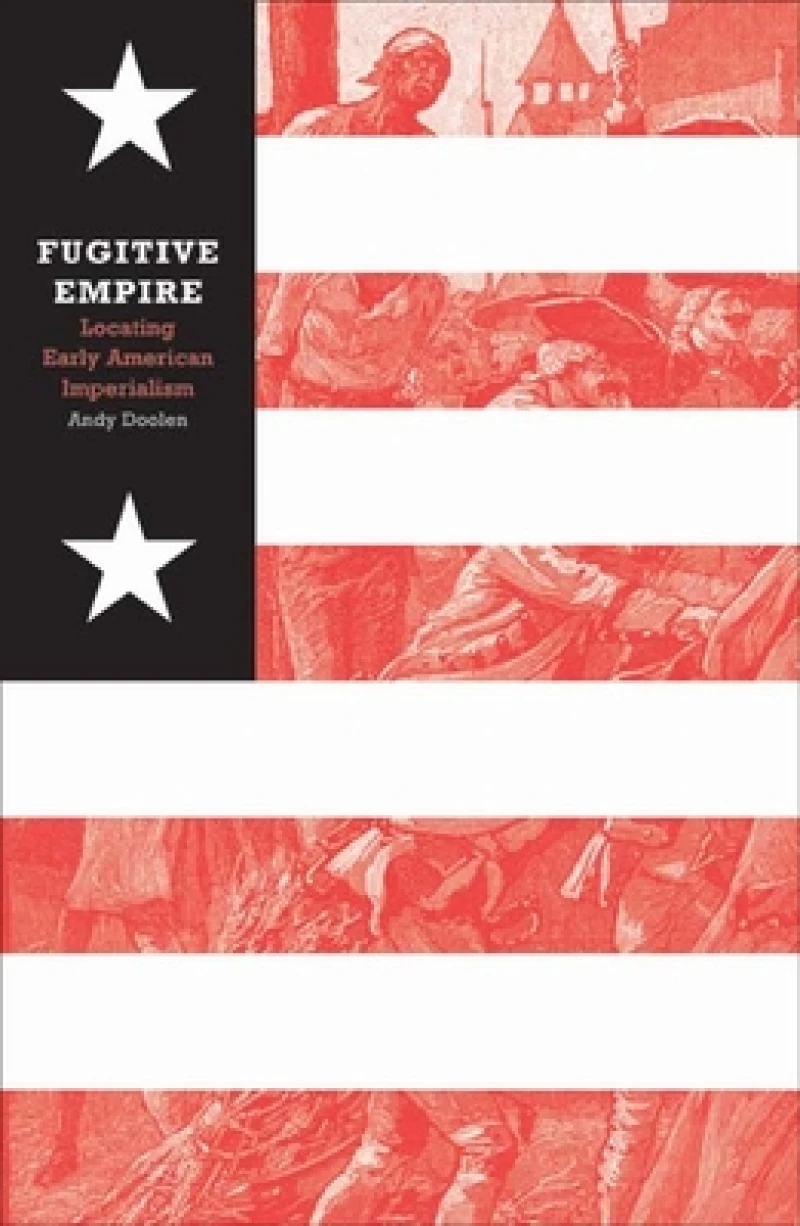
Fugitive Empire : Locating Early American Imperialism
by
Andy Doolen
Book Details
Format
Paperback / Softback
ISBN-10
0816644543
ISBN-13
9780816644544
Publisher
University of Minnesota Press
Imprint
University of Minnesota Press
Country of Manufacture
US
Country of Publication
GB
Publication Date
Nov 10th, 2005
Print length
288 Pages
Weight
386 grams
Dimensions
15.40 x 23.00 x 1.60 cms
Product Classification:
United States of America, USAc 1600 to c 1775 (period of European colonization and settlement of North America)Literary studies: generalLiterary studies: c 1500 to c 1800Regional studiesRegional / International studiesHistory of the AmericasModern history to 20th century: c 1700 to c 1900HistoryHistory of the Americas
Ksh 4,150.00
Werezi Extended Catalogue
Delivery in 14 days
1 copies in stock
Delivery Location
Delivery fee: Select location
Delivery in 14 days
Secure
Quality
Fast
Demonstrates how imperialism was fundamental to the formation of the early American republic. This book investigates the relationships among race, nation, and empire in colonial and early national America, revealing how whiteness and American identity were conflated to stabilize racial hierarchy.
In Fugitive Empire, Andy Doolen investigates the relationships among race, nation, and empire in colonial and early national America, revealing how whiteness and American identity were conflated to stabilize racial hierarchy and to repulse challenges to national policies of slavery, war, and continental expansion.
Fugitive Empire begins not in 1776 but in 1741 with the New York Conspiracy trials. Linking them to the British conflict with the Spanish in the West Indies, Doolen describes how white colonists were led to suspect all foreigners, particularly slaves, as insurgents. He shows how this protonational story resonated later in the suppression of resistance to the Fugitive Slave Law of 1793. In addition to examining the only extant record of the New York Conspiracy trials, Doolen catalogs the rampant fear of aliens in Charles Brockden Brown''s novels; places James Fenimore Cooper''s The Pioneers in the context of early efforts to relocate African-Americans to Liberia; and considers Pequot writer William Apess, whose writing on Native rights landed him in jail. Bridging the gap between the British Empire and the new United States, Doolen concludes that imperial authority lies at the heart of American republicanism, an unstable mixture of idealism, force, and pragmatism, wielded in the name of freedom even today.
Andy Doolen is assistant professor of American literature and American studies at the University of Kentucky.
Fugitive Empire begins not in 1776 but in 1741 with the New York Conspiracy trials. Linking them to the British conflict with the Spanish in the West Indies, Doolen describes how white colonists were led to suspect all foreigners, particularly slaves, as insurgents. He shows how this protonational story resonated later in the suppression of resistance to the Fugitive Slave Law of 1793. In addition to examining the only extant record of the New York Conspiracy trials, Doolen catalogs the rampant fear of aliens in Charles Brockden Brown''s novels; places James Fenimore Cooper''s The Pioneers in the context of early efforts to relocate African-Americans to Liberia; and considers Pequot writer William Apess, whose writing on Native rights landed him in jail. Bridging the gap between the British Empire and the new United States, Doolen concludes that imperial authority lies at the heart of American republicanism, an unstable mixture of idealism, force, and pragmatism, wielded in the name of freedom even today.
Andy Doolen is assistant professor of American literature and American studies at the University of Kentucky.
Get Fugitive Empire by at the best price and quality guaranteed only at Werezi Africa's largest book ecommerce store. The book was published by University of Minnesota Press and it has pages.

