
Cart 0
Fundamentals of Quantum Computing
Click to zoom

Share this book

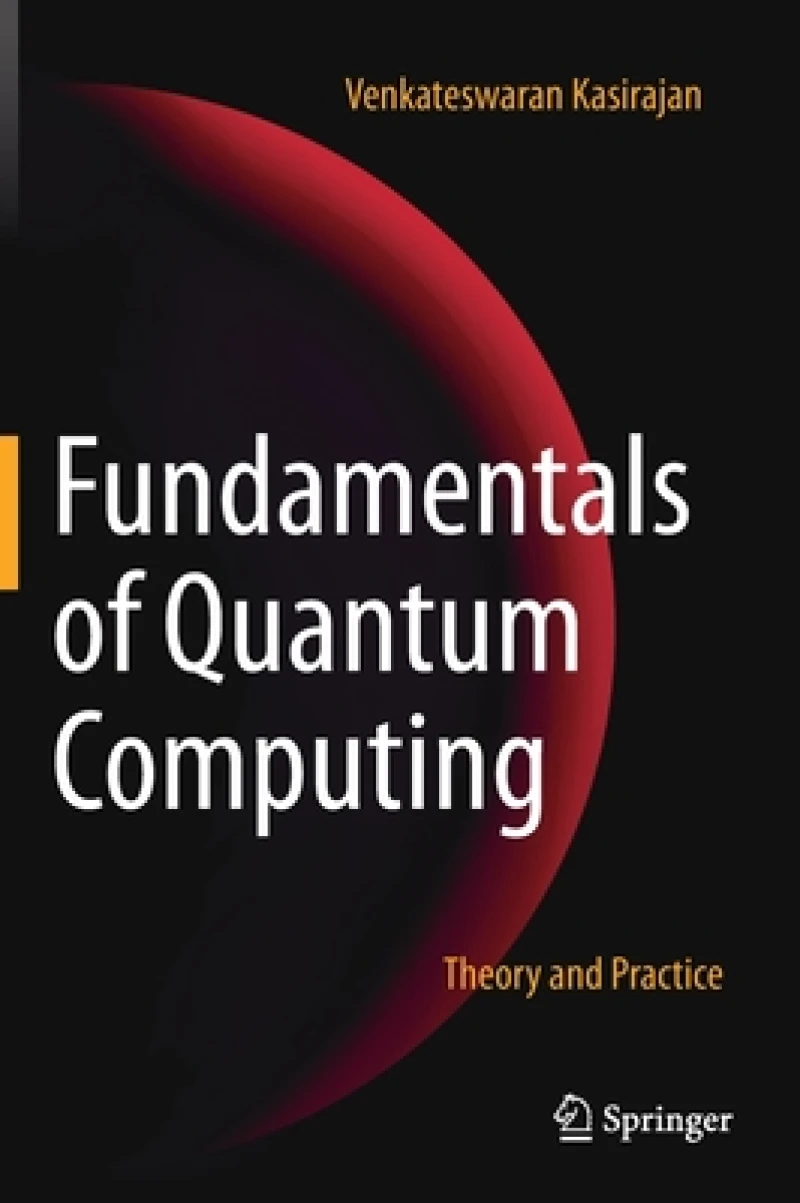
Fundamentals of Quantum Computing : Theory and Practice

2021 ed.

Book Details

Format Hardback or Cased Book
ISBN-10 3030636887
ISBN-13 9783030636883
Edition 2021 ed.
Publisher Springer Nature Switzerland AG
Imprint Springer Nature Switzerland AG
Country of Manufacture GB
Country of Publication GB
Publication Date Jun 22nd, 2021
Print length 463 Pages
Weight 1,116 grams
Dimensions 18.20 x 26.10 x 3.50 cms
Ksh 16,200.00
Temporarily out of stock, due soon 0 in stock

Delivery Location

Delivery fee: Select location

Secure
Quality
Fast
This introductory book on quantum computing includes an emphasis on the development of algorithms.  Appropriate for both university students as well as software developers interested in programming a quantum computer, this practical approach to modern quantum computing takes the reader through the required background and up to the latest developments. Beginning with introductory chapters on the required math and quantum mechanics, Fundamentals of Quantum Computing proceeds to describe four leading qubit modalities and explains the core principles of quantum computing in detail. Providing a step-by-step derivation of math and source code, some of the well-known quantum algorithms are explained in simple ways so the reader can try them either on IBM Q or Microsoft QDK. The book also includes a chapter on adiabatic quantum computing and modern concepts such as topological quantum computing and surface codes. Features:o   Foundational chapters that build the necessary background on math and quantum mechanics. o   Examples and illustrations throughout provide a practical approach to quantum programming with end-of-chapter exercises. o   Detailed treatment on four leading qubit modalities -- trapped-ion, superconducting transmons, topological qubits, and quantum dots -- teaches how qubits work so that readers can understand how quantum computers work under the hood and devise efficient algorithms and error correction codes. Also introduces protected qubits - 0-p qubits, fluxon parity protected qubits, and charge-parity protected qubits. o   Principles of quantum computing, such as quantum superposition principle, quantum entanglement, quantum teleportation, no-cloning theorem, quantum parallelism, and quantum interference are explained in detail.  A dedicated chapter on quantum algorithm explores both oracle-based, and Quantum FourierTransform-based algorithms in detail with step-by-step math and working code that runs on IBM QisKit and Microsoft QDK. Topics on EPR Paradox, Quantum Key Distribution protocols, Density Matrix formalism, and Stabilizer formalism are intriguing. While focusing on the universal gate model of quantum computing, this book also introduces adiabatic quantum computing and quantum annealing. This book includes a section on fault-tolerant quantum computing to make the discussions complete. The topics on Quantum Error Correction, Surface codes such as Toric code and Planar code, and protected qubits help explain how fault tolerance can be built at the system level.

This introductory book on quantum computing includes an emphasis on the development of algorithms.  Appropriate for both university students as well as software developers interested in programming a quantum computer, this practical approach to modern quantum computing takes the reader through the required background and up to the latest developments.

Beginning with introductory chapters on the required math and quantum mechanics, Fundamentals of Quantum Computing proceeds to describe four leading qubit modalities and explains the core principles of quantum computing in detail. Providing a step-by-step derivation of math and source code, some of the well-known quantum algorithms are explained in simple ways so the reader can try them either on IBM Q or Microsoft QDK. The book also includes a chapter on adiabatic quantum computing and modern concepts such as topological quantum computing and surface codes.

Features:

o   Foundational chapters that build the necessary background on math and quantum mechanics.

o   Examples and illustrations throughout provide a practical approach to quantum programming with end-of-chapter exercises.

o   Detailed treatment on four leading qubit modalities -- trapped-ion, superconducting transmons, topological qubits, and quantum dots -- teaches how qubits work so that readers can understand how quantum computers work under the hood and devise efficient algorithms and error correction codes. Also introduces protected qubits - 0-π qubits, fluxon parity protected qubits, and charge-parity protected qubits.

o   Principles of quantum computing, such as quantum superposition principle, quantum entanglement, quantum teleportation, no-cloning theorem, quantum parallelism, and quantum interference are explained in detail.  

A dedicated chapter on quantum algorithm explores both oracle-based, and Quantum Fourier Transform-based algorithms in detail with step-by-step math and working code that runs on IBM QisKit and Microsoft QDK. Topics on EPR Paradox, Quantum Key Distribution protocols, Density Matrix formalism, and Stabilizer formalism are intriguing. While focusing on the universal gate model of quantum computing, this book also introduces adiabatic quantum computing and quantum annealing.

This book includes a section on fault-tolerant quantum computing to make the discussions complete. The topics on Quantum Error Correction, Surface codes such as Toric code and Planar code, and protected qubits help explain how fault tolerance can be built at the system level.


Get Fundamentals of Quantum Computing by at the best price and quality guaranteed only at Werezi Africa's largest book ecommerce store. The book was published by Springer Nature Switzerland AG and it has pages.


Mind, Body, & Spirit

Shopping Cart

Africa largest book store

Sub Total:
Ebooks

Digital Library
Coming Soon

Our digital collection is currently being curated to ensure the best possible reading experience on Werezi. We'll be launching our Ebooks platform shortly.