
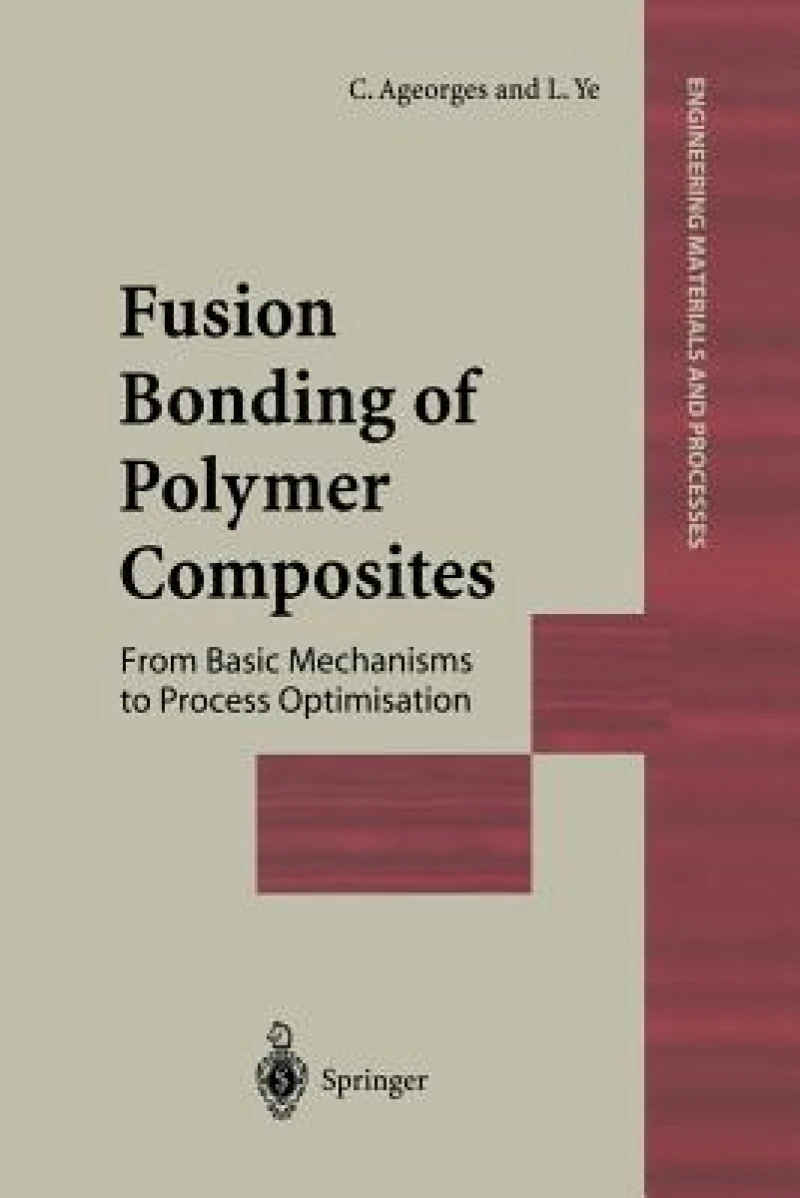
Fusion Bonding of Polymer Composites
Softcover reprint of the original 1st ed. 2002
Book Details
Format
Paperback / Softback
Book Series
Engineering Materials and Processes
ISBN-10
1447110870
ISBN-13
9781447110873
Edition
Softcover reprint of the original 1st ed. 2002
Publisher
Springer London Ltd
Imprint
Springer London Ltd
Country of Manufacture
GB
Country of Publication
GB
Publication Date
Oct 3rd, 2012
Print length
273 Pages
Weight
426 grams
Dimensions
23.30 x 15.70 x 1.60 cms
Product Classification:
Plastics & polymers technologyMaterials scienceTesting of materialsProduction engineering
Ksh 23,400.00
Werezi Extended Catalogue
0 in stock
Delivery Location
Delivery fee: Select location
Secure
Quality
Fast
Fusion bonding is one of the three methods available for joining composite and dissimilar materials. While the other two, mechanical fastening and adhesion bonding, have been the subject of wide coverage both in textbooks and monographs, fusion bonding is covered here substantially for the first time. Fusion bonding offers a number of advantages over traditional joining techniques and it is anticipated that its use will increase dramatically in the future because of the rise in the use of thermoplastic matrix composites and the growing necessity for recyclability of engineering assemblies. Fusion Bonding of Polymer Composites provides an in-depth understanding of the physical mechanisms involved in the fusion bonding process, covering such topics as:- heat transfer in fusion bonding;- modelling thermal degradation;- consolidation mechanisms;- crystallisation kinetics;- processing-microstructure-property relationship;- full-scale fusion bonding;- fusion bonding of thermosetting composite/thermoplastic composite and metal/thermoplastic joints. The book focuses on one practical case study using the resistance welding process. This example exposes the reader to the development of processing windows for a novel manufacturing process including the use of experimental test programmes and modelling strategies.
Fusion bonding is one of the three methods available for joining composite and dissimilar materials. While the other two, mechanical fastening and adhesion bonding, have been the subject of wide coverage both in textbooks and monographs, fusion bonding is covered here substantially for the first time. Fusion bonding offers a number of advantages over traditional joining techniques and it is anticipated that its use will increase dramatically in the future because of the rise in the use of thermoplastic matrix composites and the growing necessity for recyclability of engineering assemblies. Fusion Bonding of Polymer Composites provides an in-depth understanding of the physical mechanisms involved in the fusion bonding process, covering such topics as:
- heat transfer in fusion bonding;
- modelling thermal degradation;
- consolidation mechanisms;
- crystallisation kinetics;
- processing-microstructure-property relationship;
- full-scale fusion bonding;
- fusion bonding of thermosetting composite/thermoplastic composite and metal/thermoplastic joints.
The book focuses on one practical case study using the resistance welding process. This example exposes the reader to the development of processing windows for a novel manufacturing process including the use of experimental test programmes and modelling strategies.
- heat transfer in fusion bonding;
- modelling thermal degradation;
- consolidation mechanisms;
- crystallisation kinetics;
- processing-microstructure-property relationship;
- full-scale fusion bonding;
- fusion bonding of thermosetting composite/thermoplastic composite and metal/thermoplastic joints.
The book focuses on one practical case study using the resistance welding process. This example exposes the reader to the development of processing windows for a novel manufacturing process including the use of experimental test programmes and modelling strategies.
Get Fusion Bonding of Polymer Composites by at the best price and quality guaranteed only at Werezi Africa's largest book ecommerce store. The book was published by Springer London Ltd and it has pages.

