

Future Fragmentation Processes : Effectively Engaging with the Ascendancy of Global Value Chains
Book Details
Format
Paperback / softback
ISBN-10
1849291667
ISBN-13
9781849291668
Publisher
Commonwealth Secretariat
Imprint
Commonwealth Secretariat
Country of Manufacture
GB
Country of Publication
GB
Publication Date
Aug 7th, 2017
Print length
247 Pages
Weight
432 grams
Product Classification:
Commonwealth of NationsInternational economics
KSh 9,900.00
Currently unavailable
0 in stock
Delivery Location
Delivery fee: Select location
Secure
Quality
Fast
The chapters collated in this publication provide for a more careful examination of global value chains (GVCs) within which our members specialise at the sectoral level: manufacturing, services and commodity trade. Understanding how dynamics are unfolding at the sectoral level is critical to encouraging more gainful GVC participation.
Leveraging the power of trade to expand formal employment opportunities, generate greater value addition, assist diversification processes and develop productive capabilities is an aspiration of all Commonwealth governments. These objectives were conveyed clearly at the Commonwealth Trade Ministers Meeting convened in March 2017.
There are areas of mutual interest and where enhanced co-ordination between member countries could enhance trade gains. Because the ability to transmit tacit knowledge through Commonwealth trade, finance and investment networks is inherent in the trade cost advantage shared by members - which exists without formal collaboration - it suggests the sharing of already known best practice could further enhance the gains from more concerted action. In order to engage effectively with contemporary trade, which manifests as global value chains (GVCs), it is incumbent on governments to better understand corporate strategies. The achievement of structural economic transformation within the context of GVC trade entails system-wide approaches, more cognisant of innovation systems, as opposed to more siloed approaches towards sectoral development. Concerted action is required to facilitate interactions between private and public agents, so as to effectively enable societal upgrading processes. In this publication, as well as taking stock of past performance, we reflect on potential dynamics and future fragmentation processes. The chapters collated in this publication provide for a more careful examination of GVCs within which our members specialise at the sectoral level: manufacturing, services and commodity trade, including within the realm of the oceans economy. Given that the overwhelming majority of the 52 Commonwealth member countries are small states, 45 are oceans states and around one-fifth are least developed countries, understanding how dynamics are unfolding at the sectoral level is critical to encouraging more gainful GVC participation.
Through a more inductive approach, one that involves learning from experiences across the Commonwealth of existing GVC participation, a clear set of policy measures becomes apparent. These include overcoming barriers to entry, informational asymmetries and unfair competition, and stimulating innovation. Finally, important knowledge and data constraints for small states in the Pacific and Caribbean are highlighted.
There are areas of mutual interest and where enhanced co-ordination between member countries could enhance trade gains. Because the ability to transmit tacit knowledge through Commonwealth trade, finance and investment networks is inherent in the trade cost advantage shared by members - which exists without formal collaboration - it suggests the sharing of already known best practice could further enhance the gains from more concerted action. In order to engage effectively with contemporary trade, which manifests as global value chains (GVCs), it is incumbent on governments to better understand corporate strategies. The achievement of structural economic transformation within the context of GVC trade entails system-wide approaches, more cognisant of innovation systems, as opposed to more siloed approaches towards sectoral development. Concerted action is required to facilitate interactions between private and public agents, so as to effectively enable societal upgrading processes. In this publication, as well as taking stock of past performance, we reflect on potential dynamics and future fragmentation processes. The chapters collated in this publication provide for a more careful examination of GVCs within which our members specialise at the sectoral level: manufacturing, services and commodity trade, including within the realm of the oceans economy. Given that the overwhelming majority of the 52 Commonwealth member countries are small states, 45 are oceans states and around one-fifth are least developed countries, understanding how dynamics are unfolding at the sectoral level is critical to encouraging more gainful GVC participation.
Through a more inductive approach, one that involves learning from experiences across the Commonwealth of existing GVC participation, a clear set of policy measures becomes apparent. These include overcoming barriers to entry, informational asymmetries and unfair competition, and stimulating innovation. Finally, important knowledge and data constraints for small states in the Pacific and Caribbean are highlighted.
Get Future Fragmentation Processes by Jodie Keane at the best price and quality guaranteed only at Werezi Africa's largest book ecommerce store. The book was published by Commonwealth Secretariat and it has 247 pages.
Customers Who Bought This Also Bought

The White Man''s Burden
KSh 2,900.00

We Are Not Able to Live in the Sky
KSh 3,400.00

New Confessions of an Economic Hit Man
KSh 2,700.00

Good Economics for Hard Times
KSh 2,350.00

The Bottom Billion
KSh 2,500.00

How to Win a Trade War
KSh 3,050.00

World for Sale
KSh 2,150.00
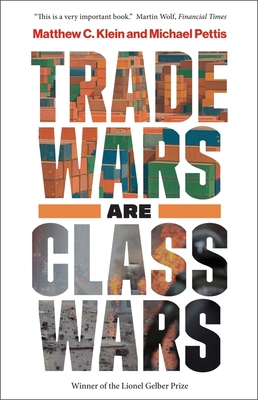
Trade Wars Are Class Wars – How Rising Inequality Distorts the Global Economy and Threatens International Peace
KSh 2,600.00

Capital and Ideology
KSh 7,450.00
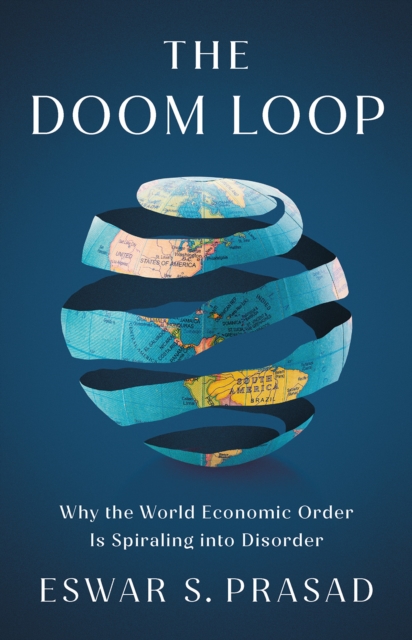
Doom Loop
KSh 4,150.00
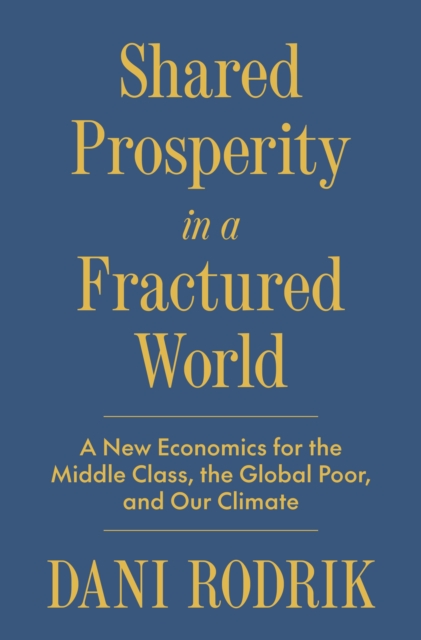
Shared Prosperity in a Fractured World
KSh 4,000.00

Big Con
KSh 2,350.00
