
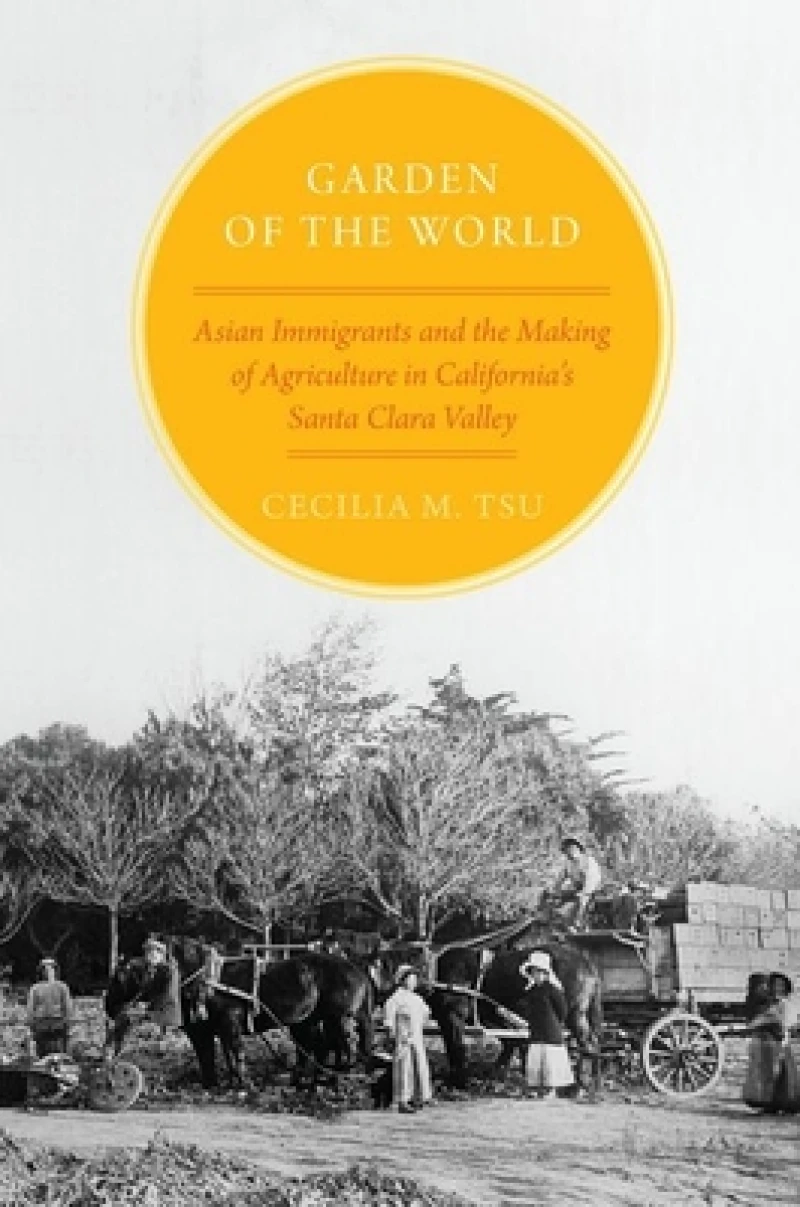
Garden of the World : Asian Immigrants and the Making of Agriculture in California's Santa Clara Valley
Book Details
Format
Hardback or Cased Book
ISBN-10
0199734771
ISBN-13
9780199734771
Publisher
Oxford University Press Inc
Imprint
Oxford University Press Inc
Country of Manufacture
US
Country of Publication
GB
Publication Date
Jul 18th, 2013
Print length
304 Pages
Weight
652 grams
Dimensions
16.00 x 23.90 x 2.50 cms
Ksh 22,300.00
Manufactured on Demand
0 in stock
Delivery Location
Delivery fee: Select location
Secure
Quality
Fast
Garden of the World examines how overlapping waves of Chinese, Japanese, and Filipino immigrants fundamentally altered the agricultural economy and landscape of the Santa Clara Valley as well as white residents' ideas about race, gender, and what it meant to be an American family farmer.
Nearly a century before it became known as Silicon Valley, the Santa Clara Valley was world-renowned for something else: the succulent fruits and vegetables grown in its fertile soil. Virtually all farms were owned by whites, but the soil was largely worked by Asian immigrants. In Harvesting the American Dream, Cecilia Tsu tells the overlooked and intertwined histories of the land of the Santa Clara Valley and the Asian immigrants who cultivated it. Weaving together the story of the three overlapping waves of Asian migration from China, Japan, and the Philippines in the nineteenth and twentieth centuries, Tsu offers a comparative history that sheds light on white and Asian Californians'' understandings of race, gender, and national identity.From the mid-nineteenth century on, white farmers had an increased need for labor, and Chinese immigrants willingly and disproportionately filled it. Despite this common labor arrangement, the idea of the independent family farm, worked solely by family members, became even more deeply entrenched, particularly in the West. Farm owners justified the labor of Chinese men as sojourning immigrants disconnected from family, capable of only menial agricultural work. They also viewed Asian crops as marginal, which justified their increasing reliance on foreign workers. Popular belief that the Chinese lacked a coherent family structure was later extended to the Japanese, even though immigrant families began settling in the Valley in the late 1910s. As the earlier family farm framework divided along crop and family lines fell apart, it was adapted, this time barring women from field work. The direct threat of Japanese family farming to the white family farm ideal, Tsu argues, played a significant role in the rise of discrimination against Asians through immigrant exclusion, denial of citizenship, and alien land laws. However, the mutual dependence that characterized Asian-white relations in the Santa Clara Valley prevented the area from becoming a hotbed of racial tension. Efforts to hold on to the white family farm ideal during the Depression led nonwhite laborers, primarily Filipino and Mexican, to be eyed suspiciously, as red-sympathizing foreigners whose involvement in labor militancy revealed a dormant anti-Americanism. Tsu simultaneously tells the story of this agricultural world from the perspectives of the Asian workers who sought to create their own American dream. They saw farming as not just a source of income, but also a way to bolster their community standing. Although they did not share a common heritage, the groups interacted with each other constantly and peacefully, patronizing each others'' shops, working for the same landowners, sometimes living in the same area, and encountering many of the same stereotypes.
Get Garden of the World by at the best price and quality guaranteed only at Werezi Africa's largest book ecommerce store. The book was published by Oxford University Press Inc and it has pages.

