
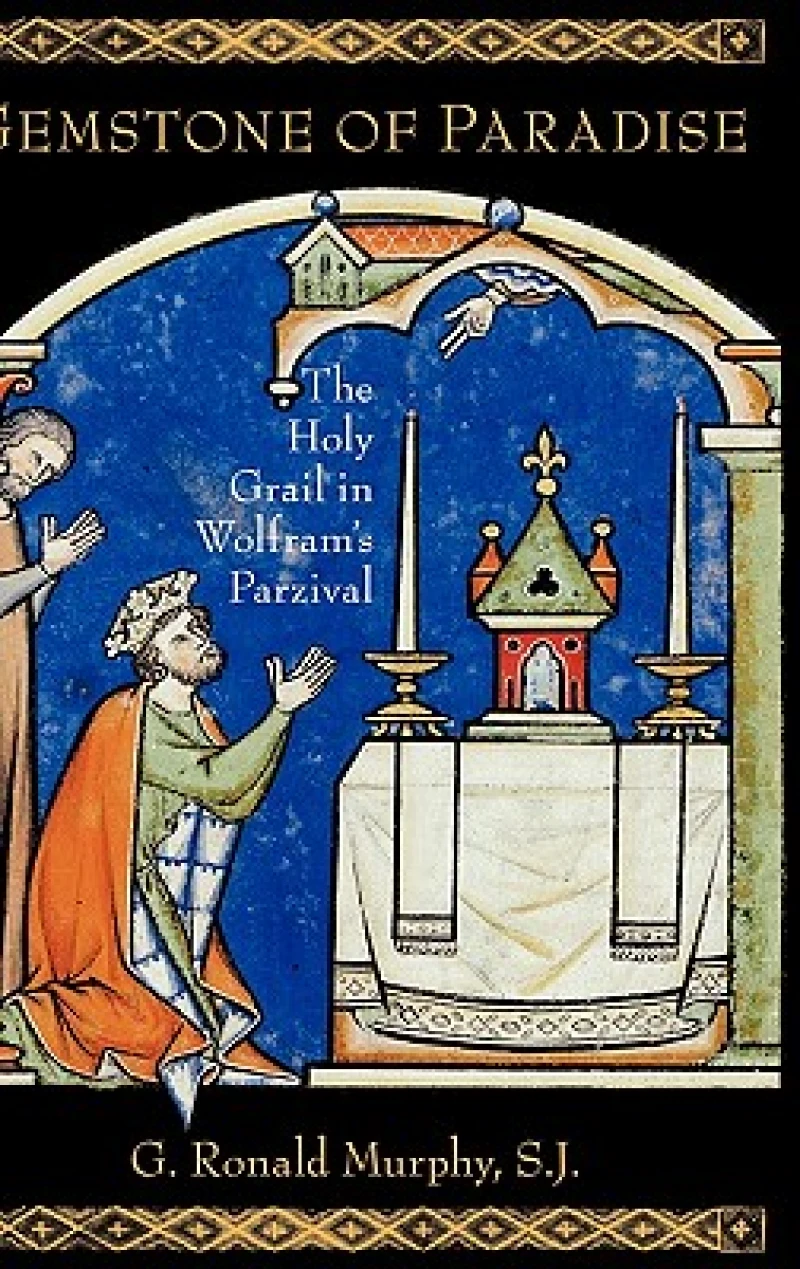
Gemstone of Paradise : The Holy Grail in Wolfram's Parzival
Book Details
Format
Hardback or Cased Book
ISBN-10
0195306392
ISBN-13
9780195306392
Publisher
Oxford University Press Inc
Imprint
Oxford University Press Inc
Country of Manufacture
GB
Country of Publication
GB
Publication Date
Aug 24th, 2006
Print length
256 Pages
Weight
508 grams
Dimensions
16.20 x 23.50 x 2.20 cms
Ksh 12,850.00
Manufactured on Demand
0 in stock
Delivery Location
Delivery fee: Select location
Secure
Quality
Fast
Presents the story of "Parzival" that was intended as an argument against continued efforts by Latin Christians to regain the Holy Land by force. The author believes that he has discovered the altar stone that inspired Wolfram's work, in the Paradise Altar in the diocesan museum of the German city of Bamberg.
The phenomenal success of Dan Brown''s Da Vinci Code has given new life to the perennial debate about the nature and meaning of the mysterious Holy Grail. The story of the Grail, usually identified as some kind of mystical vessel, has gripped the imaginations of millions since it first appeared in several medieval romances. Of these, Wolfram von Eschenbach''s Middle High German Parzival (c. 1200) is generally recognized as the most complex and beautiful. Strangely, in Parzival, the Grail is identified as a stone rather than a cup or dish. This oddity is usually seen as just another mystery, further evidence of the difficulty of discerning the true sources of the Grail legend. In this groundbreaking study, Ronald Murphy seeks to dispel this mystery and to enable a far better appreciation of Wolfram''s purposes. Wolfram, Murphy argues, wanted to chastise his contemporaries who looked for the Grail in the possession of Muslims in the Holy Land. The Grail (salvation, blessedness, the presence of God), Wolfram was saying, was where God said He would be: on the altar at the consecration of the Mass. Wolfram''s "sacred stone" was none other than a consecrated altar, precious by virtue of the sacrament but also, Murphy argues, by virtue of the material from which it was made: green serpentine, one of the precious stones associated with the rivers of Paradise. Wolfram''s stone may also have been a symbolic reference to the stone the Crusaders fought to obtain - the Holy Sepulchre. The entire story of Parzival, Murphy believes, was intended as an argument against continued efforts by Latin Christians to regain the Holy Land by force. Remarkably, Murphy believes he has discovered the very altar stone that inspired Wolfram''s work, preserved to the present day in the Paradise Altar in the diocesan museum of the German city of Bamberg. Offering an entirely original reading of Wolfram''s famous text, this engrossing and readable book will appeal not only to scholars and students of medieval literature but to many of the readers who are drawn to the lasting mystery of the Holy Grail.
Get Gemstone of Paradise by at the best price and quality guaranteed only at Werezi Africa's largest book ecommerce store. The book was published by Oxford University Press Inc and it has pages.

