
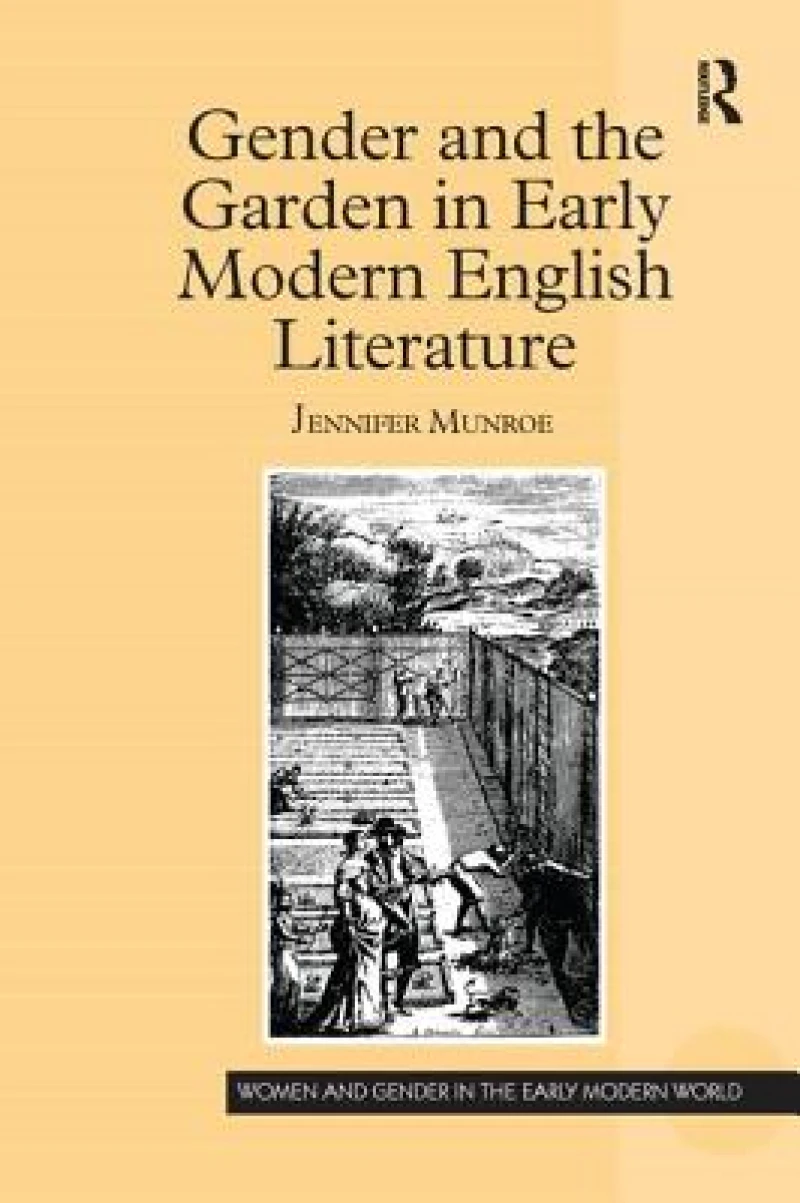
Gender and the Garden in Early Modern English Literature
Book Details
Format
Paperback / Softback
Book Series
Women and Gender in the Early Modern World
ISBN-10
1138273813
ISBN-13
9781138273818
Publisher
Taylor & Francis Ltd
Imprint
Routledge
Country of Manufacture
GB
Country of Publication
GB
Publication Date
Sep 9th, 2016
Print length
146 Pages
Weight
270 grams
Product Classification:
c 1500 onwards to present dayLandscape architecture and designLandscape art & architectureLiterary studies: generalLiterary studies: c 1500 to c 1800Early modern history: c 1450/1500 to c 1700HistoryCivil engineering, surveying & buildingCivil engineering, surveying and building
Ksh 10,600.00
Werezi Extended Catalogue
0 in stock
Delivery Location
Delivery fee: Select location
Secure
Quality
Fast
Radical reconfigurations in gardening practice in sixteenth- and seventeenth-century England altered the social function of the garden, offering men and women new opportunities for social mobility. While recent work has addressed how middle class men used the garden to attain this mobility, the gendering of the garden during the period has gone largely unexamined. This new study focuses on the developing gendered tension in gardening that stemmed from a shift from the garden as a means of feeding a family, to the garden as an aesthetic object imbued with status. The first part of the book focuses on how practical gardening books proposed methods for planting as they simultaneously represented gardens increasingly hierarchized by gender. The second part of the book looks at how men and women appropriated aesthetic uses of actual gardening in their poetry, and reveals a parallel gendered tension there. Munroe analyzes garden representations in the writings of such manuals writers as Gervase Markham, Thomas Hill, and William Lawson, and such poets as Edmund Spenser, Aemilia Lanyer and Lady Mary Wroth. Investigating gardens, gender and writing, Jennifer Munroe considers not only published literary representations of gardens, but also actual garden landscapes and unpublished evidence of everyday gardening practice. She de-prioritizes the text as a primary means of cultural production, showing instead the relationship between what men and women might imagine possible and represent in their writing, and everyday spatial practices and the spaces men and women occupied and made. In so doing, she also broadens our outlook on whom we can identify and value as producers of early modern social space.
Get Gender and the Garden in Early Modern English Literature by at the best price and quality guaranteed only at Werezi Africa's largest book ecommerce store. The book was published by Taylor & Francis Ltd and it has pages.

