
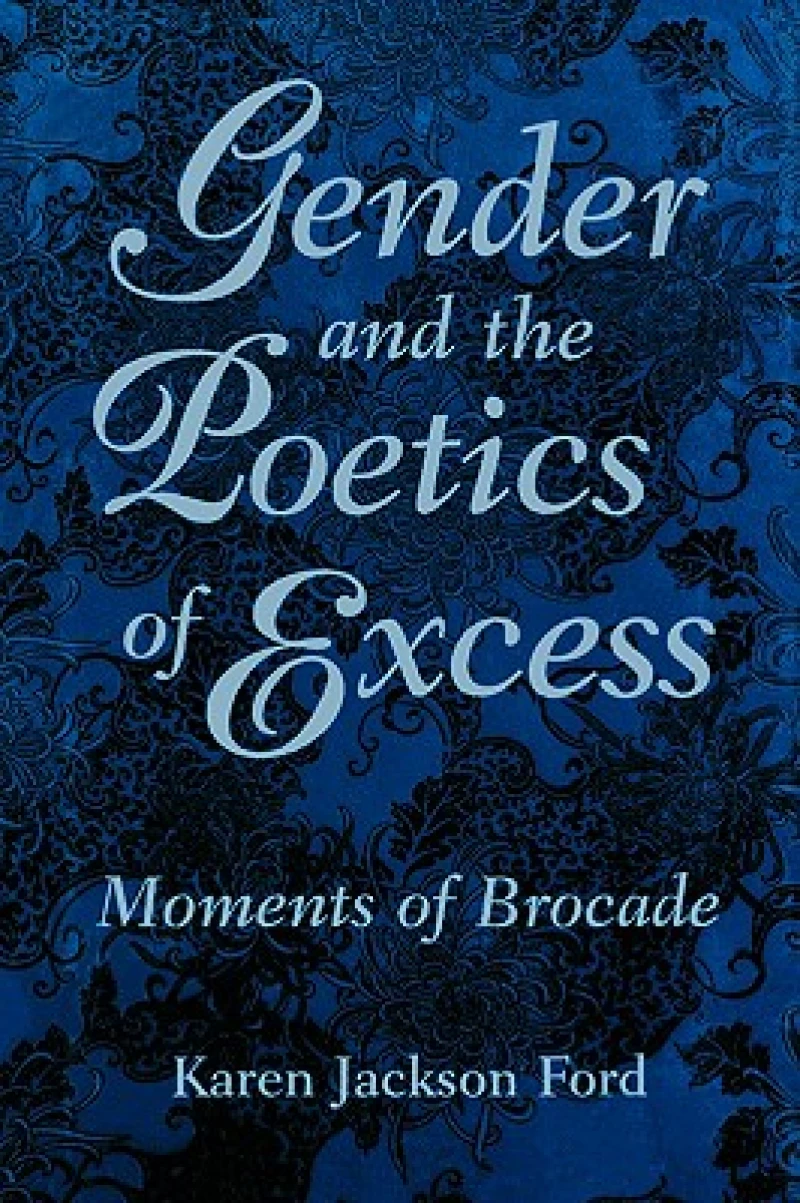
Gender and the Poetics of Excess : Moments of Brocade
Book Details
Format
Paperback / Softback
ISBN-10
1604732555
ISBN-13
9781604732559
Publisher
University Press of Mississippi
Imprint
University Press of Mississippi
Country of Manufacture
US
Country of Publication
GB
Publication Date
Feb 28th, 2009
Print length
272 Pages
Weight
420 grams
Dimensions
22.80 x 15.20 x 1.60 cms
Product Classification:
Literary studies: poetry & poetsLiterary companions, book reviews & guides
Ksh 5,100.00
Werezi Extended Catalogue
0 in stock
Delivery Location
Delivery fee: Select location
Secure
Quality
Fast
The argument posed in this analysis is that the poetic excesses of several major female poets, excesses that have been typically regarded as flaws in their work, are strategies for escaping the inhibiting and sometimes inimical conventions too often imposed on women writers. The forms of excess vary with each poet, but by conceiving of poetic excess in relation to literary decorum, this study establishes a shared motivation for such a strategy. Literary decorum is one instrument a culture employs to constrain its writers. Perhaps it is the most effective because it is the least definable. The excesses discussed here, like the criteria of decorum against which they are perceived, cannot be itemized as an immutable set of traits. Though decorum and excess shift over time and in different cultures, their relationship to one another remains strikingly stable. Thus, nineteenth-century standards for women's writing and late twentieth-century standards bear almost no relation. Emily Dickinson's do not anticipate Gertrude Stein's or Sylvia Plath's or Jayne Cortez's or Ntozake Shange's. Yet the charges of indecorousness leveled at these women poets repeat a fixed set of abstract grievances. Dickinson, Stein, Plath, Cortez, and Shange all engage in a poetics of excess as a means of rejecting the limitations and conventions of ""female writing"" that the larger culture imposes on them. In resisting conventions for feminine writing, these poets developed radical new poetries, yet their work was typically criticized or dismissed as excessive. Thus, Dickinson's form is classified as hysterical and her figures tortured. Stein's works are called repetitive and nonsensical. Plath's tone is accused of being at once virulent and confessional, Cortez's poems violent and vulgar, Shange's work vengeful and self-righteous. The publishing history of these poets demonstrates both the opposition to such an aesthetic and the necessity for it.
Get Gender and the Poetics of Excess by at the best price and quality guaranteed only at Werezi Africa's largest book ecommerce store. The book was published by University Press of Mississippi and it has pages.

