
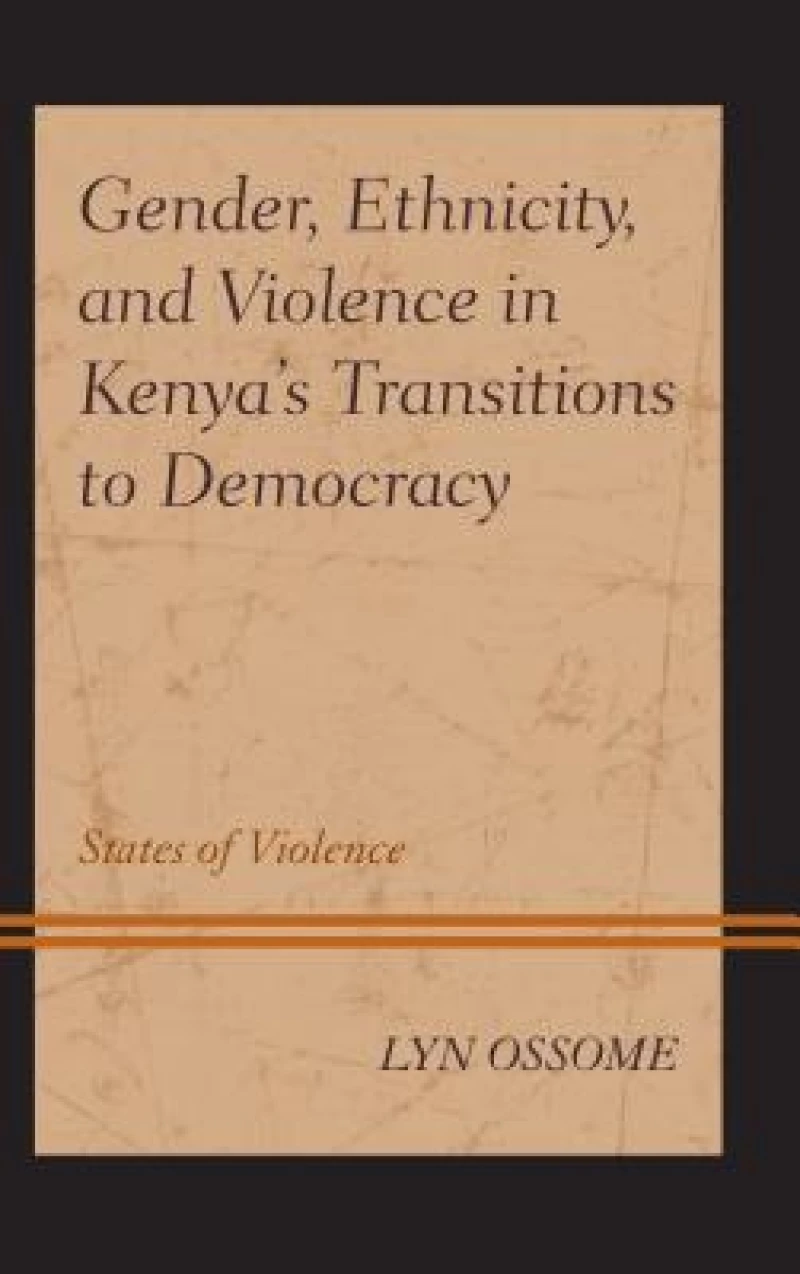
Gender, Ethnicity, and Violence in Kenya’s Transitions to Democracy : States of Violence
by
Lyn Ossome
Book Details
Format
Hardback or Cased Book
Book Series
Gender and Sexuality in Africa and the Diaspora
ISBN-10
1498558305
ISBN-13
9781498558303
Publisher
Bloomsbury Publishing Plc
Imprint
Lexington Books
Country of Manufacture
GB
Country of Publication
GB
Publication Date
Apr 2nd, 2018
Print length
236 Pages
Weight
514 grams
Dimensions
16.10 x 28.00 x 2.10 cms
Product Classification:
Violence in societyGender studies, gender groups
Ksh 17,500.00
Manufactured on Demand
0 in stock
Delivery Location
Delivery fee: Select location
Secure
Quality
Fast
Gender, Ethnicity, and Violence in Kenya’s Transitions to Democracy examines gendered violence in the context of multiparty politics in Kenya, placing it in the historical milieu of colonial rule and its legacies of the ethnicization of both state and society.
Critiquing the valorization of democracy as a means of containing violence and stabilizing political contestation, this book draws links between the democratization process and sexual/gendered violence observed against women during electioneering periods in Kenya. The book shows the contradictory relationship between democracy and gendered violence as being largely influenced in the first instance by the capitalist interests vested in the colonial state and its imperative to exploit laboring women; secondly, in the nature of the postcolonial state and politics largely captured by ethnic, bourgeois class interests; and third, influenced by neoliberal political ideology that has remained largely disarticulated from women''s structural positions in Kenyan society. It argues that colonial capitalist interests established certain patterns of gender exploitation that extended into the postcolonial period such that the indigenous bourgeoisie took the form of an ethnicized elite. Ethnicity shaped politics and neoliberal political ideology further blocked women’s integration into politics in substantive ways. It concludes that it is not so much the norms and values of liberal democracy that assist in understanding women’s exclusion, but rather the structural dynamics that have shaped women’s experiences of democratic politics. In this way, gender violence in the context of democratization and electoral violence with its gendered manifestation can be fully understood as deeply embedded in the history of the structural dynamics of colonialism, capitalism, and patriarchalism in Kenya.
Get Gender, Ethnicity, and Violence in Kenya’s Transitions to Democracy by at the best price and quality guaranteed only at Werezi Africa's largest book ecommerce store. The book was published by Bloomsbury Publishing Plc and it has pages.

