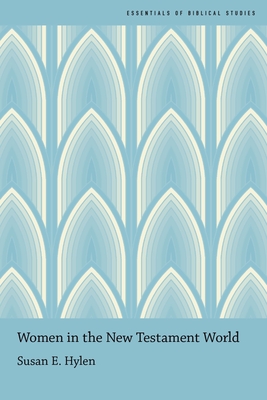
Gender Mobility : 7 Ideas about Gender in the New Testament Period
by
Susan Hylen
Book Details
Format
Hardback
ISBN-10
0197798470
ISBN-13
9780197798478
Publisher
Oxford University Press Inc
Imprint
Oxford University Press Inc
Country of Manufacture
GB
Country of Publication
GB
Publication Date
Jun 27th, 2025
Print length
192 Pages
Weight
380 grams
Dimensions
1.30 x 15.60 x 23.50 cms
KSh 16,200.00
Currently unavailable
0 in stock
Delivery Location
Delivery fee: Select location
Secure
Quality
Fast
What if our long-held understandings of gender have less historical basis than we imagine?The gender norms and sexual distinctions of the first century world that produced the New Testament were not strictly binary, as we might think. Although some ancient writers did indeed contrast male and female attributes, other social norms created considerable overlap between men and women.In Gender Mobility, Susan E. Hylen argues that the Roman gender order was definitively non-binary. She makes a compelling case that freeborn men, freeborn women, freed men, freed women, enslaved men, and enslaved women all constituted different genders. Further, specifically non-binary genders like eunuchs held a place within Roman gender norms and systems. And the possibility that some people could change gender -- what Hylen calls "gender mobility" -- was a standard feature of the period.Hylen also shows that, for the most part, gender options were not freely chosen, and moreover that gender norms were dominated by familiar forms of oppression -- a social domination that favored freeborn men and women over other groups. In this way, Hylen redirects our contemporary thinking about gender roles to the ancient past, while simultaneously opening our imaginations to other ways that societies have constructed gender. This thought-provoking book serves our own current moment as we continue to debate gender norms and the institutions that maintain them.
Get Gender Mobility by Susan Hylen at the best price and quality guaranteed only at Werezi Africa's largest book ecommerce store. The book was published by Oxford University Press Inc and it has 192 pages.
Customers Who Bought This Also Bought
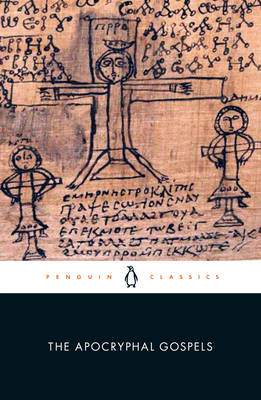
The Apocryphal Gospels
KSh 2,350.00

The Inhumanity of Right
KSh 4,850.00

Consumption and Spirituality
KSh 30,950.00
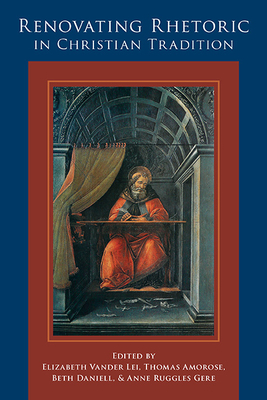
Renovating Rhetoric in Christian Tradition
KSh 8,100.00
Academic Freedom and the Telos of the Catholic University
KSh 8,100.00

Religious Liberty, Volume 3
KSh 6,650.00

Modernismus als theologischer Historismus
KSh 10,200.00

A Brief Introduction to Sociology from a Christian Perspective
KSh 10,600.00
Religious Minorities in Turkey
KSh 12,600.00
From Jamestown to Jefferson
KSh 7,550.00

The Uyghur Community
KSh 25,200.00
Race, Religion, and Resilience in the Neoliberal Age
KSh 21,600.00