
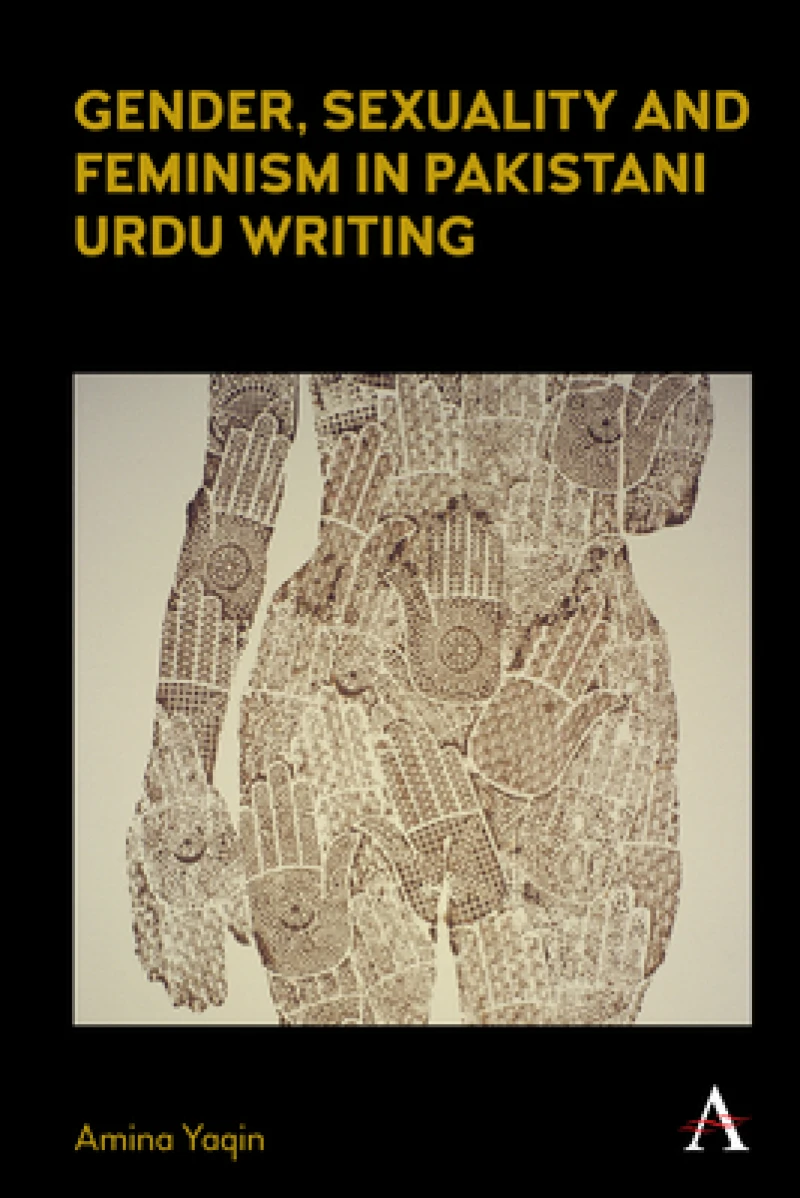
Gender, Sexuality and Feminism in Pakistani Urdu Writing
Book Details
Delivery Location
Delivery fee: Select location
As the first study of its kind, this book offers a new understanding of progressive womens poetry in Urdu and the legacy of postcolonial politics. It underlines Urdus linguistic hybridities, the context of the zenana, reform, and rekhti to illustrate how the modernising impulse under colonial rule impacted women as subjects in textual form. It argues that canonical texts for sharif women from Mirat-ul Arus to Umrao Jan Ada need to be looked at alongside womens diaries and autobiographies so that we have an overall picture of gendered lives from imaginative fiction, memoirs and biographies.
In the late nineteenth century, ideas of the cosmopolitan and local were in conversation with the secular and sacred across different Indian literatures. Emerging poets from the zenana can be traced back to Zahida Khatun Sherwania from Aligarh and Haya Lakhnavi from Lucknow who had very unique trajectories as sharif women. With the rise of anti-colonial nationalism, the Indian womens movement gathered force and those who had previously been confined to the private sphere took their place in public as speaking subjects. The influence of the Left, Marxist thought and resistance against colonial rule fired the Progressive Writers Movement in the 1930s. The pioneering writer and activist Rashid Jahan was at the helm of the movement mediating womens voices through a scientific and rational lens. She was succeeded by Ismat Chughtai, who like her contemporary Saadat Hasan Manto courted controversy by writing openly about sexualities and class. With the onset of partition, as the progressive writers were split across two nations, they carried with them the vision of a secular borderless world. In Pakistan, Urdu became an ideological ground for state formation, and Urdu writers came under state surveillance in the Cold War era. The study picks up the story of progressive women poets in Pakistan to try and understand their response to emerging dominant narratives of nation, community and gender. How did national politics and an ideological Islamisation that was at odds with a secular separation of church and state affect their writing?
Despite the disintegration of the Progressive Writers Movement and the official closure of the Left in Pakistan, the author argues that an exceptional legacy can be found in the voices of distinctive women poets including Ada Jafri, Zehra Nigah, Sara Shagufta, Parvin Shakir, Fahmida Riaz and Kishwar Naheed. Their poems offer new metaphors and symbols borrowing from feminist thought and a hybrid Islamicate culture. Riaz and Naheed joined forces with the womens movement in Pakistan in the 1980s and caused some discomfort amongst Urdu literary circles with their writing. Celebrated across both sides of the border, their poetry and politics is less well known than the verse of the progressive poet par excellence Faiz Ahmed Faiz or the hard hitting lyrics of Habib Jalib. The book demonstrates how they manipulate and appropriate a national language as mother tongue speakers to enunciate a middle ground between the sacred and secular. In doing so they offer a new aesthetic that is inspired by activism and influenced by feminist philosophy.
In this book, the author critically interrogates the construction of gender, community and nation in the work of progressive women poets. The book combines the study of nation and community through a close engagement with Urdu literary culture in the twentieth century and particularly the work of pioneering literary women. It argues that gender and sexuality become fixed signifiers in the trauma of partition and the formation of the post-partition Islamic nation. The story of literary women in Pakistan taking up the mantle of public poets thus has to be understood in relation to the history of reform, anti-colonial resistance and a transnational Islamicate culture. The book examines the presence of feminist thought in the work of progressive women poets charting their interrogation of the clash between secular and sacred values and the increasing split between liberal and Islamic nationalism. The book suggests that through their writing and experiences, women have negotiated sacred and secular spaces to move beyond a community that is subservient to nationalist ideology.
Get Gender, Sexuality and Feminism in Pakistani Urdu Writing by at the best price and quality guaranteed only at Werezi Africa's largest book ecommerce store. The book was published by Anthem Press and it has pages.

