
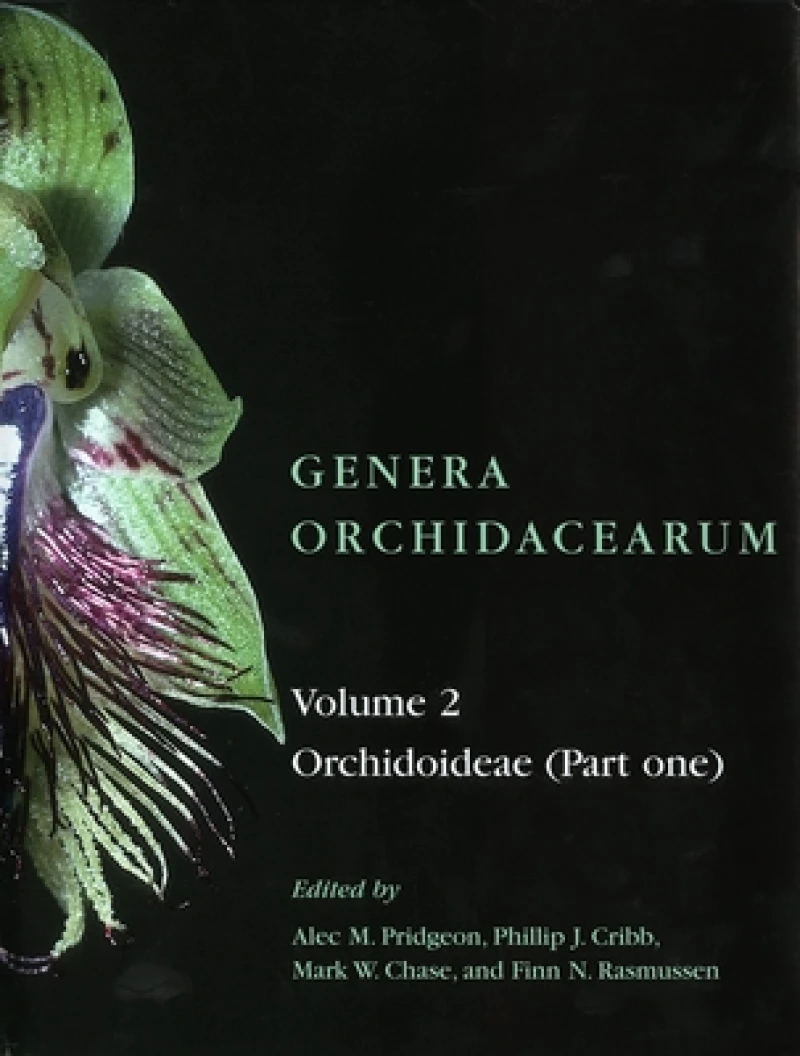
Genera Orchidacearum: Volume 2. Orchidoideae (Part 1)
Book Details
Format
Hardback or Cased Book
Book Series
Genera Orchidacearum
ISBN-10
0198507100
ISBN-13
9780198507109
Publisher
Oxford University Press
Imprint
Oxford University Press
Country of Manufacture
GB
Country of Publication
GB
Publication Date
Jan 18th, 2001
Print length
438 Pages
Weight
1,450 grams
Dimensions
28.70 x 22.20 x 3.20 cms
Product Classification:
EvolutionPlant ecology
Ksh 36,000.00
Manufactured on Demand
0 in stock
Delivery Location
Delivery fee: Select location
Secure
Quality
Fast
Orchids are among the most popular and widely collected of plant families, with tropical species and hybrids being cultivated the world over. This volume covers the first 100 species of the Orchidaceae family. It is useful both for scientists and for orchid breeders, and for collectors and enthusiasts.
Orchidaceae are the largest monocot family and likely the largest plant family in terms of number of species (ca. 20,000), but for a variety of reasons it remains one of the least understood: lack of a fossil record, relative scarcity of active research until recent years, size and geographical distribution of the family, and the largely tropical distribution of most, which hinders access. The early classifications and generic circumscriptions of Lindley (1830-1840), Bentham and Hooker (1883) and Schlechter (1927) relied mainly on morphological characters, especially floral features. The problem with such reliance on floral features at higher levels of classification is that floral morphology is extremely plastic in evolutionary terms, so that unrelated species may have developed similar structures in response to similar selection, particularly pollinator pressures. Such parallelisms are rife in Orchidaceae, so it is necessary to apply more objective criteria and character choices in trying to unravel the complexities of the family''s history. Robert L. Dressler''s (Phylogeny and Classification of the Orchid Family, Cambridge University Press, 1993) classification introduced characters from pollen, seeds, and anatomy to supplement traditional characters. The recent surge in molecular approaches, especially multigene analyses, combined with several other types of new data, had not only contradicted key elements of Dressler''s concepts at higher levels but will result in the recircumscription of many genera. The aim of Genera Orchidacearum is therefore to produce a more robust and natural account of the orchids at the generic level, incorporate the wealth of new molecular data in a truly phylogenetic classification, and identify those areas and taxa that need additional work.
Get Genera Orchidacearum: Volume 2. Orchidoideae (Part 1) by at the best price and quality guaranteed only at Werezi Africa's largest book ecommerce store. The book was published by Oxford University Press and it has pages.

