
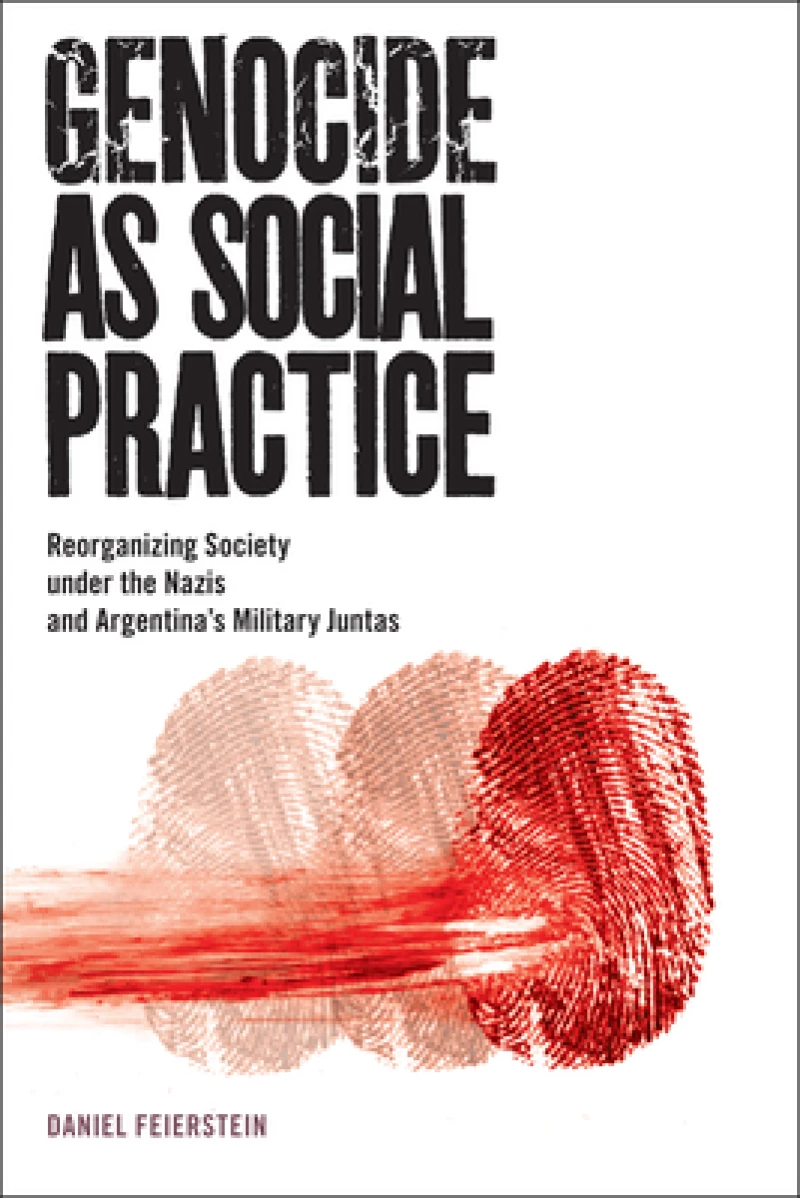
Genocide As Social Practice : Reorganizing Society Under the Nazis and Argentina's Military Juntas
Book Details
Format
Hardback or Cased Book
Book Series
Genocide, Political Violence, Human Rights
ISBN-10
0813563186
ISBN-13
9780813563183
Publisher
Rutgers University Press
Imprint
Rutgers University Press
Country of Manufacture
US
Country of Publication
GB
Publication Date
May 14th, 2014
Print length
288 Pages
Weight
513 grams
Dimensions
22.90 x 15.20 x 2.30 cms
Product Classification:
Social & cultural historyEthnic studiesHispanic & Latino studies
Ksh 21,600.00
Werezi Extended Catalogue
0 in stock
Delivery Location
Delivery fee: Select location
Secure
Quality
Fast
Genocide not only annihilates people but also destroys and reorganizes social relations, using terror as a method. In Genocide as Social Practice, social scientist Daniel Feierstein looks at the policies of state-sponsored repression pursued by the Argentine military dictatorship against political opponents between 1976 and 1983 and those pursued by the Third Reich between 1933 and 1945. He finds similarities, not in the extent of the horror but in terms of the goals of the perpetrators. The Nazis resorted to ruthless methods in part to stifle dissent but even more importantly to reorganize German society into a Volksgemeinschaft, or people’s community, in which racial solidarity would supposedly replace class struggle. The situation in Argentina echoes this. After seizing power in 1976, the Argentine military described its own program of forced disappearances, torture, and murder as a “process of national reorganization” aimed at remodeling society on “Western and Christian” lines. For Feierstein, genocide can be considered a technology of power-a form of social engineering-that creates, destroys, or reorganizes relationships within a given society. It influences the ways in which different social groups construct their identity and the identity of others, thus shaping the way that groups interrelate. Feierstein establishes continuity between the “reorganizing genocide” first practiced by the Nazis in concentration camps and the more complex version-complex in terms of the symbolic and material closure of social relationships -later applied in Argentina. In conclusion, he speculates on how to construct a political culture capable of confronting and resisting these trends. First published in Argentina, in Spanish, Genocide as Social Practice has since been translated into many languages, now including this English edition. The book provides a distinctive and valuable look at genocide through the lens of Latin America as well as Europe. Download open access ebook here.
Get Genocide As Social Practice by at the best price and quality guaranteed only at Werezi Africa's largest book ecommerce store. The book was published by Rutgers University Press and it has pages.

