
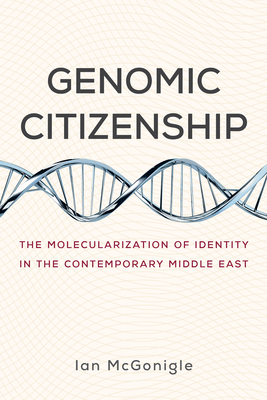
Genomic Citizenship : The Molecularization of Identity in the Contemporary Middle East
Book Details
Format
Paperback / softback
ISBN-10
0262542943
ISBN-13
9780262542944
Publisher
MIT Press Ltd
Imprint
MIT Press
Country of Manufacture
US
Country of Publication
GB
Publication Date
Aug 24th, 2021
Print length
216 Pages
Weight
358 grams
Dimensions
15.20 x 30.90 x 1.60 cms
Product Classification:
Biology, life sciences
KSh 12,950.00
Werezi Extended Catalogue
Delivery in 12 days
5 copies in stock
Delivery Location
Delivery fee: Select location
Delivery in 12 days
Secure
Quality
Fast
An anthropological study based on ethnographic work in Israel and Qatar explores the relationship between science, particularly genetics, and national identity.
Based on ethnographic work in Israel and Qatar, two small Middle Eastern ethnonations with significant biomedical resources, Genomic Citizenship explores the relationship between science and identity. Ian McGonigle, originally trained as a biochemist, draws on anthropological theory, STS, intellectual history, critical theory, Middle Eastern studies, cultural studies, and critical legal studies. He connects biomedical research on ethnic populations to the political, economic, legal, and historical context of the state; to global trends in genetic medicine; and to the politics of identity in the context of global biomedical research.
Genomic Citizenship is more an anthropology of scientific objects than an anthropology of scientists or an ethnography of the laboratory. McGonigle bases his untraditional project on traditional anthropological methods, including participant observation. Some of the most persuasive data in the book are from public records, legal and historical sources, published scientific papers, institutional reports, websites, and brochures.
McGonigle discusses biological understandings of Jewishness, especially in relation to the intellectual history of Zionism and Jewish political thought, and considers the possibility of a novel application of genetics in assigning Israeli citizenship. He also describes developments in genetic medicine in Qatar and analyzes the Qatari Biobank in the context of Qatari nationalism and state-building projects. Considering possible consequences of findings on the diverse origins of the Qatari population for tribal identities, he argues that the nation cannot be defined as either a purely natural or biological entity. Rather, it is reified, reinscribed, and refracted through genomic research and discourse.
Based on ethnographic work in Israel and Qatar, two small Middle Eastern ethnonations with significant biomedical resources, Genomic Citizenship explores the relationship between science and identity. Ian McGonigle, originally trained as a biochemist, draws on anthropological theory, STS, intellectual history, critical theory, Middle Eastern studies, cultural studies, and critical legal studies. He connects biomedical research on ethnic populations to the political, economic, legal, and historical context of the state; to global trends in genetic medicine; and to the politics of identity in the context of global biomedical research.
Genomic Citizenship is more an anthropology of scientific objects than an anthropology of scientists or an ethnography of the laboratory. McGonigle bases his untraditional project on traditional anthropological methods, including participant observation. Some of the most persuasive data in the book are from public records, legal and historical sources, published scientific papers, institutional reports, websites, and brochures.
McGonigle discusses biological understandings of Jewishness, especially in relation to the intellectual history of Zionism and Jewish political thought, and considers the possibility of a novel application of genetics in assigning Israeli citizenship. He also describes developments in genetic medicine in Qatar and analyzes the Qatari Biobank in the context of Qatari nationalism and state-building projects. Considering possible consequences of findings on the diverse origins of the Qatari population for tribal identities, he argues that the nation cannot be defined as either a purely natural or biological entity. Rather, it is reified, reinscribed, and refracted through genomic research and discourse.
Get Genomic Citizenship by Ian McGonigle at the best price and quality guaranteed only at Werezi Africa's largest book ecommerce store. The book was published by MIT Press Ltd and it has 216 pages.
Customers Who Bought This Also Bought

Biology for Cambridge International AS & A Level Coursebook
KSh 12,150.00

Biology for the IB MYP 4 & 5
KSh 9,950.00
The Origin of Language
KSh 4,500.00

Animal Vegetable Criminal
KSh 1,800.00

Pearson Edexcel International A Level Biology Student Book
KSh 8,450.00

Pearson Edexcel International AS Level Biology Student Book
KSh 8,300.00

Pearson Edexcel International A Level Biology Lab Book
KSh 1,800.00

Bonk
KSh 2,000.00

The Gene
KSh 4,350.00
Caie as & a Level Biology SB
KSh 10,550.00

A-Level Biology: AQA Year 1 & 2 Complete Revision & Practice with Online Edition
KSh 4,450.00
They Had Names
KSh 3,900.00
More in This Genre
Biology for Cambridge International AS & A Level Coursebook
KSh 12,150.00
Biology for the IB MYP 4 & 5
KSh 9,950.00
The Origin of Language
KSh 4,500.00
Animal Vegetable Criminal
KSh 1,800.00
Pearson Edexcel International A Level Biology Student Book
KSh 8,450.00
Pearson Edexcel International AS Level Biology Student Book
KSh 8,300.00
