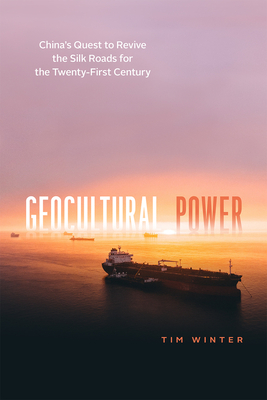
Geocultural Power : China's Quest to Revive the Silk Roads for the Twenty-First Century
Abridged
by
Tim Winter
Book Details
Format
Hardback
Book Series
Silk Roads
ISBN-10
022665821X
ISBN-13
9780226658216
Edition
Abridged
Publisher
The University of Chicago Press
Imprint
University of Chicago Press
Country of Manufacture
US
Country of Publication
GB
Publication Date
Oct 7th, 2019
Print length
304 Pages
Weight
510 grams
Dimensions
23.60 x 15.70 x 2.40 cms
Product Classification:
Asian historyInternational relationsInternational economicsGeography
KSh 13,150.00
Currently unavailable
0 in stock
Delivery Location
Delivery fee: Select location
Secure
Quality
Fast
Launched in 2013, China's Belt and Road Initiative is forging connections in infrastructure, trade, energy, finance, tourism, and culture across Eurasia and Africa. This extraordinarily ambitious strategy places China at the center of a geography of overland and maritime connectivity stretching across more than sixty countries and incorporating almost two-thirds of the world's population. But what does it mean to revive the Silk Roads for the twenty-first century? Geocultural Power explores this question by considering how China is couching its strategy for building trade, foreign relations, and energy and political security in an evocative topography of history. Until now Belt and Road has been discussed as a geopolitical and geoeconomic project. This book introduces geocultural power to the analysis of international affairs. Tim Winter highlights how many countries--including Iran, Sri Lanka, Kenya, Malaysia, Indonesia, Pakistan, and others--are revisiting their histories to find points of diplomatic and cultural connection. Through the revived Silk Roads, China becomes the new author of Eurasian history and the architect of the bridge between East and West. In a diplomatic dance of forgetting, episodes of violence, invasion, and bloodshed are left behind for a language of history and heritage that crosses borders in ways that further the trade ambitions of an increasingly networked China-driven economy.
Launched in 2013, China's Belt and Road Initiative is forging connections in infrastructure, trade, energy, finance, tourism, and culture across Eurasia and Africa. This extraordinarily ambitious strategy places China at the center of a geography of overland and maritime connectivity stretching across more than sixty countries and incorporating almost two-thirds of the world’s population. But what does it mean to revive the Silk Roads for the twenty-first century?
Geocultural Power explores this question by considering how China is couching its strategy for building trade, foreign relations, and energy and political security in an evocative topography of history. Until now Belt and Road has been discussed as a geopolitical and geoeconomic project. This book introduces geocultural power to the analysis of international affairs. Tim Winter highlights how many countries—including Iran, Sri Lanka, Kenya, Malaysia, Indonesia, Pakistan, and others—are revisiting their histories to find points of diplomatic and cultural connection. Through the revived Silk Roads, China becomes the new author of Eurasian history and the architect of the bridge between East and West. In a diplomatic dance of forgetting, episodes of violence, invasion, and bloodshed are left behind for a language of history and heritage that crosses borders in ways that further the trade ambitions of an increasingly networked China-driven economy.
Geocultural Power explores this question by considering how China is couching its strategy for building trade, foreign relations, and energy and political security in an evocative topography of history. Until now Belt and Road has been discussed as a geopolitical and geoeconomic project. This book introduces geocultural power to the analysis of international affairs. Tim Winter highlights how many countries—including Iran, Sri Lanka, Kenya, Malaysia, Indonesia, Pakistan, and others—are revisiting their histories to find points of diplomatic and cultural connection. Through the revived Silk Roads, China becomes the new author of Eurasian history and the architect of the bridge between East and West. In a diplomatic dance of forgetting, episodes of violence, invasion, and bloodshed are left behind for a language of history and heritage that crosses borders in ways that further the trade ambitions of an increasingly networked China-driven economy.
Get Geocultural Power by Tim Winter at the best price and quality guaranteed only at Werezi Africa's largest book ecommerce store. The book was published by The University of Chicago Press and it has 304 pages.
Customers Who Bought This Also Bought

From Third World to First
KSh 3,200.00
Breakneck
KSh 4,500.00

India After Gandhi
KSh 4,850.00

Anarchy
KSh 2,700.00

On China
KSh 3,400.00
Apostles of Development
KSh 5,600.00
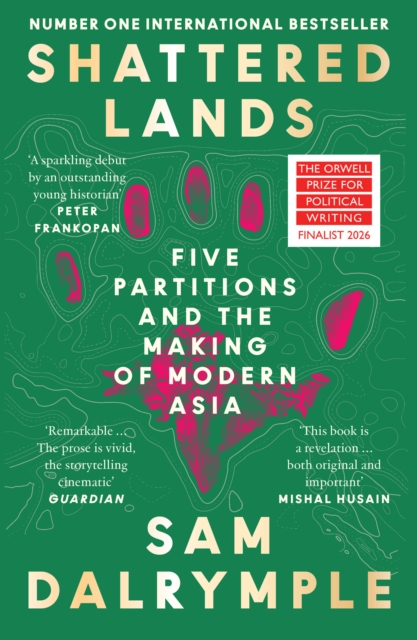
Shattered Lands
KSh 2,000.00
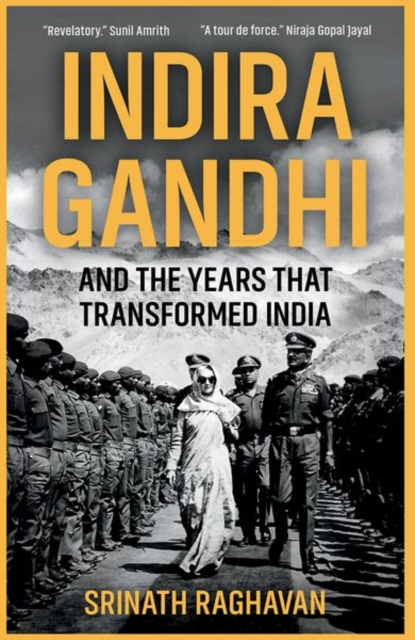
Indira Gandhi and the Years that Transformed India
KSh 5,050.00
India: A Wounded Civilization
KSh 2,000.00
Shattered Lands
KSh 3,200.00
Games without Rules
KSh 2,900.00

Ghost Nation
KSh 3,950.00