
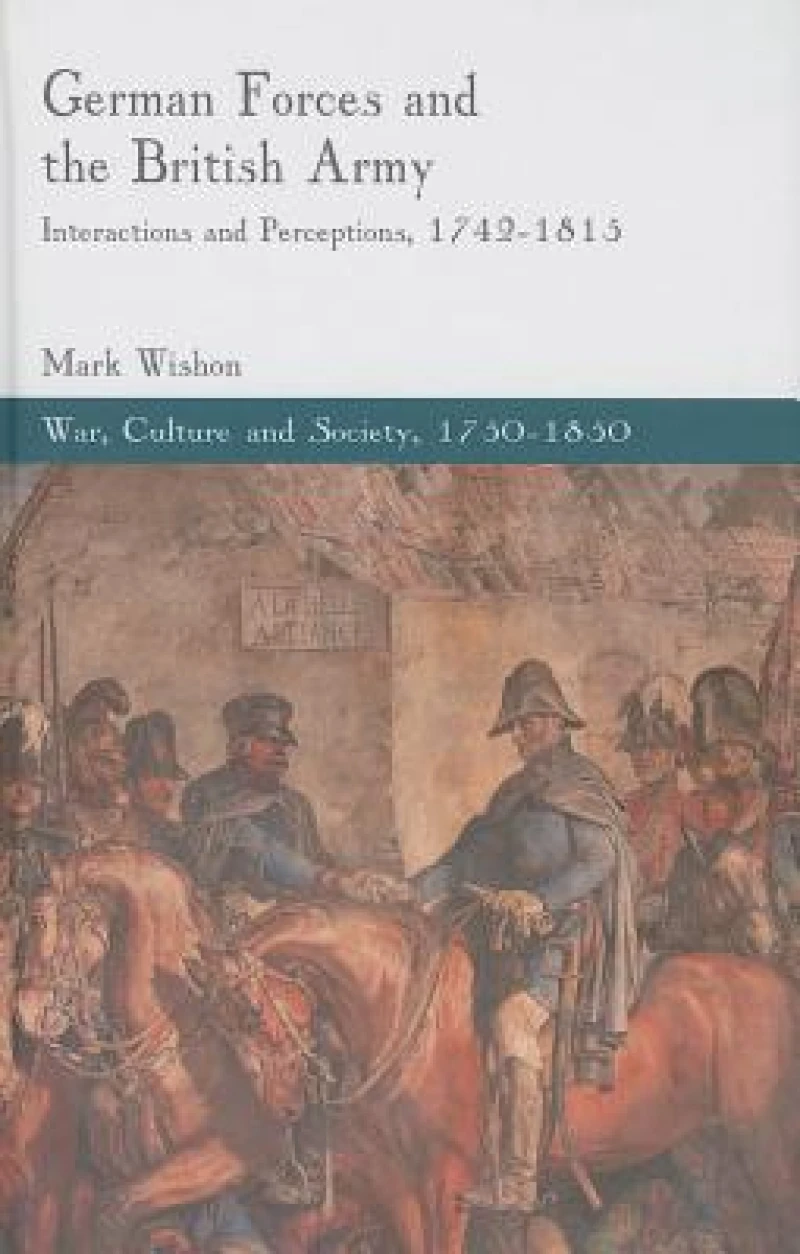
German Forces and the British Army : Interactions and Perceptions, 1742-1815
by
M. Wishon
Book Details
Format
Hardback or Cased Book
Book Series
War, Culture and Society, 1750–1850
ISBN-10
1137284005
ISBN-13
9781137284006
Publisher
Palgrave Macmillan
Imprint
Palgrave Macmillan
Country of Manufacture
GB
Country of Publication
GB
Publication Date
Jul 19th, 2013
Print length
271 Pages
Weight
448 grams
Dimensions
22.00 x 14.00 x 2.00 cms
Ksh 8,100.00
Werezi Extended Catalogue
0 in stock
Delivery Location
Delivery fee: Select location
Secure
Quality
Fast
This book examines the partnerships between Britain's famed redcoats and the foreign corps that were a consistent and valuable part of Britain's military endeavors in the eighteenth century. While most histories have portrayed these associations as fraught with discord, a study of eyewitness accounts tells a different story.
Throughout the ''long eighteenth century'' Britain was heavily reliant upon soldiers from states within the Holy Roman Empire to augment British forces during times of war, especially in the repeated conflicts with France. The disparity in populations between these two rival powers, and the British public''s reluctance to maintain a large standing army, made this external source of manpower of crucial importance. Whereas the majority of these forces were acting in the capacity of allies, ''auxiliary'' forces were hired as well, and from the mid-century onwards, a small but steadily increasing number of German men would serve within British regiments or distinct formations referred to as ''Foreign Corps''. Employing, or allying with these troops would result in these Anglo-German armies operating not only on the European continent but in the American Colonies, Caribbean and within the British Isles as well.
Within these multinational coalitions, soldiers would encounter and interact with one another in a variety of professional and informal venues, and many participants recorded their opinions of these foreign ''brother-soldiers'' in journals, private correspondence, or memoirs. Although their impressions borrowed from many prevalent stereotypes, especially in analyses concerning national character, these soldiers had a unique perspective and their writings reflect this. These men belonged to the soldiering profession, and this solidarity among military men would often focus their attention away from national or cultural distinctions, and towards defining how their allies adhered to the common ideal of a good soldier. The result was that though the British public may have maintained a derogatory attitude towards German soldiers, Britain''s own military men - due to shared identities and experiences - viewed them far more favourably.
Within these multinational coalitions, soldiers would encounter and interact with one another in a variety of professional and informal venues, and many participants recorded their opinions of these foreign ''brother-soldiers'' in journals, private correspondence, or memoirs. Although their impressions borrowed from many prevalent stereotypes, especially in analyses concerning national character, these soldiers had a unique perspective and their writings reflect this. These men belonged to the soldiering profession, and this solidarity among military men would often focus their attention away from national or cultural distinctions, and towards defining how their allies adhered to the common ideal of a good soldier. The result was that though the British public may have maintained a derogatory attitude towards German soldiers, Britain''s own military men - due to shared identities and experiences - viewed them far more favourably.
Get German Forces and the British Army by at the best price and quality guaranteed only at Werezi Africa's largest book ecommerce store. The book was published by Palgrave Macmillan and it has pages.

