
Book Details
Format
Paperback / softback
Book Series
World Regional Geography Book Series
ISBN-10
3030929558
ISBN-13
9783030929558
Edition
2022 ed.
Publisher
Springer Nature Switzerland AG
Imprint
Springer Nature Switzerland AG
Country of Manufacture
GB
Country of Publication
GB
Publication Date
Mar 4th, 2023
Print length
300 Pages
Weight
964 grams
Dimensions
27.70 x 21.20 x 1.80 cms
KSh 12,600.00
Werezi Extended Catalogue
Delivery in 12 days
3 copies in stock
Delivery Location
Delivery fee: Select location
Delivery in 12 days
Secure
Quality
Fast
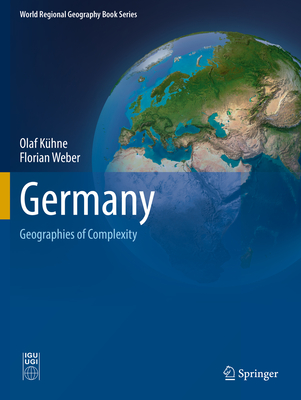
This book addresses the highly differentiated spatial, social, cultural and demographic structure(s) of Germany, with a particular focus on the reciprocal relations between different levels of spatial development. The historical development of Germany serves as a background in order to provide context for the development of spatially relevant ideas and ideals (whether in relation to politics, landscape, or culture). In this regard, questions of divergence and convergence become highly salient. The book makes the complexity of spatial and social developments in Germany comprehensible. The neopragmatic approach adopted here allows bringing together different theoretical strands while providing a basis for independent regional geographic research at the same time. Beginning with an overview of the physical structures of Germany which provides the material point of departure for the societal development of Germany, key aspects of the German history are discussed. Particular attention is paid to the reciprocal influence between material substrate and notions of landscape. Here, specific ‘German’ trajectories of aesthetic and normative conceptions of landscape become clear. A common theme throughout the book are questions of divergence and of efforts towards convergence, which become evident when considering past and present economic, political, and demographic developments. Efforts to tackle current challenges, such as adapting to climate change and mitigating it, or securing raw materials, also become apparent. The complexity of spatial processes in Germany is illustrated in case study regions dealing with the challenges of structural change in traditional industrial regions (such as the Ruhr area), or e.g. efforts of Berlin to position and find itself as the capital of a unified Germany. Overall, the book shows how theory-driven regional geographic research can make spatiotemporal complexities tangible and comprehensible.
Get Germany by Florian Weber, Olaf Kuhne at the best price and quality guaranteed only at Werezi Africa's largest book ecommerce store. The book was published by Springer Nature Switzerland AG and it has 300 pages.
Customers Who Bought This Also Bought

How Africa Works
KSh 3,050.00

Development as Freedom
KSh 2,900.00

How Africa Works
KSh 4,500.00

Anti-Politics Machine
KSh 3,750.00

We Are Not Able to Live in the Sky
KSh 3,400.00
Apostles of Development
KSh 5,600.00

The Bottom Billion
KSh 2,500.00

Indigenous Knowledge Inquiries
KSh 6,600.00

Why Africa is poor
KSh 2,350.00

Historical Dictionary of Aid and Development Organizations
KSh 12,050.00

Contemporary Latin American Architecture
KSh 7,900.00
The Poverty of Growth
KSh 2,900.00
More by Florian Weber, Olaf Kuhne

San Diego
KSh 7,200.00

Failing Beautifully in Science
KSh 4,500.00

Zur Aktualität von Ralf Dahrendorf
KSh 5,400.00

Freiheit und Landschaft
KSh 9,900.00
Landschaftsgovernance
KSh 3,250.00

Distinktion - Macht - Landschaft
KSh 8,100.00

Panrelations and Vocabularies on the Way to a Neopragmatist Synthesis for Social and Spatial Sciences
KSh 9,900.00
Ralf Dahrendorf
KSh 16,200.00

Landschaft zwischen Philosophie und Sozialwissenschaften
KSh 4,500.00

Theorien Sozialer Konflikte ? Vom Überblick Zur Konzeptionellen Weiterentwicklung
KSh 3,600.00
Liberty and Landscape
KSh 18,000.00

Landscape and Power in Geographical Space as a Social-Aesthetic Construct
KSh 8,100.00
