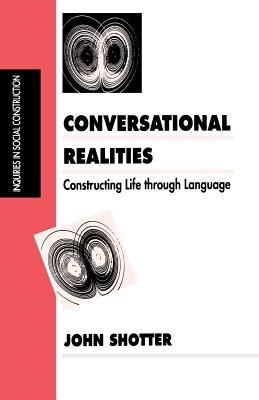
Getting It : Withness-Thinking and the Dialogical in Practice
by
John Shotter
Book Details
Format
Paperback / softback
ISBN-10
1612890350
ISBN-13
9781612890357
Publisher
Hampton Press Inc
Imprint
Hampton Press Inc
Country of Manufacture
US
Country of Publication
GB
Publication Date
Aug 30th, 2011
Print length
242 Pages
Weight
368 grams
Dimensions
15.30 x 22.80 x 1.90 cms
Product Classification:
Psychology
KSh 4,050.00
Publisher Out of Stock
0 in stock
Delivery Location
Delivery fee: Select location
Secure
Quality
Fast
This is for reflective practitioners, for people wishing to inquire into what is involved in thinking "in the moment" when encountering unique, "first-time" events. It is also about complexity considered as a third realm of mysterious events subsisting between those we call problems which we can solve by rational thought, and those we call ineffable which we cannot at all describe in words
This is a book for reflective practitioners, for people wishing to inquire into what is involved in thinking "in the moment" when encountering unique, "first-time" events. It is also a book about complexity considered as a third realm of mysterious events subsisting between those we call problems which we can solve by rational thought, and those we call ineffable which we cannot at all describe in words–for we can, with the help of Wittgenstein’s methods, Shotter claims, find our "way about" within this realm of the mysterious, even though we may never fully understand it.
Thus, instead of thinking about the difficulties we encounter in life, as if they are objects "over there" in the world about us, Shotter argues that if we can "relate to" and "enter into" our difficulties in an exploratory fashion–a process that he calls withness-thinking–then felt action-guiding anticipations will in fact emerge within us as to how we might next act in relation to overcoming each unique difficulty we face.
Thus Shotter’s inquiry is not to do theories, with any general ways of thinking. His focus is on our living, bodily activities, and the ways in which they are always spontaneously responsive to their particular surroundings, as well as always being expressive in some way to others.
But more than this. When two or more of us gather together in meetings, and our activities intertwine, something novel, an "it", characteristic of our situation as an integrated whole is always created between us. This is why the book is called "Getting It": for it is the unique nature of these situated "its" that we must sense, and do detailed justice to, if we are to fit our practices to the requirements of our always unique circumstances.
Thus, instead of thinking about the difficulties we encounter in life, as if they are objects "over there" in the world about us, Shotter argues that if we can "relate to" and "enter into" our difficulties in an exploratory fashion–a process that he calls withness-thinking–then felt action-guiding anticipations will in fact emerge within us as to how we might next act in relation to overcoming each unique difficulty we face.
Thus Shotter’s inquiry is not to do theories, with any general ways of thinking. His focus is on our living, bodily activities, and the ways in which they are always spontaneously responsive to their particular surroundings, as well as always being expressive in some way to others.
But more than this. When two or more of us gather together in meetings, and our activities intertwine, something novel, an "it", characteristic of our situation as an integrated whole is always created between us. This is why the book is called "Getting It": for it is the unique nature of these situated "its" that we must sense, and do detailed justice to, if we are to fit our practices to the requirements of our always unique circumstances.
Get Getting It by John Shotter at the best price and quality guaranteed only at Werezi Africa's largest book ecommerce store. The book was published by Hampton Press Inc and it has 242 pages.
Customers Who Bought This Also Bought

This Too Shall Pass
KSh 2,000.00

Maybe You Should Talk to Someone
KSh 2,000.00
David and Goliath
KSh 2,350.00
Corruptible
KSh 2,350.00

Damaged but Not Destroyed
KSh 4,850.00
Antifragile
KSh 2,700.00
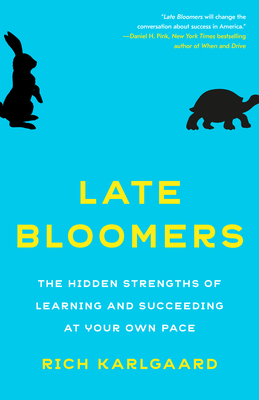
Late Bloomers
KSh 2,700.00

Mind Fixers – Psychiatry`s Troubled Search for the Biology of Mental Illness
KSh 2,900.00

The Life Of The Mind
KSh 3,950.00
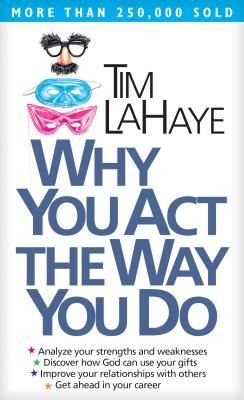
Why You Act the Way You Do
KSh 1,600.00

Lost Girls
KSh 2,000.00

Dark Psychology and Manipulation
KSh 3,550.00