
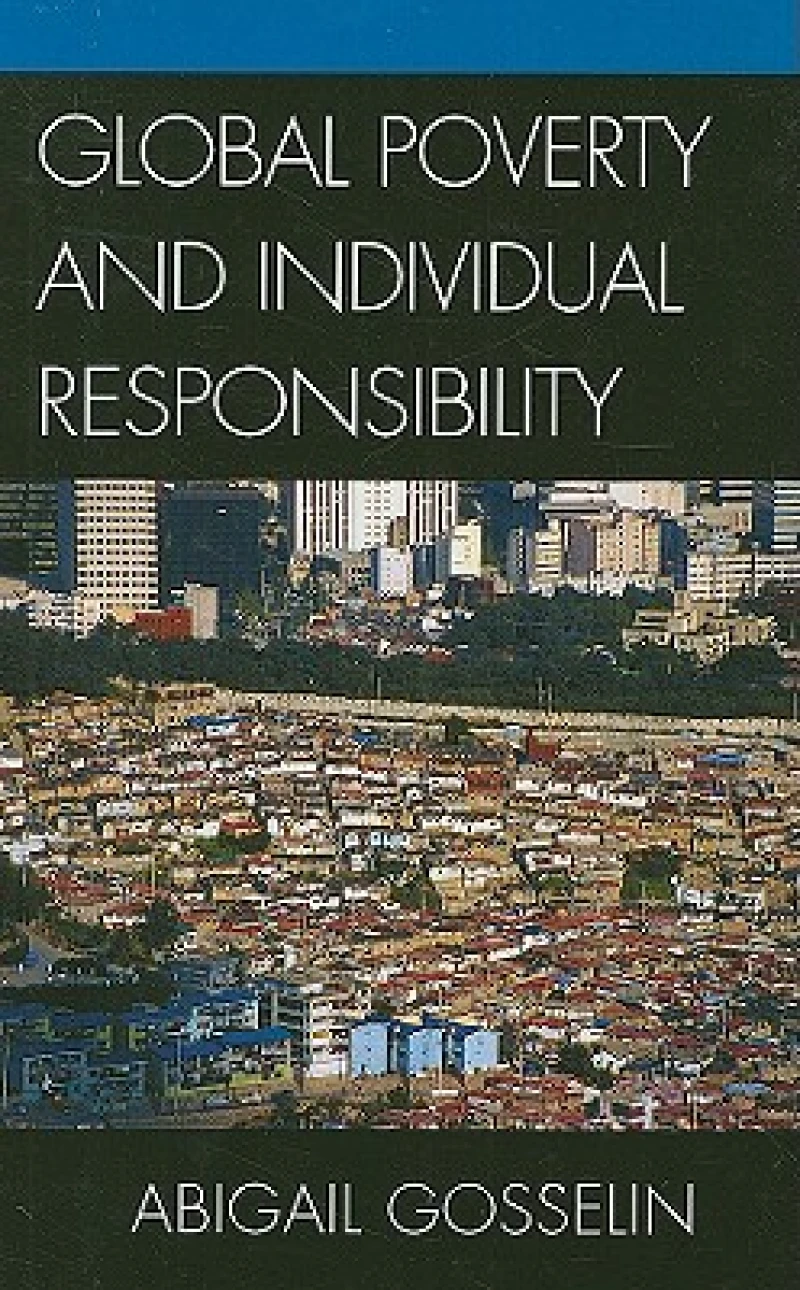
Global Poverty and Individual Responsibility
Book Details
Format
Hardback or Cased Book
ISBN-10
0739122908
ISBN-13
9780739122907
Publisher
Bloomsbury Publishing Plc
Imprint
Lexington Books
Country of Manufacture
GB
Country of Publication
GB
Publication Date
Jan 16th, 2009
Print length
228 Pages
Weight
490 grams
Dimensions
23.90 x 16.30 x 2.00 cms
Ksh 19,350.00
Manufactured on Demand
0 in stock
Delivery Location
Delivery fee: Select location
Secure
Quality
Fast
This book considers what responsibilities affluent individuals have toward global poverty, given that global poverty is a problem with structural, political causes, and one that generally requires collective action. While philosophers have tended to address responsibility for global poverty in exclusively moral, political, or legal ways, Gosselin examines the intersection of these three approaches, giving a comprehensive look at affluent individuals'' relationships to poverty. She thus provides both a survey of existing literature on responsibility for global poverty, as well as a positive proposal for a pluralistic and differentiated account of individual duties based on a person''s moral agency, her roles within collective groups (including her occupational and civic roles), and her institutional identities as citizen and consumer. While the agents most responsible for addressing global poverty are collectives like governments and corporations, individuals have various kinds of duties to ensure that relevant groups carry out their collective responsibilities. Gosselin examines three kinds of duties at length, each with its own chapter: beneficence, redress, and institutional justice. Situating each duty in the relevant literature (moral, legal, and political philosophy), she explains how the duty is justified, who are its appropriate duty-bearers, and what actions it requires of individuals. Real-life examples that analyze causes, identify responsible agents, and explain the nature of this responsibility show the applicability of each duty to particular situations of poverty. The final chapter summarizes the many and differentiated duties individuals have based on their moral, institutional, and role identities, which in turn are based on how they are situated with respect to the global poor. A suggested list of particular actions individuals should take is given.
Get Global Poverty and Individual Responsibility by at the best price and quality guaranteed only at Werezi Africa's largest book ecommerce store. The book was published by Bloomsbury Publishing Plc and it has pages.

