
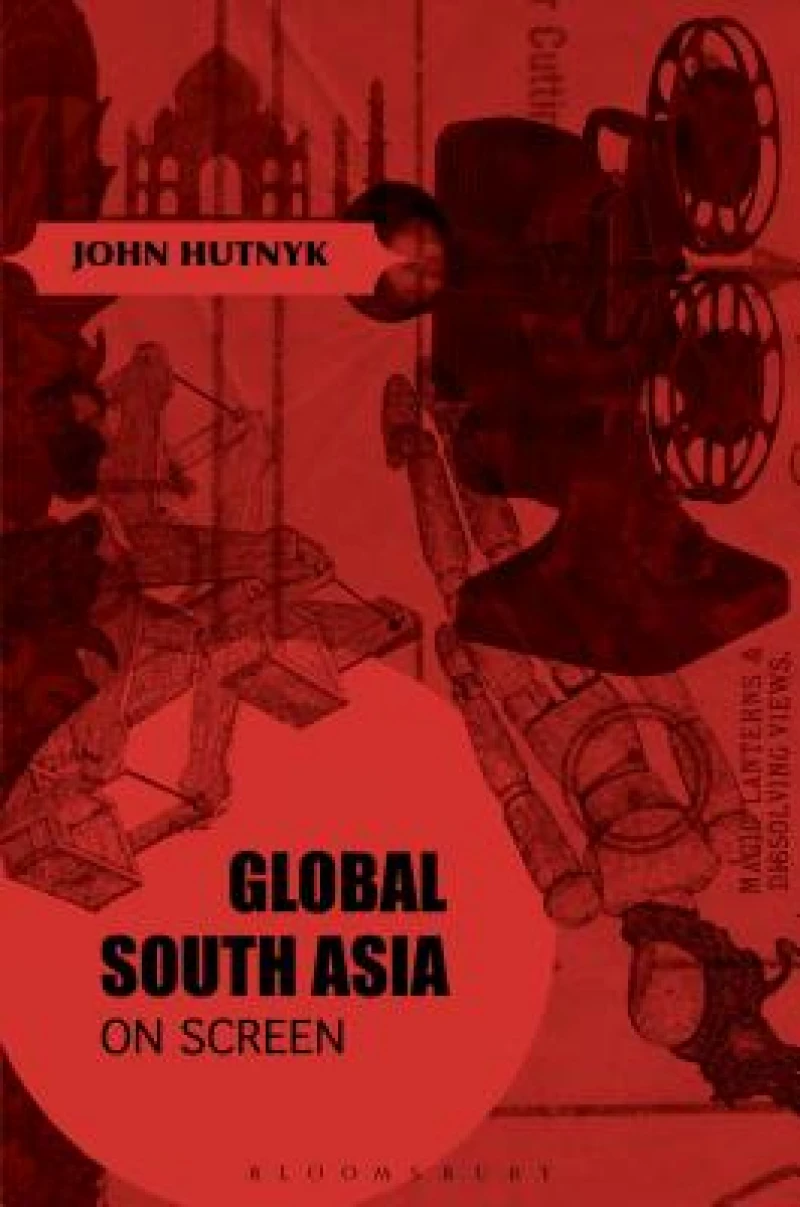
Global South Asia on Screen
by
John Hutnyk
Book Details
Format
Paperback / Softback
ISBN-10
1501324950
ISBN-13
9781501324956
Publisher
Bloomsbury Publishing Plc
Imprint
Bloomsbury Academic USA
Country of Manufacture
GB
Country of Publication
GB
Publication Date
Dec 26th, 2019
Print length
272 Pages
Weight
394 grams
Dimensions
16.50 x 22.90 x 1.30 cms
Product Classification:
Films, cinema
Ksh 7,100.00
Manufactured on Demand
Delivery in 29 days
Delivery Location
Delivery fee: Select location
Delivery in 29 days
Secure
Quality
Fast
With importance for geopolitical cultural economy, anthropology, and media studies, John Hutnyk brings South Asian circuits of scholarship to attention where, alongside critical Marxist and poststructuralist authors, a new take on film and television is on offer. The book presents Raj-era costume dramas as a commentary on contemporary anti-Muslim racism, a new political compact in film and television studies, and the President watching a snuff film from Pakistan. Hanif Kureishi's postcolonial 'fuck Sandwich' sits alongside Salman Rushdie's Satanic Verses, updated for the war on terror with low-brow, high-brow versions of Asia that carry us up the Himalayas with magic carpet TV nostalgia. Maoists rage below and books go up in flames while News network phone-ins end with executions on the Hanging Channel and arms trade and immigration paranoia thrives. Multiplying filmi versions of Mela are measured against a transnational realignment towards Global South Asia in a contested and testing political future. Each chapter offers a slice of historical study and assessment of media theory appropriate for viewers of Global South Asia seeking to understand why lurid exoticism and paralysing terror go hand-in-hand. The answers are in the images always open to interpretation, but Global South Asia on Screen examines the ways film and TV trade on stereotype and fear, nationalism and desire, politics and context, and with this the book calls for wider reading than media theory has hitherto entertained.
With importance for geopolitical cultural economy, anthropology, and media studies, John Hutnyk brings South Asian circuits of scholarship to attention where, alongside critical Marxist and poststructuralist authors, a new take on film and television is on offer.
The book presents Raj-era costume dramas as a commentary on contemporary anti-Muslim racism, a new political compact in film and television studies, and the President watching a snuff film from Pakistan. Hanif Kureishi''s postcolonial ''fuck Sandwich'' sits alongside Salman Rushdie''s Satanic Verses, updated for the war on terror with low-brow, high-brow versions of Asia that carry us up the Himalayas with magic carpet TV nostalgia. Maoists rage below and books go up in flames while News network phone-ins end with executions on the Hanging Channel and arms trade and immigration paranoia thrives. Multiplying filmi versions of Mela are measured against a transnational realignment towards Global South Asia in a contested and testing political future.
Each chapter offers a slice of historical study and assessment of media theory appropriate for viewers of Global South Asia seeking to understand why lurid exoticism and paralysing terror go hand-in-hand. The answers are in the images always open to interpretation, but Global South Asia on Screen examines the ways film and TV trade on stereotype and fear, nationalism and desire, politics and context, and with this the book calls for wider reading than media theory has hitherto entertained.
The book presents Raj-era costume dramas as a commentary on contemporary anti-Muslim racism, a new political compact in film and television studies, and the President watching a snuff film from Pakistan. Hanif Kureishi''s postcolonial ''fuck Sandwich'' sits alongside Salman Rushdie''s Satanic Verses, updated for the war on terror with low-brow, high-brow versions of Asia that carry us up the Himalayas with magic carpet TV nostalgia. Maoists rage below and books go up in flames while News network phone-ins end with executions on the Hanging Channel and arms trade and immigration paranoia thrives. Multiplying filmi versions of Mela are measured against a transnational realignment towards Global South Asia in a contested and testing political future.
Each chapter offers a slice of historical study and assessment of media theory appropriate for viewers of Global South Asia seeking to understand why lurid exoticism and paralysing terror go hand-in-hand. The answers are in the images always open to interpretation, but Global South Asia on Screen examines the ways film and TV trade on stereotype and fear, nationalism and desire, politics and context, and with this the book calls for wider reading than media theory has hitherto entertained.
Get Global South Asia on Screen by at the best price and quality guaranteed only at Werezi Africa's largest book ecommerce store. The book was published by Bloomsbury Publishing Plc and it has pages.

