
Book Details
Format
Paperback / Softback
Book Series
International Political Economy Series
ISBN-10
3030128725
ISBN-13
9783030128722
Edition
2019 ed.
Publisher
Springer Nature Switzerland AG
Imprint
Springer Nature Switzerland AG
Country of Manufacture
GB
Country of Publication
GB
Publication Date
Aug 15th, 2020
Print length
267 Pages
Ksh 8,100.00
Werezi Extended Catalogue
0 in stock
Delivery Location
Delivery fee: Select location
Secure
Quality
Fast
"It is my expectation that respect for the critical importance of seed sovereignty will in due course be recognised by member states of the United Nations to be as critical to global peace and security as the UN Charter demands in respect of State sovereign equality, justice, human rights and economic and social wellbeing for all peoples."—Denis J. Halliday, UN Assistant Secretary-General 1994-98 "A constructive contribution to our understanding of what is going wrong and what can go right in the complex area of seed sovereignty."—Dervla Murphy, renowned travel writer and adventurer"Keeping seed diversity alive is the secret ingredient, not just for the good, nutrient-dense food that every cook, gardener and farmer/producer needs, but for strengthening our resilience in the face of multiple environmental threats. This compelling and timely book helps us to understand what we are up against and how we can overcome it."— Darina Allen, internationally renowned cook, founder of Ballymaloe Cookery school and President of the East Cork Convivium of Slow FoodThis book studies the relationship between globalisation and seed sovereignty in Sub-Saharan Africa. It provides comparative case studies of the most recent Kenyan and Ethiopian seed laws, as well as a study of seed sovereignty 'on the ground' in a locality within Ethiopia. Based on extensive fieldwork, it identifies the interests and motivations of transnational seed corporations, global philanthropic organisations, state actors, and local farmers. It finds significant differences in the wording of seed laws and the exercise of seed sovereignty, applying theories of globalisation to help us better understand these varied outcomes. It shows that seed sovereignty has the potential to be shared between local, national, regional, and global authorities, but in different ways in different countries and localities. In the face of what might sometimes appear to be unstoppable global forces, these findings suggest that the exercise of seed sovereignty can be transformed even in a highly globalised world.
"It is my expectation that respect for the critical importance of seed sovereignty will in due course be recognised by member states of the United Nations to be as critical to global peace and security as the UN Charter demands in respect of State sovereign equality, justice, human rights and economic and social wellbeing for all peoples."
-Denis J. Halliday, UN Assistant Secretary-General 1994-98
"A constructive contribution to our understanding of what is going wrong and what can go right in the complex area of seed sovereignty."
-Dervla Murphy, renowned travel writer and adventurer"Keeping seed diversity alive is the secret ingredient, not just for the good, nutrient-dense food that every cook, gardener and farmer/producer needs, but for strengthening our resilience in the face of multiple environmental threats. This compelling and timely book helps us to understand what we are up against and how we can overcome it."
- Darina Allen, internationally renowned cook, founder of Ballymaloe Cookery school and President of the East Cork Convivium of Slow Food
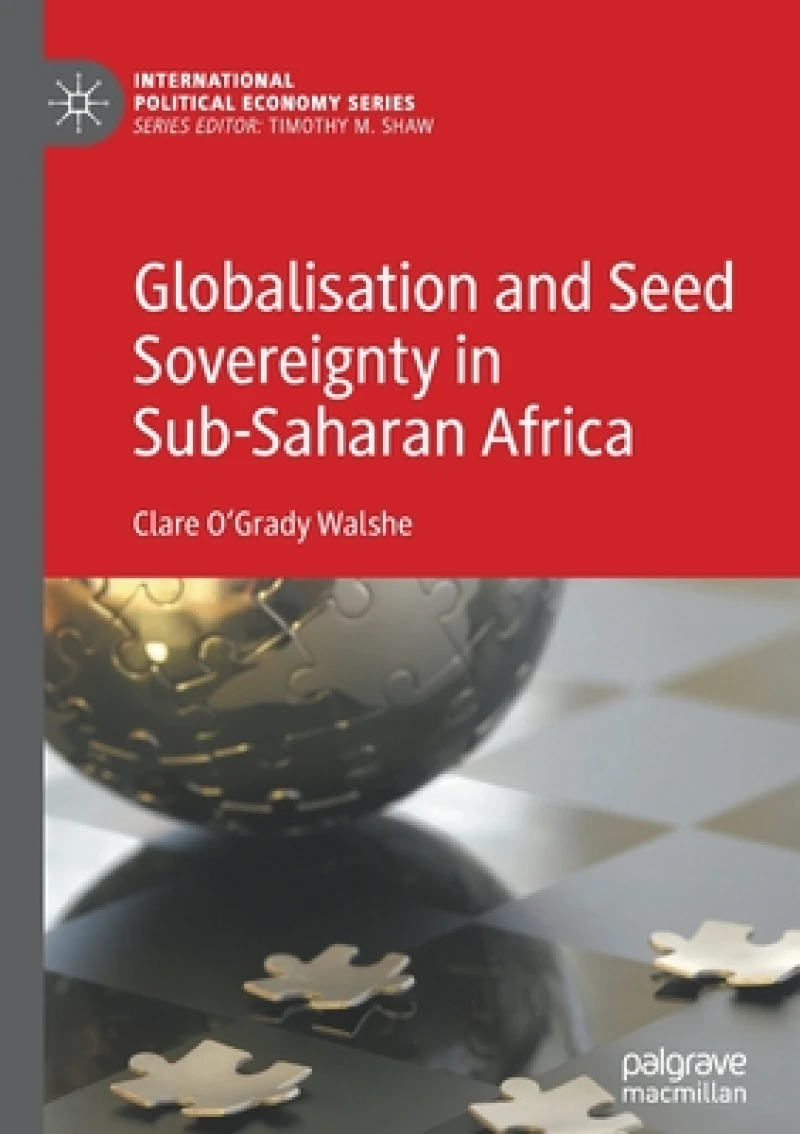
This book studies the relationship between globalisation and seed sovereignty in Sub-Saharan Africa. It provides comparative case studies of the most recent Kenyan and Ethiopian seed laws, as well as a study of seed sovereignty ''on the ground'' in a locality within Ethiopia. Based on extensive fieldwork, it identifies the interests and motivations of transnational seed corporations, global philanthropic organisations, state actors, and local farmers. It finds significant differences in the wording of seed laws and the exercise of seed sovereignty, applying theories of globalisation to help us better understand these varied outcomes. It shows that seed sovereignty has the potential to be shared between local, national, regional, and global authorities, but in different ways in different countries and localities. In the face of what might sometimes appear to be unstoppable global forces, these findings suggest that the exercise of seed sovereignty can be transformed even in a highly globalised world.
Get Globalisation and Seed Sovereignty in Sub-Saharan Africa by at the best price and quality guaranteed only at Werezi Africa's largest book ecommerce store. The book was published by Springer Nature Switzerland AG and it has pages.

