

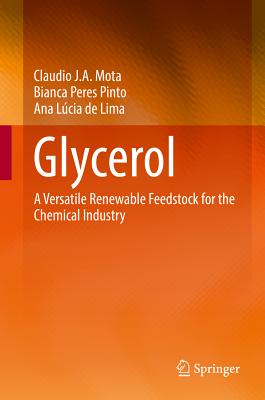
Glycerol : A Versatile Renewable Feedstock for the Chemical Industry
Softcover reprint of the original 1st ed. 2017
Book Details
Format
Paperback / softback
ISBN-10
3319866117
ISBN-13
9783319866116
Edition
Softcover reprint of the original 1st ed. 2017
Publisher
Springer International Publishing AG
Imprint
Springer International Publishing AG
Country of Manufacture
GB
Country of Publication
GB
Publication Date
Jun 12th, 2018
Print length
110 Pages
Product Classification:
ChemistryBiotechnologyIndustrial chemistryIndustrial chemistry and chemical engineeringChemical engineeringAlternative and renewable energy sources and technologyAlternative & renewable energy sources & technologyEnvironmental science, engineering & technologyEnvironmental science, engineering and technology
KSh 13,500.00
Temporarily out of stock, due soon
0 in stock
Delivery Location
Delivery fee: Select location
Secure
Quality
Fast
The book describes the main processes of chemical transformation of glycerol, highlighting those that are currently in commercial use and pointing out potential processes to be used in the future.The first chapter introduces the concept of biofuel and briefly describes the production of biodiesel.
This book is aimed at providing a concise discussion on the use of glycerol as a renewable raw material for the chemical industry. With the increasing use of biodiesel produced from oils and fats, there is a surplus of glycerol in the world. This abundant and rather cheap raw material can be transformed in commodities and specialty chemicals, as well as in fuels. The book describes the main processes of chemical transformation of glycerol, highlighting those that are currently in commercial use and pointing out potential processes to be used in the future. The first chapter introduces the concept of biofuel and briefly describes the production of biodiesel. It also highlights glycerol as the main byproduct of biodiesel synthesis and presents some numbers regarding the world production of glycerol. The second chapter shows the common uses of glycerol and addresses the point whether or not they can drain the large amounts of glycerol produced from biodiesel. The chapter addresses pros and cons of each use. The third chapter covers the main biotechnological processes of glycerol transformation. The fourth chapter thoroughly describes the main thermochemical processes to transform glycerol into commodities, products that will be further used in the chemical industry to produce polymers, for instance. The fifth chapter covers the production of glycerol derivatives of high added-value. The sixth chapter addresses the use of glycerol in the context of a biorefinery. The main idea is to show that many of the processes described in the previous chapters could be entirely green, using exclusively renewable raw materials.
Get Glycerol by Ana Lucia de Lima, Bianca Peres Pinto at the best price and quality guaranteed only at Werezi Africa's largest book ecommerce store. The book was published by Springer International Publishing AG and it has 110 pages.
Customers Who Bought This Also Bought
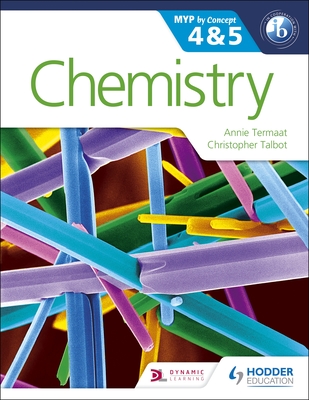
Chemistry for the IB MYP 4 & 5
KSh 9,950.00

Short History of Nearly Everything
KSh 2,350.00

The Vision of Ephesians – The Task of the Church and the Glory of God
KSh 2,500.00

Chemistry: The Central Science in SI Units, Global Edition
KSh 15,950.00

Chemistry for Breakfast
KSh 2,000.00

Pearson Edexcel International AS Level Chemistry Student Book
KSh 8,400.00

Pearson Edexcel International A Level Chemistry Lab Book
KSh 1,700.00

Disappearing Spoon...and other true tales from the Periodic Table
KSh 2,150.00

Pearson Edexcel International A Level Chemistry Student Book
KSh 8,400.00
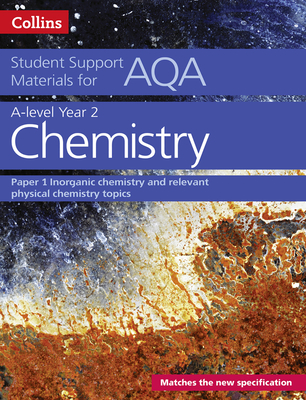
CSSM Chem Y2 Paper 1
KSh 2,200.00
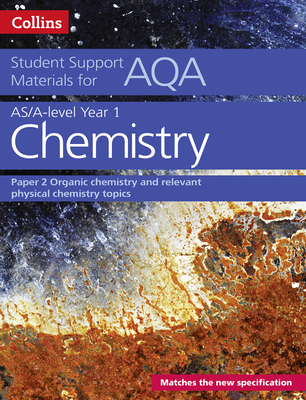
CSSM Chem Y1 Paper 2
KSh 2,050.00

Student Support Materials for AQA
KSh 1,750.00
More by Ana Lucia de Lima, Bianca Peres Pinto
More in This Genre
Chemistry for the IB MYP 4 & 5
KSh 9,950.00
Short History of Nearly Everything
KSh 2,350.00
The Vision of Ephesians – The Task of the Church and the Glory of God
KSh 2,500.00
Chemistry: The Central Science in SI Units, Global Edition
KSh 15,950.00
Chemistry for Breakfast
KSh 2,000.00
Pearson Edexcel International AS Level Chemistry Student Book
KSh 8,400.00
