
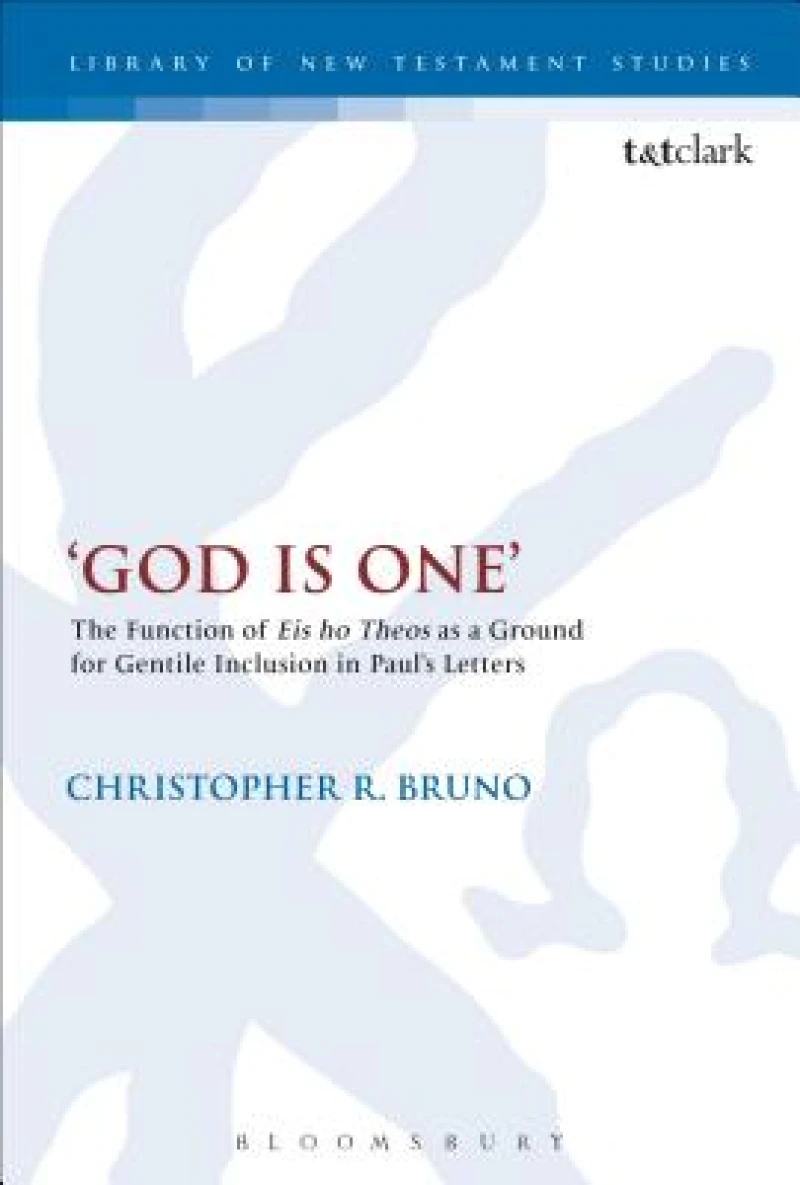
God is One' : The Function of 'Eis ho Theos' as a Ground for Gentile Inclusion in Paul's Letters
Book Details
Format
Paperback / Softback
Book Series
The Library of New Testament Studies
ISBN-10
056766306X
ISBN-13
9780567663061
Publisher
Bloomsbury Publishing PLC
Imprint
T.& T.Clark Ltd
Country of Manufacture
GB
Country of Publication
GB
Publication Date
Apr 23rd, 2015
Print length
272 Pages
Weight
400 grams
Dimensions
23.60 x 15.60 x 1.80 cms
Product Classification:
None
Ksh 7,850.00
Manufactured on Demand
0 in stock
Delivery Location
Delivery fee: Select location
Secure
Quality
Fast
In discussions of Paul's letters, much attention has been devoted to statements that closely identify Christ with Israel's God (i.e., 1 Cor 8:6). However, in Rom 3:30 and Gal 3:20, Paul uses the phrase "God is one" to link Israel's monotheistic confession and the inclusion of the Gentiles in the people of God. Therefore, this study traces the OT and early Jewish backgrounds of the phrase "God is one" and their possible links to Gentile inclusion. Following this, Christopher Bruno examines the two key Pauline texts that link the confession of God as one with the inclusion of the Gentiles. Bruno observes a significant discontinuity between the consistent OT and Jewish interpretations of the phrase and Paul's use of "God is one" in relation to the Gentiles. In the both the OT and earlyJewish literature, the phrase functions as a boundary marker of sorts, distinguishing the covenant people and the Gentiles. The key exception to this pattern is Zech 14:9, which anticipates the confession of God as one expanding to the nations. Similarly, in Romans and Galatians, the phrase is not aboundary marker, but rather grounds the unity of Jew and Gentile. The contextand arguments in Rom 3:30 and Gal 3:20 lead to the conclusion that Paul's monotheism must now be understood in light of the Christ event; moreover, Zech14:9 may play a significant role in the link between Paul's eschatological monotheism and his argument for the inclusion of the Gentiles in Romans and Galatians.
In discussions of Paul''s letters, much attention has been devoted to statements that closely identify Christ with Israel''s God (i.e., 1 Cor 8:6). However, in Rom 3:30 and Gal 3:20, Paul uses the phrase "God is one" to link Israel''s monotheistic confession and the inclusion of the Gentiles in the people of God. Therefore, this study traces the OT and early Jewish backgrounds of the phrase "God is one" and their possible links to Gentile inclusion. Following this, Christopher Bruno examines the two key Pauline texts that link the confession of God as one with the inclusion of the Gentiles. Bruno observes a significant discontinuity between the consistent OT and Jewish interpretations of the phrase and Paul''s use of "God is one" in relation to the Gentiles. In the both the OT and earlyJewish literature, the phrase functions as a boundary marker of sorts, distinguishing the covenant people and the Gentiles. The key exception to this pattern is Zech 14:9, which anticipates the confession of God as one expanding to the nations. Similarly, in Romans and Galatians, the phrase is not aboundary marker, but rather grounds the unity of Jew and Gentile. The contextand arguments in Rom 3:30 and Gal 3:20 lead to the conclusion that Paul''s monotheism must now be understood in light of the Christ event; moreover, Zech14:9 may play a significant role in the link between Paul''s eschatological monotheism and his argument for the inclusion of the Gentiles in Romans and Galatians.
Get God is One' by at the best price and quality guaranteed only at Werezi Africa's largest book ecommerce store. The book was published by Bloomsbury Publishing PLC and it has pages.

