
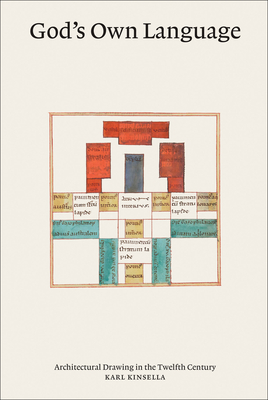
God’s Own Language : Architectural Drawing in the Twelfth Century
Book Details
Format
Hardback
ISBN-10
0262047748
ISBN-13
9780262047746
Publisher
MIT Press Ltd
Imprint
MIT Press
Country of Manufacture
GB
Country of Publication
GB
Publication Date
Jun 13th, 2023
Print length
240 Pages
Weight
684 grams
Dimensions
24.90 x 16.60 x 2.00 cms
Product Classification:
Architecture
KSh 8,650.00
Werezi Extended Catalogue
Delivery in 4 days
1 copies in stock
Delivery Location
Delivery fee: Select location
Delivery in 4 days
Secure
Quality
Fast
How modern architectural language was invented to communicate with the divine—challenging a common narrative of European architectural history.
The architectural drawing might seem to be a quintessentially modern form, and indeed many histories of the genre begin in the early modern period with Italian Renaissance architects such as Alberti. Yet the Middle Ages also had a remarkably sophisticated way of drawing and writing about architecture. God’s Own Language takes us to twelfth-century Paris, where a Scottish monk named Richard of Saint Victor, along with his mentor Hugh, developed an innovative visual and textual architectural language. In the process, he devised techniques and terms that we still use today, from sectional elevations to the word “plan.”
Surprisingly, however, Richard’s detailed drawings appeared not in an architectural treatise but in a widely circulated set of biblical commentaries. Seeing architecture as a way of communicating with the divine, Richard drew plans and elevations for such biblical constructions as Noah’s ark and the temple envisioned by the prophet Ezekiel. Interpreting Richard and Hugh’s drawings and writings within the context of the thriving theological and intellectual cultures of medieval Paris, Karl Kinsella argues that the popularity of these works suggests that, centuries before the Renaissance, there was a large circle of readers with a highly developed understanding of geometry and the visual language of architecture.
The architectural drawing might seem to be a quintessentially modern form, and indeed many histories of the genre begin in the early modern period with Italian Renaissance architects such as Alberti. Yet the Middle Ages also had a remarkably sophisticated way of drawing and writing about architecture. God’s Own Language takes us to twelfth-century Paris, where a Scottish monk named Richard of Saint Victor, along with his mentor Hugh, developed an innovative visual and textual architectural language. In the process, he devised techniques and terms that we still use today, from sectional elevations to the word “plan.”
Surprisingly, however, Richard’s detailed drawings appeared not in an architectural treatise but in a widely circulated set of biblical commentaries. Seeing architecture as a way of communicating with the divine, Richard drew plans and elevations for such biblical constructions as Noah’s ark and the temple envisioned by the prophet Ezekiel. Interpreting Richard and Hugh’s drawings and writings within the context of the thriving theological and intellectual cultures of medieval Paris, Karl Kinsella argues that the popularity of these works suggests that, centuries before the Renaissance, there was a large circle of readers with a highly developed understanding of geometry and the visual language of architecture.
Get God’s Own Language by Karl Kinsella at the best price and quality guaranteed only at Werezi Africa's largest book ecommerce store. The book was published by MIT Press Ltd and it has 240 pages.
Customers Who Bought This Also Bought

Architecture
KSh 7,550.00

Architecture: The Whole Story
KSh 5,150.00

Architectural Graphics
KSh 8,650.00

The Dorm Room Guide
KSh 2,900.00
The Scandal of the Kingdom Workbook
KSh 2,700.00
The Cairo of Naguib Mahfouz
KSh 4,100.00

Room 606
KSh 10,800.00

Éléments et théorie de l''architecture. Tome 3
KSh 6,050.00
Charles Rennie Mackintosh
KSh 1,950.00
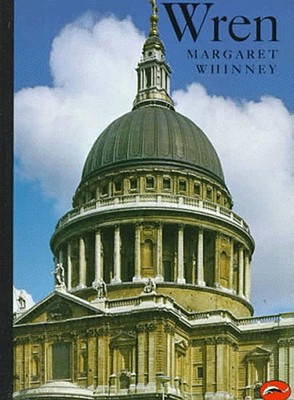
Wren
KSh 1,950.00
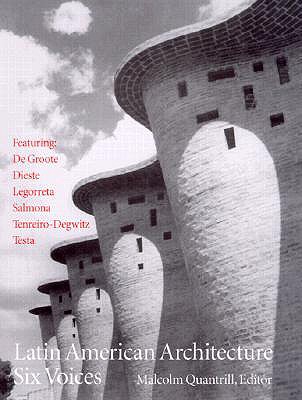
Latin American Architecture
KSh 8,650.00

If Buildings Could Speak, What Would They Say?
KSh 3,600.00
