
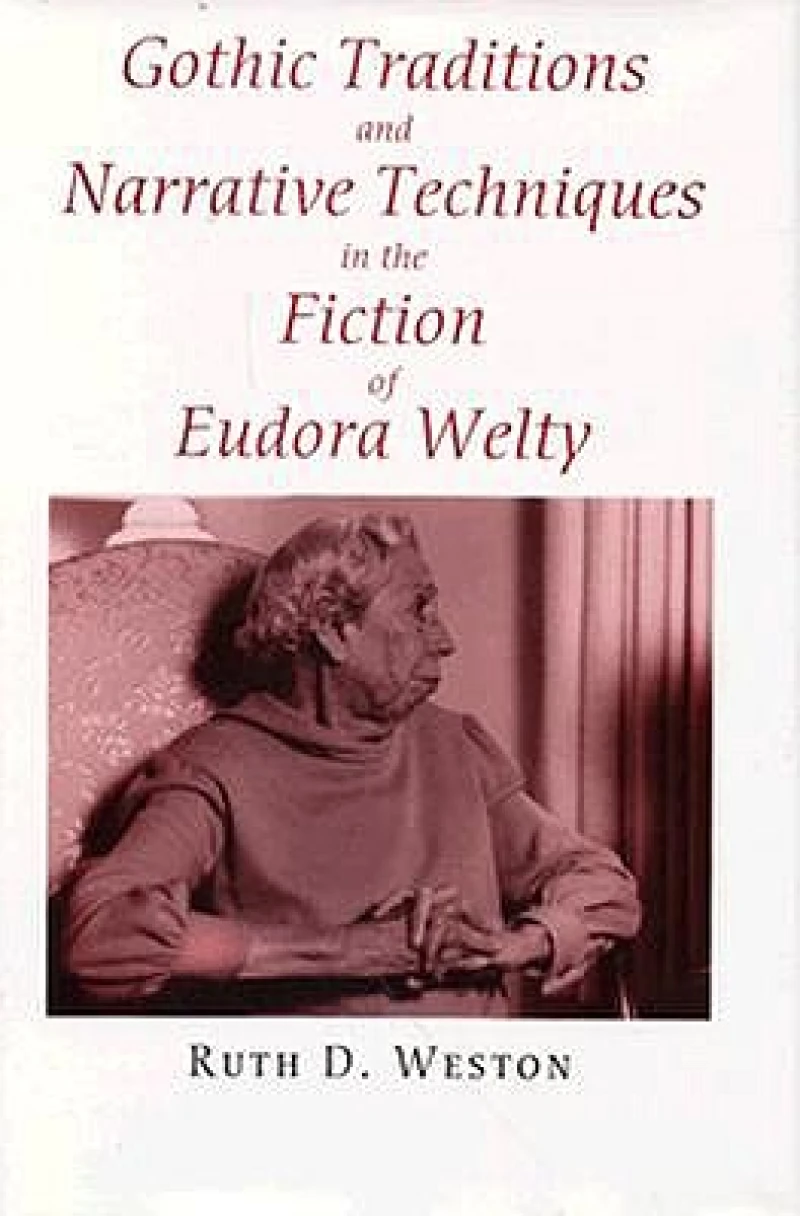
Gothic Traditions and Narrative Techniques in the Fiction of Eudora Welty
Book Details
Format
Hardback or Cased Book
Book Series
Southern Literary Studies
ISBN-10
0807118974
ISBN-13
9780807118979
Publisher
Louisiana State University Press
Imprint
Louisiana State University Press
Country of Manufacture
US
Country of Publication
GB
Publication Date
Nov 1st, 1994
Print length
264 Pages
Weight
524 grams
Dimensions
16.00 x 23.70 x 2.40 cms
Ksh 6,750.00
Temporarily out of stock, due soon
0 in stock
Delivery Location
Delivery fee: Select location
Secure
Quality
Fast
In this study, Ruth D. Weston probes the whole of Eudora Welty's work to reveal the writer's close relationship to the gothic tradition. Specifically, Weston shows how Welty employs the theme of enclosure and escape and settings that convey a sense of mystery, gothic adaptations both, to create certain narrative techniques in her fiction.
In this study, Ruth D. Weston probes the whole of Eudora Welty's work to reveal the writer's close relationship to the gothic tradition. Specifically, Weston shows how Welty employs the theme of enclosure and escape and settings that convey a sense of mystery, gothic adaptations both, to create certain narrative techniques in her fiction.
Differentiating at the outset between the Gothic genre as opposed to elements of the gothic tradition, and acknowledging both critics' and Welty's own reluctance to link her writing with the former, Weston plunges in and brilliantly discloses the relationship Welty's writing has to both, and in doing so describes a rich literary heritage to which Welty belongs. She shows how the tradition of adapting European Gothic conventions to American settings has come down to us through writers such as Hawthorne, particularly through the short story, and continues in Welty's fiction.
Among Welty's narrative techniques that Weston discusses are plot structures built around betrayal and captivity, reversal of characters' gender roles, a tone sometimes similar to that of gothic genres such as the fairy tale or ghost story, and affective settings in ""gothic spaces"" such as the woods along the Natchez Trace. These techniques, Weston explains, help Welty in illustrating restrictions placed on the individual's search for selfhood by human relationships, cultural expectations, and memory.
In addition to examining the texts themselves, Weston draws on Welty's critical and theoretical writings and her letters and other materials in archival collections. She also gleans insights from the work of contemporary narrative theorists, feminist critics, and recent commentators on the Gothic. In the course of her presentation, she offers some excellent new assessments of Welty's relation to the ""female Gothic"" and the ""Southern Gothic"" and to William Faulkner and Jane Austen.
This book is one of the most informed studies to date of Welty's relation to the literary mainstream of the nineteenth and twentieth centuries. Welty scholars as well as general readers of American and southern literature will gain a deep appreciation for Welty's imaginative and original response to the Gothic literary tradition.
Differentiating at the outset between the Gothic genre as opposed to elements of the gothic tradition, and acknowledging both critics' and Welty's own reluctance to link her writing with the former, Weston plunges in and brilliantly discloses the relationship Welty's writing has to both, and in doing so describes a rich literary heritage to which Welty belongs. She shows how the tradition of adapting European Gothic conventions to American settings has come down to us through writers such as Hawthorne, particularly through the short story, and continues in Welty's fiction.
Among Welty's narrative techniques that Weston discusses are plot structures built around betrayal and captivity, reversal of characters' gender roles, a tone sometimes similar to that of gothic genres such as the fairy tale or ghost story, and affective settings in ""gothic spaces"" such as the woods along the Natchez Trace. These techniques, Weston explains, help Welty in illustrating restrictions placed on the individual's search for selfhood by human relationships, cultural expectations, and memory.
In addition to examining the texts themselves, Weston draws on Welty's critical and theoretical writings and her letters and other materials in archival collections. She also gleans insights from the work of contemporary narrative theorists, feminist critics, and recent commentators on the Gothic. In the course of her presentation, she offers some excellent new assessments of Welty's relation to the ""female Gothic"" and the ""Southern Gothic"" and to William Faulkner and Jane Austen.
This book is one of the most informed studies to date of Welty's relation to the literary mainstream of the nineteenth and twentieth centuries. Welty scholars as well as general readers of American and southern literature will gain a deep appreciation for Welty's imaginative and original response to the Gothic literary tradition.
Get Gothic Traditions and Narrative Techniques in the Fiction of Eudora Welty by at the best price and quality guaranteed only at Werezi Africa's largest book ecommerce store. The book was published by Louisiana State University Press and it has pages.

