

Governing Smart Cities as Knowledge Commons
Book Details
Format
Hardback
Book Series
Cambridge Studies on Governing Knowledge Commons
ISBN-10
1108837174
ISBN-13
9781108837170
Publisher
Cambridge University Press
Imprint
Cambridge University Press
Country of Manufacture
GB
Country of Publication
GB
Publication Date
Feb 9th, 2023
Print length
334 Pages
Weight
610 grams
Dimensions
23.60 x 16.00 x 2.40 cms
Product Classification:
North America (USA and Canada)Urban economicsRegional / urban economicsInternational communications & telecommunications lawInternational law: communications, telecommunications and mediaUrban & municipal planningUrban and municipal planning and policyDigital and information technologies: social and ethical aspectsEthical & social aspects of IT
KSh 18,700.00
Currently unavailable
0 in stock
Delivery Location
Delivery fee: Select location
Secure
Quality
Fast
Smart technologies are increasingly implemented in urban spaces, often without adequate governance; this volume develops a knowledge commons approach to help guide the adoption of smart cities, and analyzes governance successes and failures, based on a number of case studies across urban and public spaces.
The rise of 'smart' – or technologically advanced – cities has been well documented, while governance of such technology has remained unresolved. Integrating surveillance, AI, automation, and smart tech within basic infrastructure as well as public and private services and spaces raises a complex set of ethical, economic, political, social, and technological questions. The Governing Knowledge Commons (GKC) framework provides a descriptive lens through which to structure case studies examining smart tech deployment and commons governance in different cities. This volume deepens our understanding of community governance institutions, the social dilemmas communities face, and the dynamic relationships between data, technology, and human lives. For students, professors, and practitioners of law and policy dealing with a wide variety of planning, design, and regulatory issues relating to cities, these case studies illustrate options to develop best practice. Available through Open Access, the volume provides detailed guidance for communities deploying smart tech.
Get Governing Smart Cities as Knowledge Commons by Brett M. Frischmann at the best price and quality guaranteed only at Werezi Africa's largest book ecommerce store. The book was published by Cambridge University Press and it has 334 pages.
Customers Who Bought This Also Bought

World Cities Report 2026
KSh 13,050.00

Blighted
KSh 5,400.00

The Transformative City
KSh 22,600.00
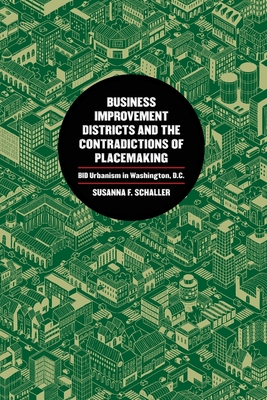
Business Improvement Districts and the Contradictions of Placemaking
KSh 6,300.00

The Transformative City
KSh 6,300.00

Super Prime
KSh 4,500.00
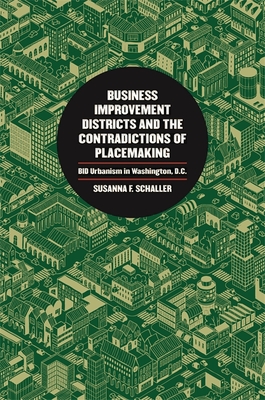
Business Improvement Districts and the Contradictions of Placemaking
KSh 13,550.00

Blighted
KSh 6,500.00

Smart Cities for Sustainable and Urban Development
KSh 27,000.00

Theories and Models of Urbanization
KSh 26,800.00

The Urban University and the Knowledge Economy
KSh 30,950.00

Planning and Design for Sustainable Urban Mobility
KSh 11,450.00
