
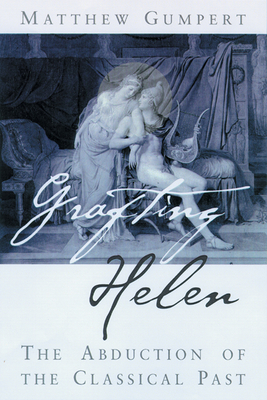
Grafting Helen : The Abduction of the Classical Past
Book Details
Format
Paperback / softback
ISBN-10
0299171248
ISBN-13
9780299171247
Publisher
University of Wisconsin Press
Imprint
University of Wisconsin Press
Country of Manufacture
US
Country of Publication
GB
Publication Date
Nov 30th, 2001
Print length
432 Pages
Weight
493 grams
Dimensions
23.00 x 15.10 x 2.00 cms
KSh 3,550.00
Temporarily out of stock, due soon
0 in stock
Delivery Location
Delivery fee: Select location
Secure
Quality
Fast
This text contends that Helen of Troy, and in particular the use of her image, is a crucial emblem for much of Western thought and literature and suggests that it has been stolen, appropriated, imitated, extorted and coveted throughout the course of history.
Classicism = cultural embezziement? History is a love story: a tale of desire and jealousy, abandonment and fidelity, abduction and theft, rupture and reconciliation. This contention is central is central to Grafting Helen, Matthew Gumpert''s original and dazzling meditation on Helen of Troy as a crucial emblem for much of Western thought and literature. Grafting Helen looks at ""classicism"" - the privileged thetorical language for describing cultural origins in the West - as a protracted form of cultural embezzlement. No coin of the realm has been more valuable, more circulated, more coveted, or more counterfeited than the one that bears the face of Helen of Troy. Gumpert uncovers Helen as the emblem for the past as something to be stolen, appropriated, imitated, extorted, and coverted once again. Tracing the figure of Helen from its classical origins through the Middle Ages, the French Renaissance, and the modern era, Gumpert suggests that the relation of current Western culture to the past is not like the act of coveting; it is the act of coveting, he argues, for it relies on the same strategies, the same defenses, the same denials, and the same delusions.
Get Grafting Helen by University of Wisconsin Press at the best price and quality guaranteed only at Werezi Africa's largest book ecommerce store. The book was published by University of Wisconsin Press and it has 432 pages.
Customers Who Bought This Also Bought

How to Read & Why
KSh 2,350.00

Stranger Faces
KSh 2,500.00

Classical Literary Criticism
KSh 2,350.00

Recognising the Stranger
KSh 1,800.00

What is Literature?
KSh 3,250.00

Beginnings
KSh 3,050.00

Create Dangerously
KSh 700.00

An Analysis of Immanuel Kant''s Critique of Pure Reason
KSh 1,200.00

Chaucer's Pardoner and Gender Theory
KSh 8,100.00

Black and Female
KSh 2,350.00

Difference and Repetition
KSh 4,500.00

The Social Construction of What?
KSh 5,200.00
More by University of Wisconsin Press

Ilan Stavans
KSh 4,000.00

Wisconsin''s Natural Communities
KSh 4,400.00

Asinaria
KSh 7,350.00

The Good-bye Window
KSh 2,650.00

Emile De Antonio
KSh 7,500.00

The Gothic World of Stephen King
KSh 4,050.00

Rural Society and Cotton in Colonial Zaire
KSh 3,750.00

Goddesses and Monsters
KSh 4,200.00

LECTURES in JAPANESE ABOUT SIGNIFICANT EVENTS in the HISTORY of CHEMISTRY with CD-ROM of NHK TELEVISION PROGRAMS
KSh 3,850.00

German Language in America
KSh 4,150.00

Surviving the Slaughter
KSh 9,350.00

Before They Could Vote
KSh 11,050.00
