
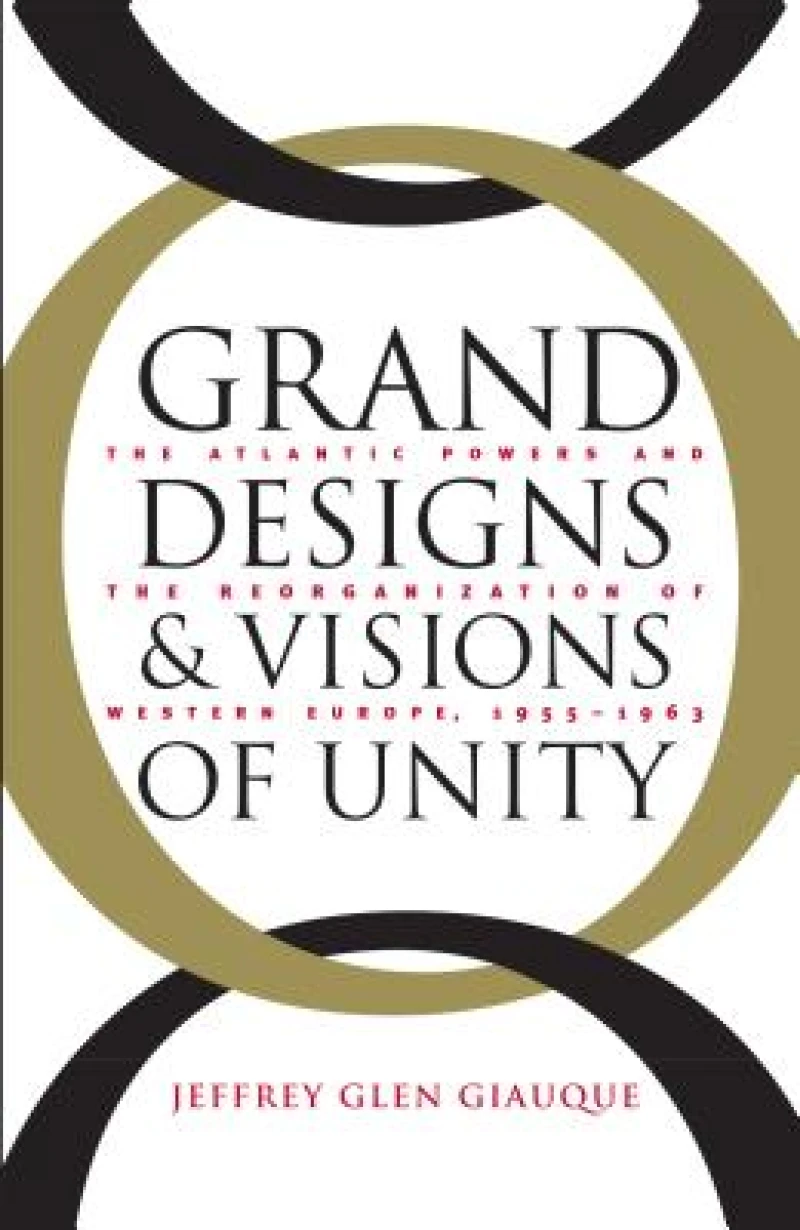
Grand Designs and Visions of Unity : The Atlantic Powers and the Reorganization of Western Europe, 1955-1963
New
Book Details
Format
Paperback / Softback
Book Series
The New Cold War History
ISBN-10
0807853445
ISBN-13
9780807853443
Edition
New
Publisher
The University of North Carolina Press
Imprint
The University of North Carolina Press
Country of Manufacture
US
Country of Publication
GB
Publication Date
Mar 25th, 2002
Print length
344 Pages
Weight
502 grams
Dimensions
23.50 x 15.70 x 2.00 cms
Ksh 7,750.00
Werezi Extended Catalogue
0 in stock
Delivery Location
Delivery fee: Select location
Secure
Quality
Fast
In the late 1950s, against the unfolding backdrop of the Cold War, American and European leaders began working to reshape Western Europe. Focusing on the four largest Atlantic powers - Britain, France, Germany and the United States - Giauque explores these early stages of European integration.
In the late 1950s, against the unfolding backdrop of the Cold War, American and European leaders began working to reshape Western Europe. They sought to adapt the region to a changing world in which European empires were rapidly disintegrating, Soviet influence was spreading, and the United States could no longer shoulder the entire political and economic burden of the West yet hesitated to share it with Europe. Focusing on the four largest Atlantic powers — Britain, France, Germany, and the United States — Jeffrey Giauque explores these early stages of European integration.
Giauque uses evidence from newly opened international archives to show how a mix of cooperation and collaboration shaped efforts to unify postwar Europe. He examines the “grand designs” each country developed to advance its own interests, specific plans for collaboration or accord, and the reactions of the other Atlantic powers to these proposals. Competing national interests not only derailed many otherwise sound plans for European unity, Giauque says, but also influenced such nascent European institutions as the Common Market, the antecedent of today’s European Union. Indeed, beyond examining the origins of the European community, this comparative study provides insight into national attitudes and aspirations that continue to shape European and American policies today.
Giauque uses evidence from newly opened international archives to show how a mix of cooperation and collaboration shaped efforts to unify postwar Europe. He examines the “grand designs” each country developed to advance its own interests, specific plans for collaboration or accord, and the reactions of the other Atlantic powers to these proposals. Competing national interests not only derailed many otherwise sound plans for European unity, Giauque says, but also influenced such nascent European institutions as the Common Market, the antecedent of today’s European Union. Indeed, beyond examining the origins of the European community, this comparative study provides insight into national attitudes and aspirations that continue to shape European and American policies today.
Get Grand Designs and Visions of Unity by at the best price and quality guaranteed only at Werezi Africa's largest book ecommerce store. The book was published by The University of North Carolina Press and it has pages.

