

Grasslands : Ecology, Management & Restoration
Book Details
Format
Hardback
ISBN-10
1606920243
ISBN-13
9781606920244
Publisher
Nova Science Publishers Inc
Imprint
Nova Science Publishers Inc
Country of Manufacture
US
Country of Publication
GB
Publication Date
Nov 1st, 2008
Print length
270 Pages
Weight
792 grams
Dimensions
25.80 x 18.60 x 2.30 cms
Product Classification:
Grasslands, heaths, prairies, tundraPlains and grasslands
KSh 27,200.00
Not available
0 in stock
Delivery Location
Delivery fee: Select location
Secure
Quality
Fast
Grasslands are areas where the vegetation is dominated by grasses (Poaceae) and other herbaceous (non-woody) plants (forbs). Plants of the sedge (Cyperacae) and rush (Juncaceae) families can also be frequent in grasslands. Grasslands occur naturally on all continents except Antarctica, and in many other areas they have replaced the natural vegetation due to human influence. In temperate latitudes, such as north-west Europe, grasslands are dominated by perennial species, whereas in warmer climates annual species form a greater component of the vegetation. Grasslands can be found in most terrestrial climates. Grassland vegetation can vary in height from very short, as in chalk downland where the vegetation may be less than 30 cm high, to quite tall, as in the case of North American tallgrass prairie, South American grasslands and African savannah. Woody plants, shrubs or trees, may occur on some grasslands - forming wooded, scrubby or semi-wooded grassland, such as the African savannahs or the Iberian dehesa. Such grasslands are sometimes referred to as wood-pasture or Savannah woodland. Grasslands cover nearly fifty percent of the land surface of the continent of Africa. This book gathers new and important research from around the world in this field.
Get Grasslands by Hans G Schröder at the best price and quality guaranteed only at Werezi Africa's largest book ecommerce store. The book was published by Nova Science Publishers Inc and it has 270 pages.
Customers Who Bought This Also Bought

Degradation of Alpine Grasslands on Tibetan Plateau
KSh 23,400.00

The Great Country
KSh 2,000.00

Innate Terrain
KSh 14,050.00

Wild Idea
KSh 3,400.00

The Nebraska Sandhills
KSh 5,050.00

Innate Terrain
KSh 5,950.00

Routledge Handbook of Grasslands
KSh 46,800.00

Carex of Illinois and Surrounding States
KSh 4,300.00

A Geography of Blood
KSh 2,700.00

Recovering the Prairie
KSh 5,650.00

The Nebraska Sandhills
KSh 4,500.00
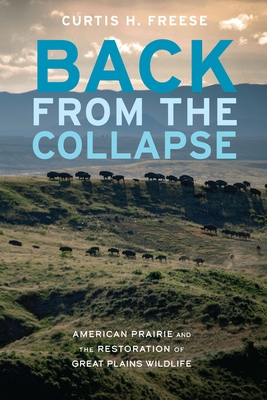
Back from the Collapse
KSh 3,800.00
