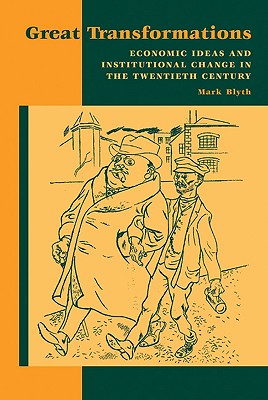
Great Transformations : Economic Ideas and Institutional Change in the Twentieth Century
by
Mark Blyth
Book Details
Format
Paperback / softback
ISBN-10
0521010527
ISBN-13
9780521010528
Publisher
Cambridge University Press
Imprint
Cambridge University Press
Country of Manufacture
GB
Country of Publication
GB
Publication Date
Sep 16th, 2002
Print length
298 Pages
Weight
448 grams
Dimensions
22.70 x 15.50 x 1.70 cms
Product Classification:
Political economy
KSh 5,150.00
Currently unavailable
0 in stock
Delivery Location
Delivery fee: Select location
Secure
Quality
Fast
This book analyses political and economic change in the United States and Sweden from the 1920s to the end of the 1990s. The key claim is that economic ideas are political tools used by domestic groups in order to effect change.
This book picks up where Karl Polanyi's study of economic and political change left off. Building upon Polanyi's conception of the double movement, Blyth analyzes the two periods of deep seated institutional change that characterized the twentieth century: the 1930s and the 1970s. Blyth views both sets of changes as part of the same dynamic. In the 1930s labor reacted against the exigencies of the market and demanded state action to mitigate the market's effects by 'embedding liberalism.' In the 1970s, those who benefited least from such 'embedding' institutions, namely business, reacted against these constraints and sought to overturn that institutional order. Blyth demonstrates the critical role economic ideas played in making institutional change possible. Great Transformations rethinks the relationship between uncertainty, ideas, and interests, achieving profound new insights on how, and under what conditions, institutional change takes place.
Get Great Transformations by Mark Blyth at the best price and quality guaranteed only at Werezi Africa's largest book ecommerce store. The book was published by Cambridge University Press and it has 298 pages.
Customers Who Bought This Also Bought

United States of Oligarchy
KSh 5,050.00

Good Economics for Hard Times
KSh 2,350.00

Winner Take All
KSh 2,350.00

Holding the Line
KSh 2,000.00
Wealth, Poverty and Politics
KSh 6,300.00

The Billionaire Raj
KSh 1,800.00
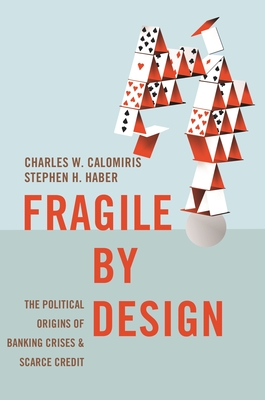
Fragile by Design – The Political Origins of Banking Crises and Scarce Credit
KSh 4,500.00

Mission Economy
KSh 2,350.00

Adam Smith
KSh 2,350.00

Trade Wars Are Class Wars – How Rising Inequality Distorts the Global Economy and Threatens International Peace
KSh 2,600.00
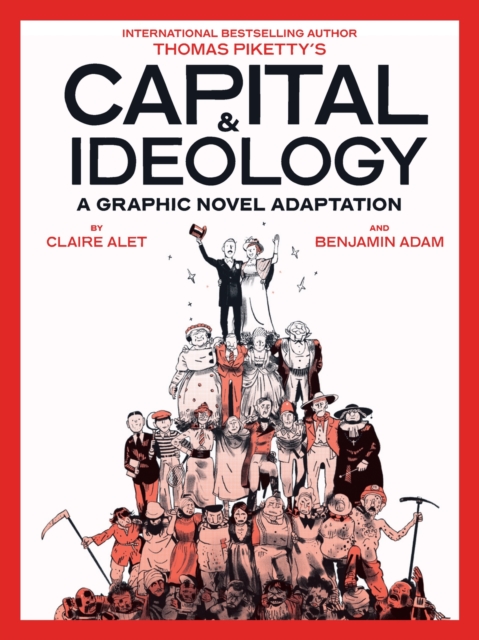
Capital & Ideology
KSh 3,050.00
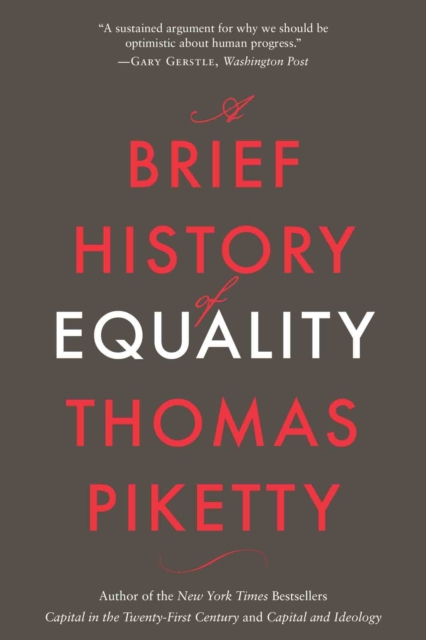
A Brief History of Equality
KSh 2,850.00