

Green Photonics and Electronics
Softcover reprint of the original 1st ed. 2017
Book Details
Format
Paperback / softback
Book Series
NanoScience and Technology
ISBN-10
3319883623
ISBN-13
9783319883625
Edition
Softcover reprint of the original 1st ed. 2017
Publisher
Springer International Publishing AG
Imprint
Springer International Publishing AG
Country of Manufacture
GB
Country of Publication
GB
Publication Date
Sep 1st, 2018
Print length
291 Pages
Product Classification:
Laser physicsEnergy technology & engineeringEnergy technology and engineeringElectrical engineeringAlternative and renewable energy sources and technologyAlternative & renewable energy sources & technologyComputer architecture & logic designComputer architecture and logic design
KSh 19,800.00
Temporarily out of stock, due soon
0 in stock
Delivery Location
Delivery fee: Select location
Secure
Quality
Fast
These must and can be energy efficient but they operate in an electronic environment and therefore have to be considered in a wide scope that also requires low energy electronic devices, sophisticated circuit designs and clever architectures.
This books focuses on recent break-throughs in the development of a variety of photonic devices, serving distances ranging from mm to many km, together with their electronic counter-parts, e.g. the drivers for lasers, the amplifiers following the detectors and most important, the relevant advanced VLSI circuits. It explains that as a consequence of the increasing dominance of optical interconnects for high performance workstation clusters and supercomputers their complete design has to be revised. This book thus covers for the first time the whole variety of interdependent subjects contributing to green photonics and electronics, serving communication and energy harvesting. Alternative approaches to generate electric power using organic photovoltaic solar cells, inexpensive and again energy efficient in production are summarized. In 2015, the use of the internet consumed 5-6% of the raw electricity production in developed countries. Power consumption increases rapidlyand without some transformational change will use, by the middle of the next decade at the latest, the entire electricity production. This apocalyptic outlook led to a redirection of the focus of data center and HPC developers from just increasing bit rates and capacities to energy efficiency. The high speed interconnects are all based on photonic devices. These must and can be energy efficient but they operate in an electronic environment and therefore have to be considered in a wide scope that also requires low energy electronic devices, sophisticated circuit designs and clever architectures. The development of the next generation of high performance exaFLOP computers suffers from the same problem: Their energy consumption based on present device generations is essentially prohibitive.
Get Green Photonics and Electronics by Dieter Bimberg at the best price and quality guaranteed only at Werezi Africa's largest book ecommerce store. The book was published by Springer International Publishing AG and it has 291 pages.
Customers Who Bought This Also Bought

Micro Light Emitting Diode
KSh 21,600.00

Photoresponsive Polymers II
KSh 32,400.00

Electromagnetic Noise and Quantum Optical Measurements
KSh 18,000.00
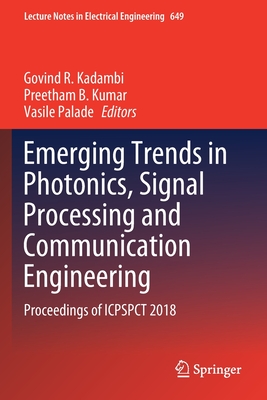
Emerging Trends in Photonics, Signal Processing and Communication Engineering
KSh 16,200.00
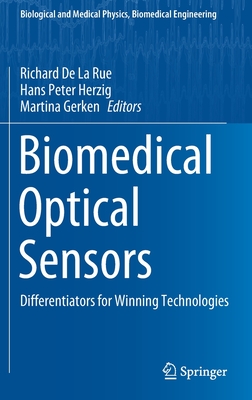
Biomedical Optical Sensors
KSh 23,400.00

Classical and Quantum Description of Plasma and Radiation in Strong Fields
KSh 27,000.00
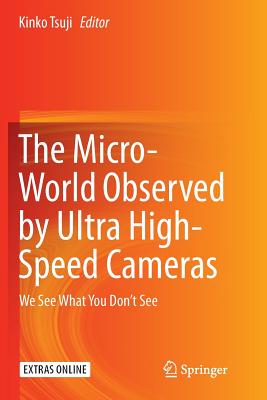
The Micro-World Observed by Ultra High-Speed Cameras
KSh 23,400.00
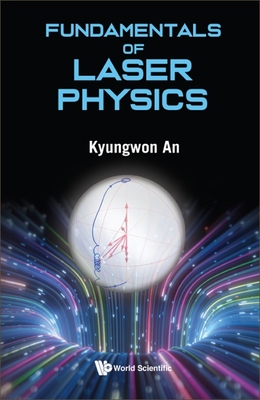
Fundamentals Of Laser Physics
KSh 22,500.00

Optical Interferometry for Biology and Medicine
KSh 23,400.00

Hardware Acceleration of Computational Holography
KSh 19,800.00

Encyclopedia of Color Science and Technology
KSh 198,000.00
Fiber Optic Sensors
KSh 25,200.00
More in This Genre
Micro Light Emitting Diode
KSh 21,600.00
Photoresponsive Polymers II
KSh 32,400.00
Electromagnetic Noise and Quantum Optical Measurements
KSh 18,000.00
Emerging Trends in Photonics, Signal Processing and Communication Engineering
KSh 16,200.00
Biomedical Optical Sensors
KSh 23,400.00
Classical and Quantum Description of Plasma and Radiation in Strong Fields
KSh 27,000.00
