
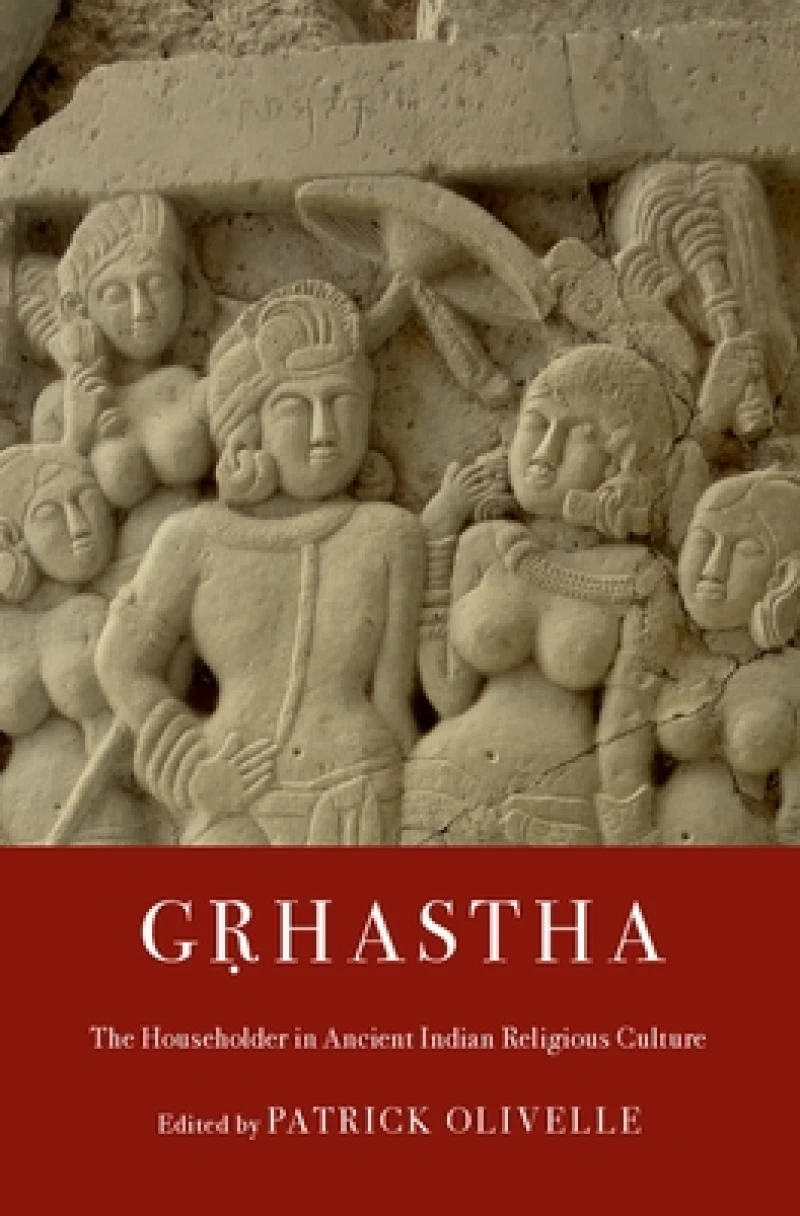
Grhastha : The Householder in Ancient Indian Religious Culture
Book Details
Format
Hardback or Cased Book
ISBN-10
019069615X
ISBN-13
9780190696153
Publisher
Oxford University Press Inc
Imprint
Oxford University Press Inc
Country of Manufacture
US
Country of Publication
GB
Publication Date
Sep 24th, 2019
Print length
288 Pages
Weight
562 grams
Dimensions
16.70 x 24.30 x 2.50 cms
Product Classification:
Asian historyHinduismSociology & anthropology
Ksh 19,450.00
Temporarily out of stock, due soon
0 in stock
Delivery Location
Delivery fee: Select location
Secure
Quality
Fast
The contrast between a married householder and a celibate ascetic who has left home and family has been highlighted in scholarship on ancient Indian religion and culture. But this is the first volume dedicated exclusively to the study of the neglected member of this pair, the householder. Through detailed study of inscriptions and texts, it shows that the ancient Indian householder was viewed as someone dedicated to holiness, just like an ascetic. The history of the common Sanskrit term used for householder, gṛhastha, shows its sharp contrast to the ascetic who has left home and also points to the essential religious nature of the householder.
For scholars of ancient Indian religions, the wandering mendicants who left home and family for a celibate life and the search for liberation represent an enigma. The Vedic religion, centered on the married household, had no place for such a figure. Much has been written about the Indian ascetic but hardly any scholarly attention has been paid to the married householder with wife and children, generally referred to in Sanskrit as gṛhastha: "the stay-at-home." The institution of the householder is viewed implicitly as posing little historical problems with regard to its origin or meaning. This volume problematizes the figure of the householder within ancient Indian culture and religion. It shows that the term gṛhastha is a neologism and is understandable only in its opposition to the ascetic who goes away from home (pravrajita). Through a thorough and comprehensive analysis of a wide range of inscriptions and texts, ranging from the Vedas, Dharmasastras, Epics, and belle lettres to Buddhist and Jain texts and texts on governance and erotics, this volume analyses the meanings, functions, and roles of the householder from the earliest times unti about the fifth century CE. The central finding of these studies is that the householder bearing the name gṛhastha is not simply a married man with a family but someone dedicated to the same or similar goals as an ascetic while remaining at home and performing the economic and ritual duties incumbent on him. The gṛhastha is thus not a generic householder, for whom there are many other Sanskrit terms, but a religiously charged concept that is intended as a full-fledged and even superior alternative to the concept of a religious renouncer.
Get Grhastha by at the best price and quality guaranteed only at Werezi Africa's largest book ecommerce store. The book was published by Oxford University Press Inc and it has pages.

