
Cart 0
Groundwater Recharge and Flow
Click to zoom

Share this book

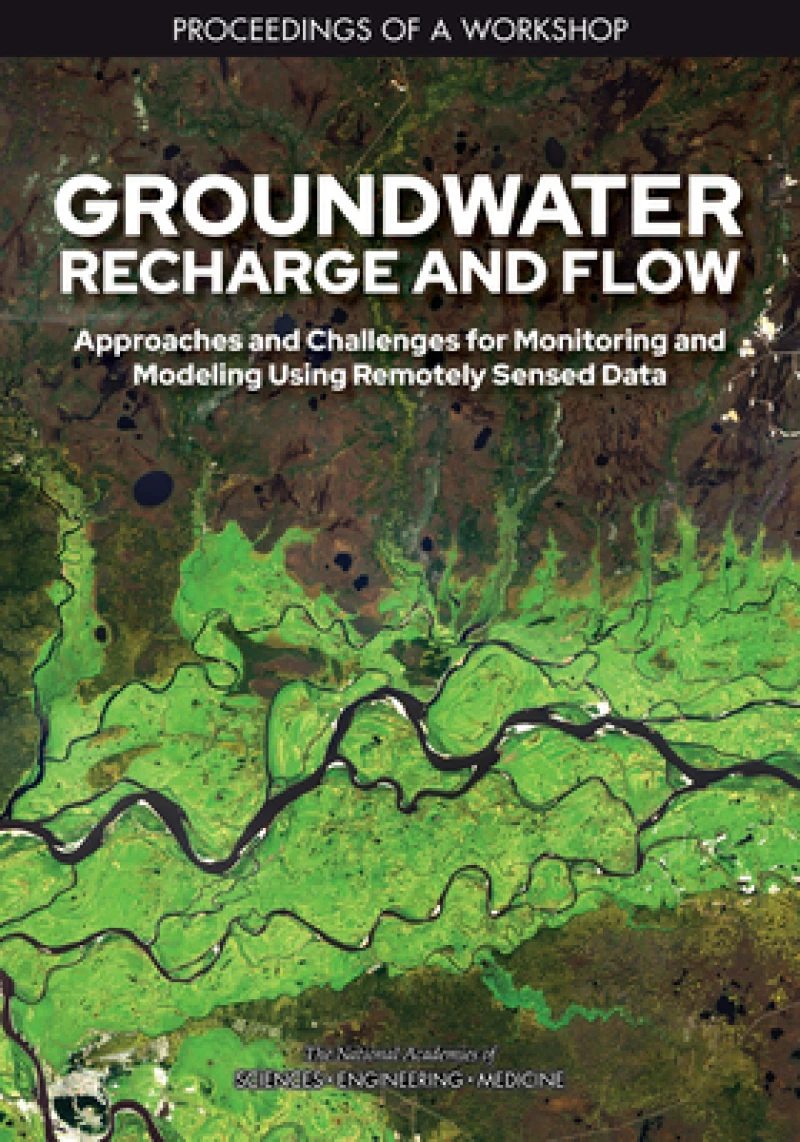
Groundwater Recharge and Flow : Approaches and Challenges for Monitoring and Modeling Using Remotely Sensed Data: Proceedings of a Workshop

Book Details

Format Paperback / Softback
ISBN-10 030949964X
ISBN-13 9780309499644
Publisher National Academies Press
Imprint National Academies Press
Country of Manufacture GB
Country of Publication GB
Publication Date Jan 17th, 2020
Print length 72 Pages
Ksh 9,000.00
Publisher Out of Stock

Delivery Location

Delivery fee: Select location

Secure
Quality
Fast

Water of appropriate quantity and quality is essential for drinking, sanitation, and food, energy, and industrial production for any society and is derived for most needs from surface- or groundwater sources. Studies suggest that groundwater use in irrigation globally is increasing in total volume as well as a percentage of all water used for irrigation, with the demand for groundwater resources increasing as available primary surface water supplies are depleted. Particularly in arid regions, groundwater may be the most accessible water supply for any purpose, leaving groundwater withdrawals concentrated in areas that are already experiencing water stress.

Even in the presence of direct ground observations and measurements of the water table, quantitative evaluation of groundwater storage, flow, or recharge at different scales requires remotely sensed data and observations applied to groundwater models. Resolving the interaction of groundwater storage, flow, and recharge at a scale at which basins are managed requires remotely sensed data and proxy data.

In June 2019, the Water Science and Technology Board of the National Academies of Sciences, Engineering, and Medicine convened a workshop to identify scientific and technological research frontiers in monitoring and modeling groundwater recharge and flow in various regions of the world. The goals of the workshop were to assess regional freshwater budgets under major use scenarios, including agriculture, industry, and municipal; examine state of the art research frontiers in characterizing groundwater aquifers, including residence time, quantity, flow, depletion, and recharge, using remotely sensed observations and proxy data; discuss groundwater model uncertainties and methods for mitigating them using sparse ground observations or data and other approaches; and consider our ability to detect which water management strategies that affect groundwater flow and recharge are being used and any changes in their use over time. This publication summarizes workshop presentations and plenary discussions.

Water of appropriate quantity and quality is essential for drinking, sanitation, and food, energy, and industrial production for any society and is derived for most needs from surface- or groundwater sources. Studies suggest that groundwater use in irrigation globally is increasing in total volume as well as a percentage of all water used for irrigation, with the demand for groundwater resources increasing as available primary surface water supplies are depleted. Particularly in arid regions, groundwater may be the most accessible water supply for any purpose, leaving groundwater withdrawals concentrated in areas that are already experiencing water stress. Even in the presence of direct ground observations and measurements of the water table, quantitative evaluation of groundwater storage, flow, or recharge at different scales requires remotely sensed data and observations applied to groundwater models. Resolving the interaction of groundwater storage, flow, and recharge at a scale at which basins are managed requires remotely sensed data and proxy data. In June 2019, the Water Science and Technology Board of the National Academies of Sciences, Engineering, and Medicine convened a workshop to identify scientific and technological research frontiers in monitoring and modeling groundwater recharge and flow in various regions of the world. The goals of the workshop were to assess regional freshwater budgets under major use scenarios, including agriculture, industry, and municipal; examine state of the art research frontiers in characterizing groundwater aquifers, including residence time, quantity, flow, depletion, and recharge, using remotely sensed observations and proxy data; discuss groundwater model uncertainties and methods for mitigating them using sparse ground observations or data and other approaches; and consider our ability to detect which water management strategies that affect groundwater flow and recharge are being used and any changes in their use over time. This publication summarizes workshop presentations and plenary discussions. Table of ContentsFront Matter1 Overview2 Regional Freshwater Budgets Under Major Use Scenarios3 Research Frontiers in Characterizing Groundwater Aquifers4 Mitigating Groundwater Model Uncertainties5 Changes in Water Management Strategies Over Time6 Final ThoughtsReferencesAppendix A: Statement of TaskAppendix B: Planning Committee BiosketchesAppendix C: Workshop AgendaAppendix D: Workshop ParticipantsAppendix E: Speaker Abstracts

Get Groundwater Recharge and Flow by at the best price and quality guaranteed only at Werezi Africa's largest book ecommerce store. The book was published by National Academies Press and it has pages.


Mind, Body, & Spirit

Shopping Cart

Africa largest book store

Sub Total:
Ebooks

Digital Library
Coming Soon

Our digital collection is currently being curated to ensure the best possible reading experience on Werezi. We'll be launching our Ebooks platform shortly.