
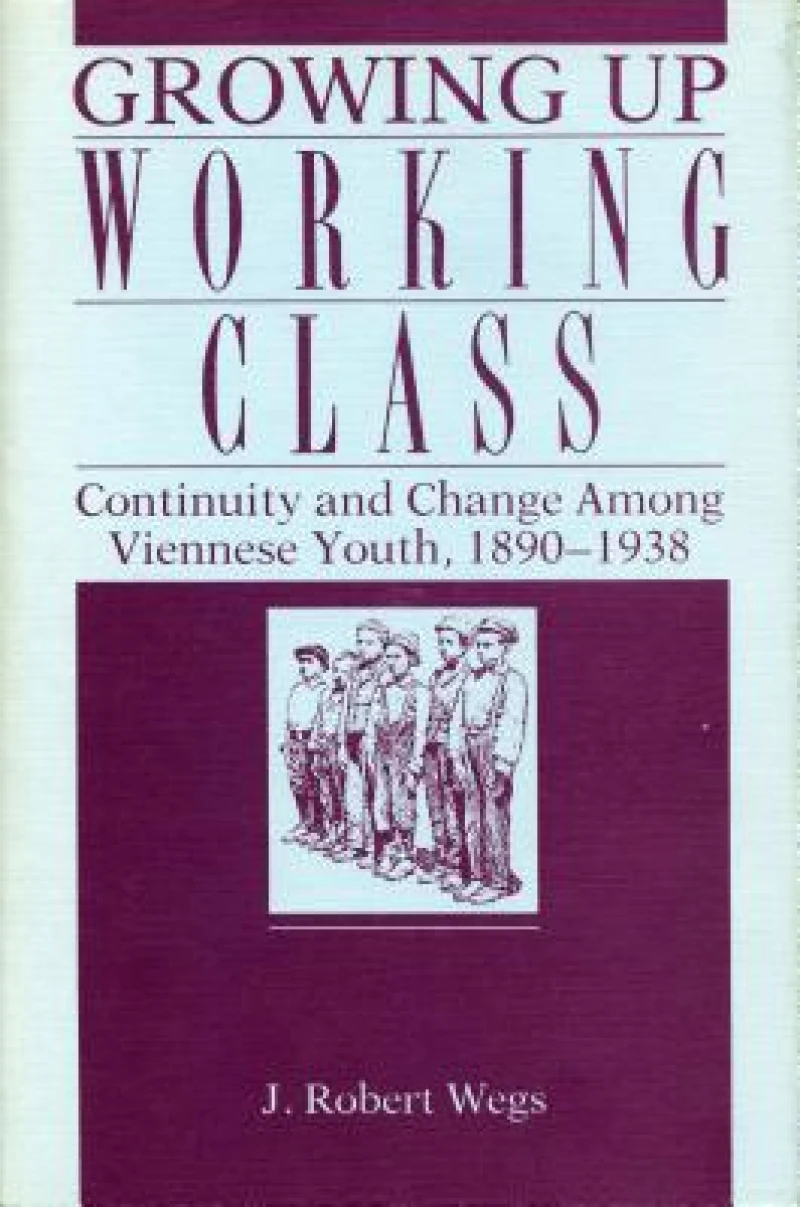
Growing Up Working Class : Continuity and Change Among Viennese Youth, 1890–1938
by
Robert Wegs
Book Details
Format
Paperback / Softback
ISBN-10
0271028076
ISBN-13
9780271028071
Publisher
Pennsylvania State University Press
Imprint
Pennsylvania State University Press
Country of Manufacture
GB
Country of Publication
GB
Publication Date
Nov 15th, 1988
Print length
216 Pages
Weight
340 grams
Dimensions
23.40 x 15.60 x 1.50 cms
Product Classification:
Age groups: adolescentsScience: general issues
Ksh 5,050.00
Werezi Extended Catalogue
0 in stock
Delivery Location
Delivery fee: Select location
Secure
Quality
Fast
This study of working-class culture, youth behavior, and the response of youths to conditions in a European setting acknowledges that poverty existed among much of the working class but questions the implicit arguments that these conditions necessarily brought about destructive responses. Until recently, various simplistic paradigms have dominated studies of European workers. These have stressed the misery of urban laborers in a capitalistic society, the functional importance of the isolated nuclear family in an industrial society, or the violent, authoritarian, and intolerant nature of working-class society as a result of cultural deprivation. The approach here, in contrast, is allied with the current trend in social history to allow for elements of diversity and individual initiative within the labor population. Numerous oral interviews are used to enrich other data and to provide evidence on family life that is missing in traditional sources. In examining the way life was actually lived, this book deals primarily with the children of manual laborers, but includes the children of other socially disadvantaged groups in the working-class districts. It analyses the social dimensions among laborers and those immediately above them, such as small-scale shopkeepers. With the view that there is not just one working-class culture but many, it explains the diversity of the working-class experience rather than concentrating only on the most impoverished stratum within it. Wegs argues that much of the working class had a fuller and richer life than is depicted in existing literature. The length of the period covered makes it possible also to draw comparisons and identify long-term trends. Separate chapters are devoted to topics such as everyday life, schooling, work, and sex and marriage. By showing how working-class youth were isolated within primarily working-class areas but still tied to the dominant culture through the schools, social workers, and the Social Democratic subculture, the book adds an important dimension to the study of the working class. It provides a fuller dimension to the study of the working-class youth by dealing with young women as well as men, and with major arguments concerning sexual divisions at work, in the family, and in society. It examines the subordinate position of women in working-class culture but also notes their significant role in the family and in society. Wegs’s study will be of interest to students of European history and social history, particularly those interested in the working class, issues of adolescence, and the family.
Get Growing Up Working Class by at the best price and quality guaranteed only at Werezi Africa's largest book ecommerce store. The book was published by Pennsylvania State University Press and it has pages.

