
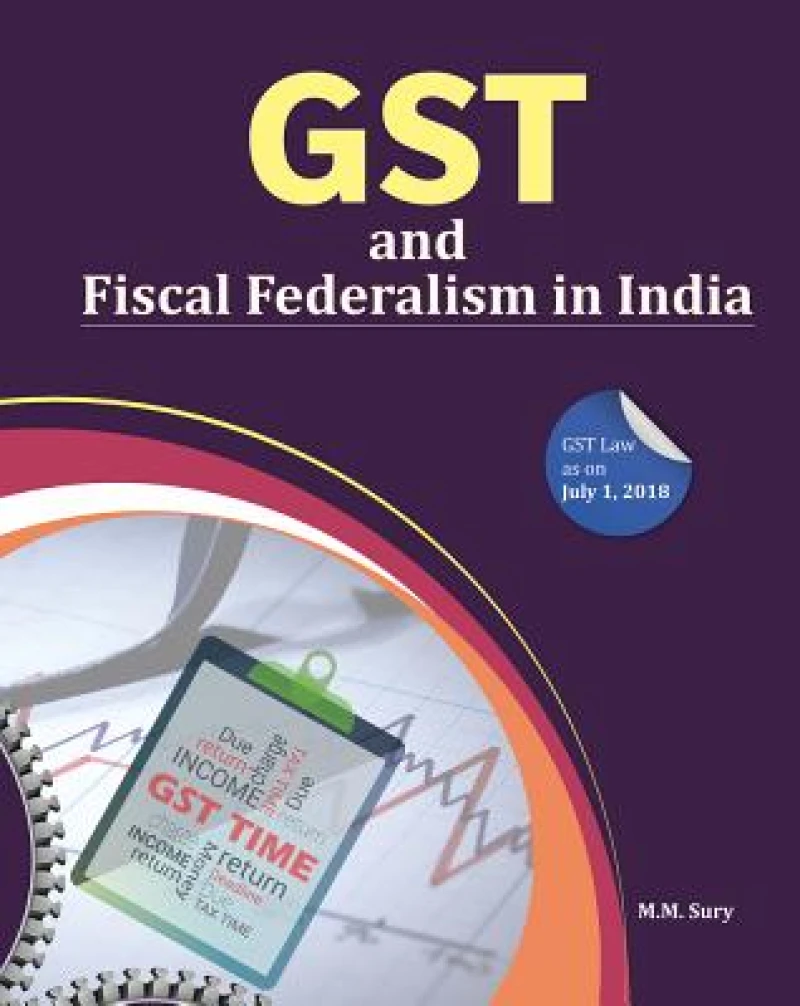
GST and Fiscal Federalism in India
Book Details
Format
Hardback or Cased Book
ISBN-10
8177084720
ISBN-13
9788177084726
Publisher
New Century Publications
Imprint
New Century Publications
Country of Manufacture
IN
Country of Publication
GB
Publication Date
Sep 1st, 2018
Print length
402 Pages
Weight
1,040 grams
Dimensions
19.00 x 24.80 x 3.50 cms
Product Classification:
Public financeTaxation & duties law
Ksh 25,000.00
Temporarily out of stock, due soon
0 in stock
Delivery Location
Delivery fee: Select location
Secure
Quality
Fast
Introduction of Goods and Services Tax (GST) from July 1, 2017 was undoubtedly the biggest tax reform in the fiscal history of India. After missing several deadlines and overcoming almost a decade of political differences, GSTa uniform nationwide tax finally replaced a multi-layered set of Central and State taxes and levies. Implementation of GST left behind an inefficient, complicated and fragmented indirect tax system. GST subsumed a profusion of Central and State indirect taxes to create a single unified market. The new tax is contributing to make India a seamless national market, boosting trade and industry and, in turn, economic growth. Common tax bases and common tax ratesacross goods and services and across States and between Centre and Statesare facilitating administration and improved compliance while also rendering manageable collection of taxes on inter-State supply of goods and services. Enactment of the Constitution (One Hundred and First Amendment) Act, 2016 and the subsequent introduction of GST marked a clear departure from the initial scheme of distribution of tax powers between the Centre and the States envisaged in the Constitution of India. Prior to this Amendment, taxation powers between the Centre and the States were clearly demarcated in the Constitution with no overlaps between their respective domains. In other words, there were no concurrent powers of taxation (or joint occupancy of tax fields) by the two levels of government. Broadly, the Centre had the powers to levy tax on the manufacture of goods while the States enjoyed the powers to levy tax on the sale of goods. In the case of inter-State sales, the Centre had the power to levy Central Sales Tax (CST). The Constitution (One Hundred and First Amendment) Act, 2016 inserted Article 246A in the Constitution which now confers concurrent powers upon both the Parliament and the State Legislatures to make laws with respect to GST. The dual GST imposes tax on the same taxable eventsupply of goods and servicessimultaneously by the Centre and the States. Both the Centre and the States are empowered to levy GST across the value chain from the stage of manufacturing to consumption. The assignment of concurrent jurisdiction to the Centre and the States for levying GST requires an institutional mechanism to ensure that decisions related to the structure, design and operation of GST are taken jointly by the Central and State Governments. Goods and Services Tax Council (GST Council) is a unique institutional mechanism for this purpose having Constitutional force. The introduction of GST has changed the landscape of fiscal federalism in India. It has charted out a new course for Centre-State fiscal relations. Signifying the spirit of co-operative federalism, GST is a historic and game-changing tax reform. This book explains various aspects of GST, in simple, lucid and non-technical language, to a cross-section of readers including teachers and students of economics, commerce, law, public administration, business management, and chartered accountancy. It will also serve the needs of legislators, business executives, entrepreneurs and investors, and others interested in understanding the basics of GST. The book contains 29 chapters organized into 4 Parts. Part I, consisting of 5 chapters, provides conceptual clarity as regards taxation of goods and services and describes pre-GST indirect tax system of India. Part II, comprising 4 chapters, records the Constitutional amendments, legislative measures and other efforts leading to the introduction of GST. Part III, containing 10 chapters, explains the current Constitutional provisions pertaining to taxes in India and various aspects of GST including its salient features, exemptions, threshold limits, composition scheme, rate structure, administration, anti-profiteering provisions, technological infrastructure, and implication of the tax for various sectors of the Indian economy. Part IV, consisting of 10 chapters, deals with the post-Independence evolution of fiscal federalism in India and the impact of GST on Centre-State fiscal relations. There are 4 appendices to the book which provide GST-relevant literature. Glossary of GST-related terms, bibliography and index also form part of the book.
Get GST and Fiscal Federalism in India by at the best price and quality guaranteed only at Werezi Africa's largest book ecommerce store. The book was published by New Century Publications and it has pages.

