

Guide to Computer Processor Architecture : A RISC-V Approach, with High-Level Synthesis
1st ed. 2023
Book Details
Format
Paperback / softback
Book Series
Undergraduate Topics in Computer Science
ISBN-10
3031180224
ISBN-13
9783031180224
Edition
1st ed. 2023
Publisher
Springer International Publishing AG
Imprint
Springer International Publishing AG
Country of Manufacture
GB
Country of Publication
GB
Publication Date
Jan 26th, 2023
Print length
439 Pages
Weight
888 grams
Dimensions
15.60 x 23.40 x 2.70 cms
KSh 9,900.00
Temporarily out of stock, due soon
0 in stock
Delivery Location
Delivery fee: Select location
Secure
Quality
Fast
The book presents a succession of RISC-V processor implementations in increasing difficulty (non pipelined, pipelined, deeply pipelined, multithreaded, multicore).
Each implementation is shown as an HLS (High Level Synthesis) code in C++ which can really be synthesized and tested on an FPGA based development board (such a board can be freely obtained from the Xilinx University Program targeting the university professors).
The book can be useful for three reasons. First, it is a novel way to introduce computer architecture. The codes given can serve as labs for a processor architecture course. Second, the book content is based on the RISC-V Instruction Set Architecture, which is an open-source machine language promised to become the machine language to be taught, replacing DLX and MIPS. Third, all the designs are implemented through the High Level Synthesis, a tool which is able to translate a C program into an IP (Intellectual Property). Hence, the book can serve to engineers willing to implement processors on FPGA and to researchers willing to develop RISC-V based hardware simulators.
Get Guide to Computer Processor Architecture by Bernard Goossens at the best price and quality guaranteed only at Werezi Africa's largest book ecommerce store. The book was published by Springer International Publishing AG and it has 439 pages.
Customers Who Bought This Also Bought
Internet Technologies, Applications and Societal Impact
KSh 16,200.00
Advanced Information Systems Engineering
KSh 16,200.00

Exam Ref 70-532 Developing Microsoft Azure Solutions
KSh 6,050.00

A+ Guide to Hardware
KSh 17,000.00
Technological Innovation for Life Improvement
KSh 16,200.00
Reliability and Statistical Computing
KSh 16,200.00
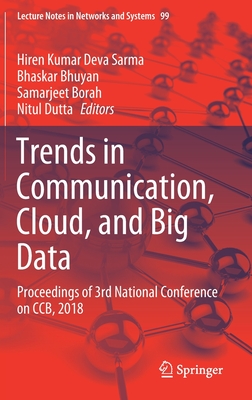
Trends in Communication, Cloud, and Big Data
KSh 23,400.00
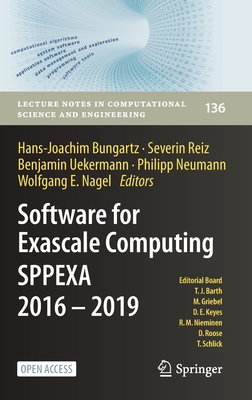
Software for Exascale Computing - SPPEXA 2016-2019
KSh 8,150.00
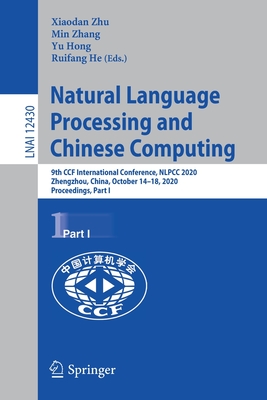
Natural Language Processing and Chinese Computing
KSh 16,200.00
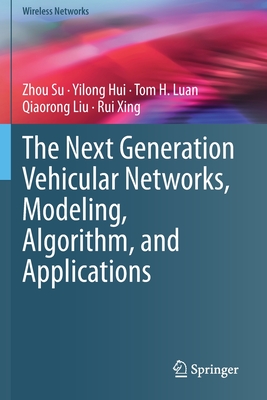
The Next Generation Vehicular Networks, Modeling, Algorithm and Applications
KSh 19,800.00

Verified Software. Theories, Tools and Experiments.
KSh 8,100.00

Multi-Agent Systems
KSh 12,600.00
More in This Genre
Internet Technologies, Applications and Societal Impact
KSh 16,200.00
Advanced Information Systems Engineering
KSh 16,200.00
Exam Ref 70-532 Developing Microsoft Azure Solutions
KSh 6,050.00
A+ Guide to Hardware
KSh 17,000.00
Technological Innovation for Life Improvement
KSh 16,200.00
Reliability and Statistical Computing
KSh 16,200.00
