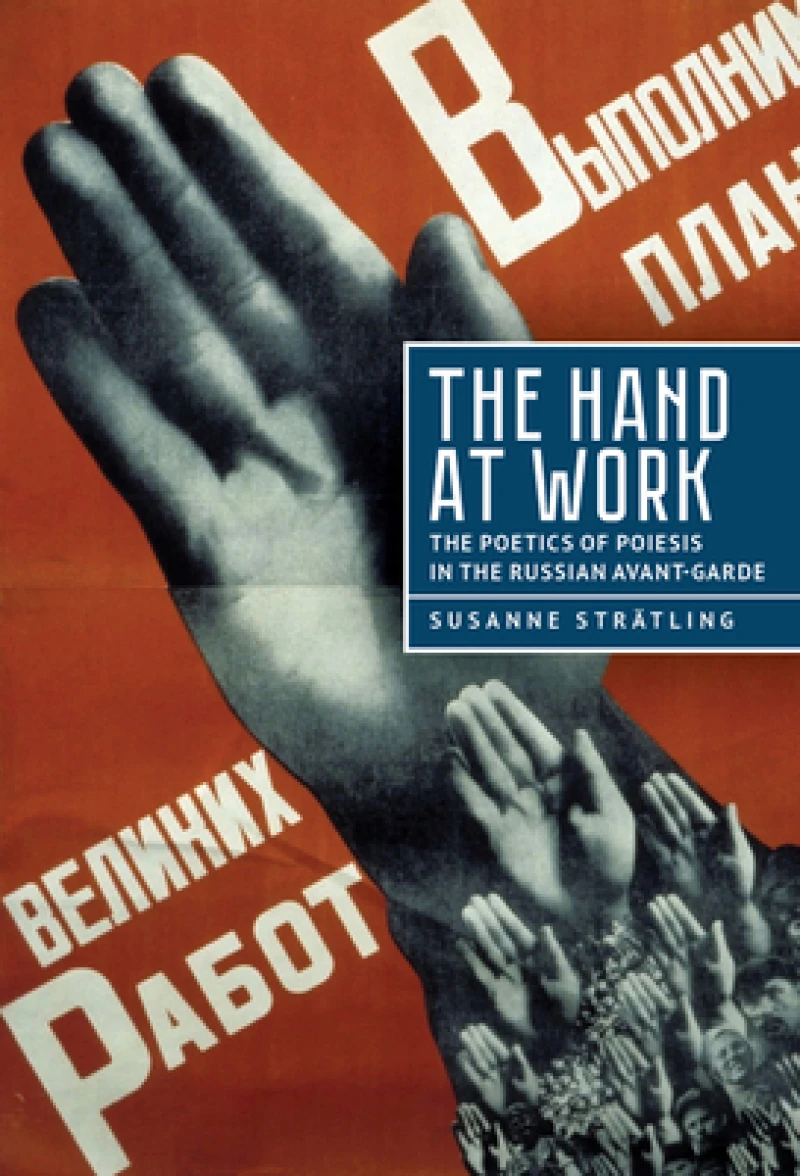
Hand at Work : The Poetics of Poiesis in the Russian Avant-Garde
Book Details
Format
Hardback or Cased Book
ISBN-10
1644697076
ISBN-13
9781644697078
Publisher
Academic Studies Press
Imprint
Academic Studies Press
Country of Manufacture
GB
Country of Publication
GB
Publication Date
Dec 30th, 2021
Print length
348 Pages
Weight
668 grams
Dimensions
24.10 x 16.50 x 2.50 cms
Ksh 14,050.00
Werezi Extended Catalogue
Delivery in 7 days
2 copies in stock
Delivery Location
Delivery fee: Select location
Delivery in 7 days
Secure
Quality
Fast
Focusing on the gestures of giving, touching, showing and handcrafting, this study examines key scenes of tactile interaction between subject and artifact. The readings of this book call for a revision of an optically obscured aesthetics and poetics to include haptic experience as an often overlooked but pivotal part of the making as well as the perception of literature and the arts.
Art = New Vision. This formula shaped the avant-garde. With moving images abruptly expanding the boundaries of the visible world, new printing techniques triggering a pictorial turn in graphic art, and literature becoming almost inseparable from visual media, we still regard the avant-garde as heyday for modernism’s obsession with the eye. But what are the blind spots of this optocentrism? Focusing on the gestures of giving, touching, showing, and handcrafting, this study examines key scenes of tactile interaction between subject and artifact. Hand movements, manual maneuvers and manipulations challenge optics and expose the crises of a visually dominated perspective on the arts. The readings of this book call for a revision of an optically obscured aesthetics and poetics to include haptic experience as an often overlooked but pivotal part of the making, as well as the perception, of literature and the arts.
"Susanne Strätling sees the Russian avant-garde from sudden, oblique angles, like Rodchenko or Tintoretto. The Hand at Work focuses on artistic discourses around gesture, especially that of the hand, from the revolutionary decade when artistic workers reinvented themselves as ‘makers,’ reactivating the original, physical sense of the Greek word poiēsis in the broad context of revolutionary idealization of proletarian labor. The author’s erudition is astonishing. So is her capacity for showing relations among seemingly unrelated ideas. This study of ideologies of embodiment—and their emphasis on touch and muscular effort—ranges not only synchronically, exhibiting related attitudes towards materiality over a dazzling variety of artistic and intellectual fields between the late 1910s and early 1930s, but also diachronically, towards earlier Russian history. I find the bridges that she builds with the Baroque period to be especially valuable. This is a book not just for specialists in the global avantgarde, or in the now burgeoning, interdisciplinary field of cultural studies of gesture, but also for readers who enjoyed Umberto Eco’s The Search for the Perfect Language, and even the occult studies of Frances Yates.”
— Devin Fore, Princeton University
—Eugene Ostashevsky, poet and translator
"This is one of the most sophisticated and innovative interpretations of the Russian avant-garde to date. Susanne Strätling offers a nuanced and impeccably researched interdisciplinary account; her monograph is undoubtedly a considerable accomplishment.”
—Galin Tihanov, George Steiner Professor of Comparative Literature, Queen Mary University of London
— Devin Fore, Princeton University
Get Hand at Work by at the best price and quality guaranteed only at Werezi Africa's largest book ecommerce store. The book was published by Academic Studies Press and it has pages.