
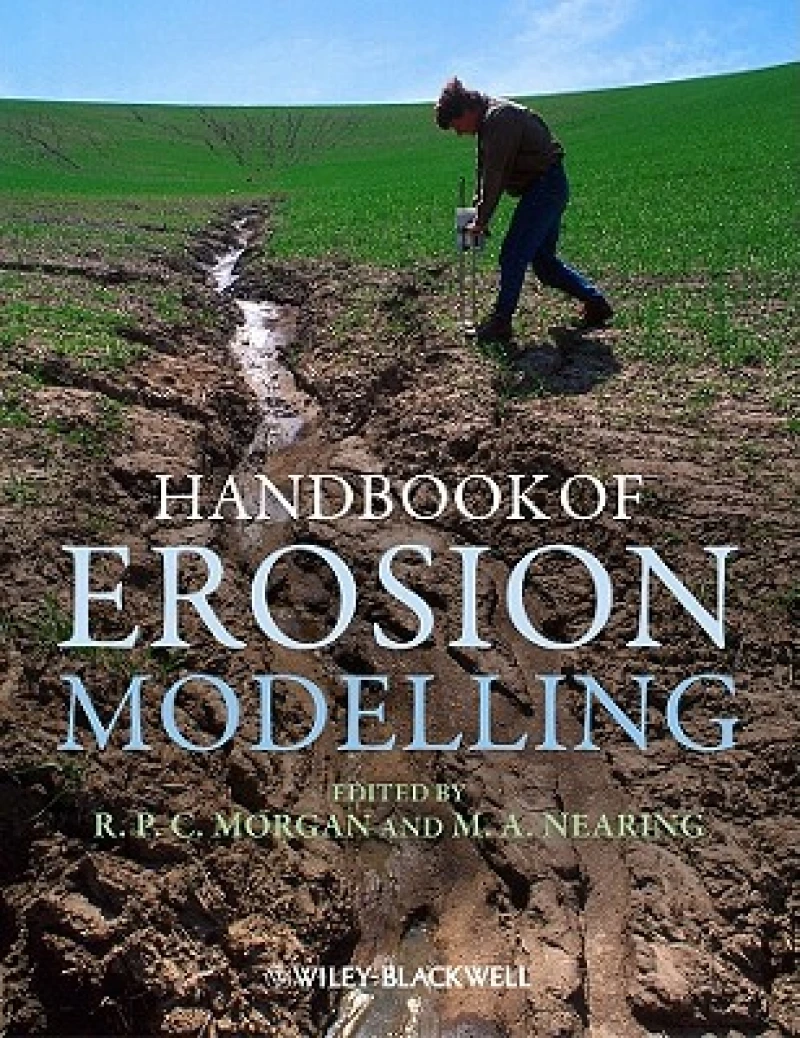
Handbook of Erosion Modelling
Book Details
Format
Hardback or Cased Book
ISBN-10
1405190108
ISBN-13
9781405190107
Publisher
John Wiley and Sons Ltd
Imprint
Wiley-Blackwell
Country of Manufacture
GB
Country of Publication
GB
Publication Date
Dec 17th, 2010
Print length
416 Pages
Weight
1,096 grams
Dimensions
24.80 x 19.70 x 2.80 cms
Product Classification:
Geological surface processes (geomorphology)Geomorphology and geological surface processes
Ksh 23,400.00
Temporarily out of stock, due soon
0 in stock
Delivery Location
Delivery fee: Select location
Secure
Quality
Fast
The text will provide the erosion model user with the tools to evaluate different erosion models and select the most appropriate for a specific purpose compatible with the input data available. The first portion of the book describes how models are developed, and shows the advantages and limitations of each model.
The movement of sediment and associated pollutants over the landscape and into water bodies is of increasing concern with respect to pollution control, prevention of muddy floods and environmental protection. In addition, the loss of soil on site has implications for declining agricultural productivity, loss of biodiversity and decreased amenity and landscape value. The fate of sediment and the conservation of soil are important issues for land managers and decision-makers. In developing appropriate policies and solutions, managers and researchers are making greater use of erosion models to characterise the processes of erosion and their interaction with the landscape. A study of erosion requires one to think in terms of microseconds to understand the mechanics of impact of a single raindrop on a soil surface, while landscapes form over periods of thousands of years. These processes operate on scales of millimetres for single raindrops to mega-metres for continents. Erosion modelling thus covers quite a lot of ground. This book introduces the conceptual and mathematical frameworks used to formulate models of soil erosion and uses case studies to show how models are applied to a variety of purposes at a range of spatial and temporal scales. The aim is to provide land managers and others with the tools required to select a model appropriate to the type and scale of erosion problem, to show what users can expect in terms of accuracy of model predictions and to provide an appreciation of both the advantages and limitations of models. Problems covered include those arising from agriculture, the construction industry, pollution and climatic change and range in scale from farms to small and large catchments. The book will also be useful to students and research scientists as an up-to-date review of the state-of-art of erosion modelling and, through a knowledge of how models are used in practice, in highlighting the gaps in knowledge that need to be filled in order to develop even better models.
Get Handbook of Erosion Modelling by at the best price and quality guaranteed only at Werezi Africa's largest book ecommerce store. The book was published by John Wiley and Sons Ltd and it has pages.

