
Cart 0
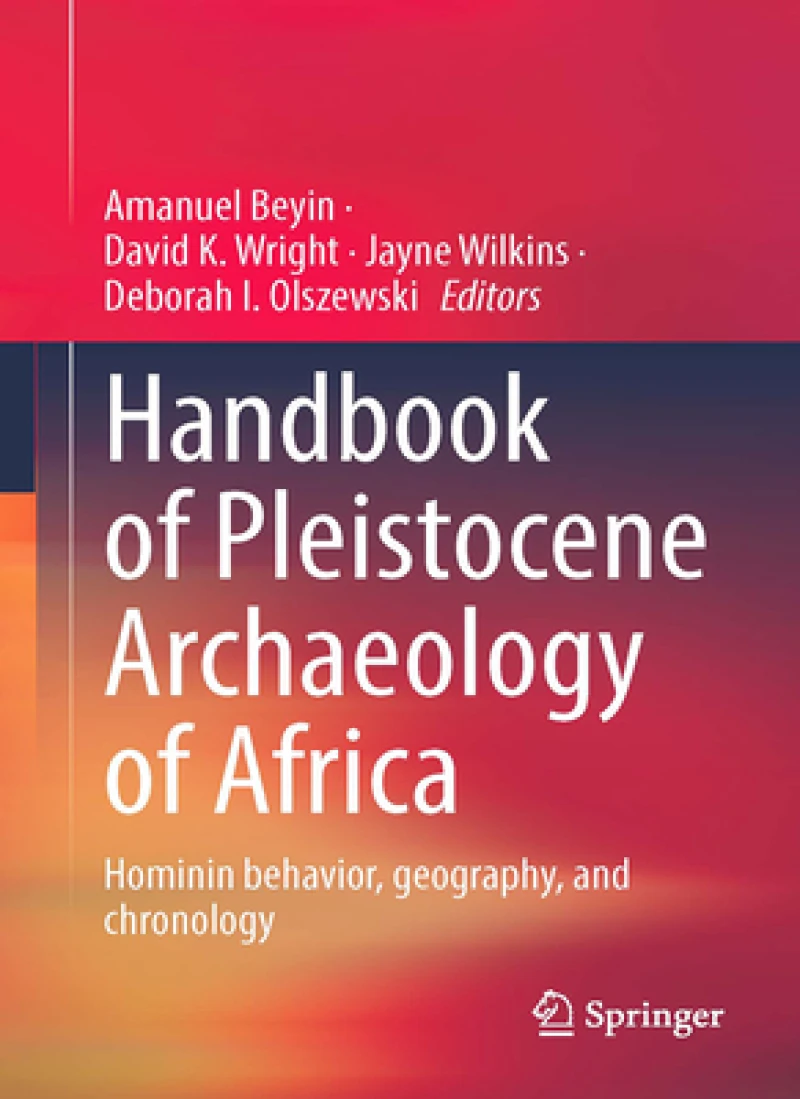
Handbook of Pleistocene Archaeology of Africa
Click to zoom

Share this book

Handbook of Pleistocene Archaeology of Africa : Hominin behavior, geography, and chronology

2023 ed.

Book Details

Format Hardback or Cased Book
ISBN-10 3031202899
ISBN-13 9783031202896
Edition 2023 ed.
Publisher Springer International Publishing AG
Imprint Springer International Publishing AG
Country of Manufacture GB
Country of Publication GB
Publication Date Aug 18th, 2023
Print length 2146 Pages
Weight 4,302 grams
Dimensions 16.70 x 24.90 x 10.00 cms
Product Classification: ArchaeologyAnthropology
Ksh 36,100.00
Werezi Extended Catalogue Delivery in 28 days

Delivery Location

Delivery fee: Select location

Delivery in 28 days

Secure
Quality
Fast

This handbook showcases an Africa-wide compendium of Stone Age archaeological sites and methodological advances that have improved our understanding of hominin lifeways and biogeography in the continent. The focal time spans the Pleistocene Epoch (c. 2.5 million–11,700 years ago) during which important human traits, such as obligate bipedalism that freed the hands to engage in creative activities, a large brain relative to body size, language, and social complexity, developed in the general forms that they are found today. The handbook is the first of its kind, and it is expected to play a significant role in human evolutionary research by:

❖ Collating the African Stone Age record, which exists in a fragmented state along the lines of national boundaries and colonial experiences.

❖ Showcasing emerging conceptual and methodological advances in African Pleistocene archaeology.

❖ Providing reference datasets for teaching and researching African prehistory.

❖ Making Africa’s Stone Age record accessible to researchers and students based in Africa who may not have access to journal publications where most new field discoveries are published.

The Handbook features 128 chapters, of which 116 are site entries grouped by the host countries and presented in an alphabetical order. A number of those site-related entries examine multiple archaeological localities lumped under specific projects or study areas. The rest of the contributions deal with methodological topics, such as luminescence and radiocarbon dating, field data recovery, lithic analysis, micromorphology, and hominin fossil and zooarchaeological records of Pleistocene Africa. The introductory chapter provides an historical overview of the development of Stone Age (Paleolithic) archaeology in Africa beginning in the mid-19th century, and paleoenvironmental and chronological frameworks commonly used to structure the continent’s Pleistocene record. By making a good amount of African Stone Age literature accessible to researchers and the public, we wish to promote interest in human evolutionary research in the continent and elsewhere.

This handbook showcases an Africa-wide compendium of Stone Age archaeological sites and methodological advances that have improved our understanding of hominin lifeways and biogeography in the continent. The focal time spans the Pleistocene Epoch (c. 2.5 million–11,700 years ago) during which important human traits, such as obligate bipedalism that freed the hands to engage in creative activities, a large brain relative to body size, language, and social complexity, developed in the general forms that they are found today. The handbook is the first of its kind, and it is expected to play a significant role in human evolutionary research by:? Collating the African Stone Age record, which exists in a fragmented state along the lines of national boundaries and colonial experiences. ? Showcasing emerging conceptual and methodological advances in African Pleistocene archaeology. ? Providing reference datasets for teaching and researching African prehistory. ? Making Africa’s Stone Age record accessible to researchers and students based in Africa who may not have access to journal publications where most new field discoveries are published. The Handbook features 128 chapters, of which 116 are site entries grouped by the host countries and presented in an alphabetical order. A number of those site-related entries examine multiple archaeological localities lumped under specific projects or study areas. The rest of the contributions deal with methodological topics, such as luminescence and radiocarbon dating, field data recovery, lithic analysis, micromorphology, and hominin fossil and zooarchaeological records of Pleistocene Africa. The introductory chapter provides an historical overview of the development of Stone Age (Paleolithic) archaeology in Africa beginning in the mid-19th century, and paleoenvironmental and chronological frameworks commonly used to structure the continent’s Pleistocene record. By making a good amount of AfricanStone Age literature accessible to researchers and the public, we wish to promote interest in human evolutionary research in the continent and elsewhere.

This handbook showcases an Africa-wide compendium of Stone Age archaeological sites and methodological advances that have improved our understanding of hominin lifeways and biogeography in the continent. The focal time spans the Pleistocene Epoch (c. 2.5 million–11,700 years ago) during which important human traits, such as obligate bipedalism that freed the hands to engage in creative activities, a large brain relative to body size, language, and social complexity, developed in the general forms that they are found today. The handbook is the first of its kind, and it is expected to play a significant role in human evolutionary research by:

❖ Collating the African Stone Age record, which exists in a fragmented state along the lines of national boundaries and colonial experiences.

❖ Showcasing emerging conceptual and methodological advances in African Pleistocene archaeology.

❖ Providing reference datasets for teaching and researching African prehistory.

❖ Making Africa’s Stone Age record accessible to researchers and students based in Africa who may not have access to journal publications where most new field discoveries are published.

The Handbook features 128 chapters, of which 116 are site entries grouped by the host countries and presented in an alphabetical order. A number of those site-related entries examine multiple archaeological localities lumped under specific projects or study areas. The rest of the contributions deal with methodological topics, such as luminescence and radiocarbon dating, field data recovery, lithic analysis, micromorphology, and hominin fossil and zooarchaeological records of Pleistocene Africa. The introductory chapter provides an historical overview of the development of Stone Age (Paleolithic) archaeology in Africa beginning in the mid-19th century, and paleoenvironmental and chronological frameworks commonly used to structure the continent’s Pleistocene record. By making a good amount of African Stone Age literature accessible to researchers and the public, we wish to promote interest in human evolutionary research in the continent and elsewhere.

This handbook showcases an Africa-wide compendium of Stone Age archaeological sites and methodological advances that have improved our understanding of hominin lifeways and biogeography in the continent. The focal time spans the Pleistocene Epoch (c. 2.5 million–11,700 years ago) during which important human traits, such as obligate bipedalism that freed the hands to engage in creative activities, a large brain relative to body size, language, and social complexity, developed in the general forms that they are found today. The handbook is the first of its kind, and it is expected to play a significant role in human evolutionary research by:? Collating the African Stone Age record, which exists in a fragmented state along the lines of national boundaries and colonial experiences. ? Showcasing emerging conceptual and methodological advances in African Pleistocene archaeology. ? Providing reference datasets for teaching and researching African prehistory. ? Making Africa’s Stone Age record accessible to researchers and students based in Africa who may not have access to journal publications where most new field discoveries are published.  The Handbook features 128 chapters, of which 116 are site entries grouped by the host countries and presented in an alphabetical order. A number of those site-related entries examine multiple archaeological localities lumped under specific projects or study areas. The rest of the contributions deal with methodological topics, such as luminescence and radiocarbon dating, field data recovery, lithic analysis, micromorphology, and hominin fossil and zooarchaeological records of Pleistocene Africa. The introductory chapter provides an historical overview of the development of Stone Age (Paleolithic) archaeology in Africa beginning in the mid-19th century, and paleoenvironmental and chronological frameworks commonly used to structure the continent’s Pleistocene record. By making a good amount of AfricanStone Age literature accessible to researchers and the public, we wish to promote interest in human evolutionary research in the continent and elsewhere. Awarded the 2025 ‘The Best Book Award’ by The Society of Africanist Archaeologists.   

Get Handbook of Pleistocene Archaeology of Africa by at the best price and quality guaranteed only at Werezi Africa's largest book ecommerce store. The book was published by Springer International Publishing AG and it has pages.


Mind, Body, & Spirit

Price

Ksh 36,100.00

Shopping Cart

Africa largest book store

Sub Total:
Ebooks

Digital Library
Coming Soon

Our digital collection is currently being curated to ensure the best possible reading experience on Werezi. We'll be launching our Ebooks platform shortly.