
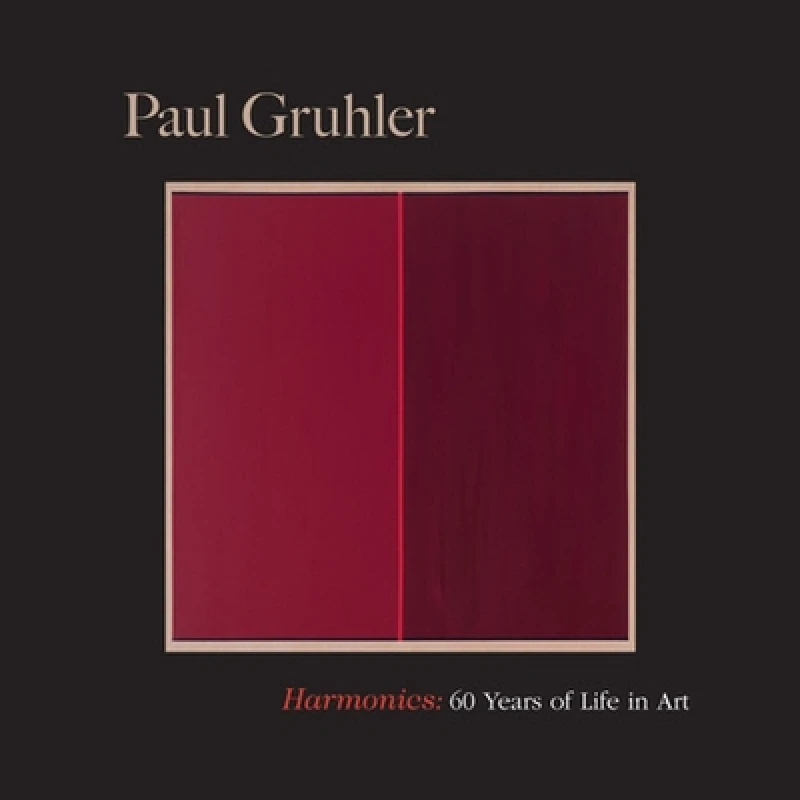
Harmonics: Sixty Years of Life in Art
by
Paul Gruhler
Book Details
Format
Paperback / Softback
ISBN-10
1942134797
ISBN-13
9781942134794
Publisher
Mandel Vilar Press
Imprint
Mandel Vilar Press
Country of Manufacture
GB
Country of Publication
GB
Publication Date
Oct 14th, 2021
Print length
128 Pages
Weight
956 grams
Dimensions
30.40 x 29.90 x 1.60 cms
Ksh 4,800.00
Werezi Extended Catalogue
0 in stock
Delivery Location
Delivery fee: Select location
Secure
Quality
Fast
Paul Gruhler opened his first studio in 1962 at the age of 21 a year later he had a solo show at the DeMena Gallery in lower Manhattan. From the beginning, Gruhler, a self-taught artist, was compelled by what came to be known as geometric abstraction, in which the deliberative arrangement of color, line, texture, and scale, in paintings and collage, evoke from these disparate elements a sense of meditative harmony. For sixty years, he has continued to explore the subtle differences that can be made from color and line.Gruhler was fortunate in the early years to have met and become good friends with three older artists who were also important teachers and mentors first Michael Lekakis, then Harold Weston and Herb Aach. Lekakis, a celebrated sculptor, who already had had exhibitions at the Guggenheim Museum, the Whitney Museum of American Art, and the Museum of Modern Arts exhibition Americans 1963, took Gruhler under his wing, navigating him through New Yorks thriving avant-garde art scene. As Carolyn Bauer writes, Michael Lekakis was instrumental in encouraging Gruhler to attend art events, while taking him to invite-only museum openings. He also introduced him to renowned artists among them, Alexander Calder, Isamu Noguchi, Louise Nevelson, and Barnett Newman whose works influenced the young Gruhler, as did such artists as Mark Rothko, Clyfford Still, and Ad Reinhardt. Lekakis was also instrumental in Gruhlers first show, giving titles to his paintings and writing catalog copy that drew upon his own abstract poetics. These canvases, he wrote, are multi colored fire densely cascades to suspension hanging a counterpoint of rhythmic patterns in space covering it like a shroud united by a golden fragmentation. Over these years Gruhler has had numerous solo and group shows in the U.S. in New York and Vermont, in Mexico, and abroad in Finland, Germany, Sweden, and The Netherlands.HARMONICS is both a retrospective and a current view of Paul Gruhlers intensive art. My work, he says, has been a meditative exploration of vertical and horizontal relationships in space, in order to achieve both harmony and tension within color, line and form.
Paul Gruhler opened his first studio in 1962 at the age of 21 — a year later he had a solo show at the DeMena Gallery in lower Manhattan. From the beginning, Gruhler, a self-taught artist, was compelled by what came to be known as geometric abstraction, in which the deliberative arrangement of color, line, texture, and scale, in paintings and collage, evoke from these disparate elements a sense of meditative harmony. For sixty years, he has continued to explore the subtle differences that can be made from color and line. Gruhler was fortunate in the early years to have met and become good friends with three older artists who were also important teachers and mentors — first Michael Lekakis, then Harold Weston and Herb Aach. Lekakis, a celebrated sculptor, who already had had exhibitions at the Guggenheim Museum, the Whitney Museum of American Art, and the Museum of Modern Art’s exhibition Americans 1963, took Gruhler under his wing, navigating him through New York’s thriving avant-garde art scene. As Carolyn Bauer writes, “Michael Lekakis was instrumental in encouraging Gruhler to attend art events, while taking him to invite-only museum openings.” He also introduced him to renowned artists — among them, Alexander Calder, Isamu Noguchi, Louise Nevelson, and Barnett Newman — whose works influenced the young Gruhler, as did such artists as Mark Rothko, Clyfford Still, and Ad Reinhardt. Lekakis was also instrumental in Gruhler’s first show, giving titles to his paintings and writing catalog copy that drew upon his own abstract poetics. “These canvases,” he wrote, are “multi colored fire densely cascades to suspension hanging a counterpoint of rhythmic patterns in space covering it like a shroud united by a golden fragmentation.” Over these years Gruhler has had numerous solo and group shows in the U.S. in New York and Vermont, in Mexico, and abroad in Finland, Germany, Sweden, and The Netherlands. HARMONICS is both a retrospective and a current view of Paul Gruhler’s intensive art. “My work,” he says, “has been a meditative exploration of vertical and horizontal relationships in space, in order to achieve both harmony and tension within color, line and form.” -- Paul Gruhler * Publisher *
Get Harmonics: Sixty Years of Life in Art by at the best price and quality guaranteed only at Werezi Africa's largest book ecommerce store. The book was published by Mandel Vilar Press and it has pages.

