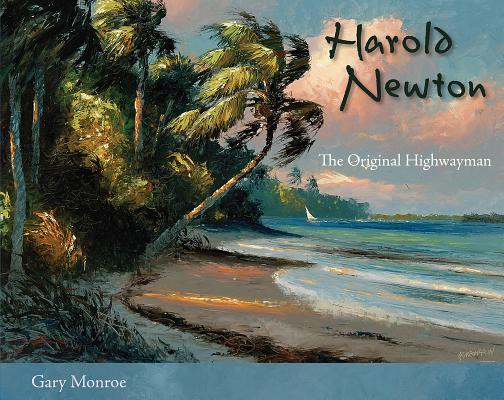
Harold Newton : The Original Highwayman
by
Gary Monroe
Book Details
Format
Paperback / softback
ISBN-10
0813064112
ISBN-13
9780813064116
Publisher
University Press of Florida
Imprint
University Press of Florida
Country of Manufacture
US
Country of Publication
GB
Publication Date
Oct 9th, 2018
Print length
160 Pages
Weight
468 grams
Dimensions
20.00 x 25.40 x 1.00 cms
Product Classification:
Individual artists, art monographs
KSh 4,700.00
Temporarily out of stock, due soon
0 in stock
Delivery Location
Delivery fee: Select location
Secure
Quality
Fast
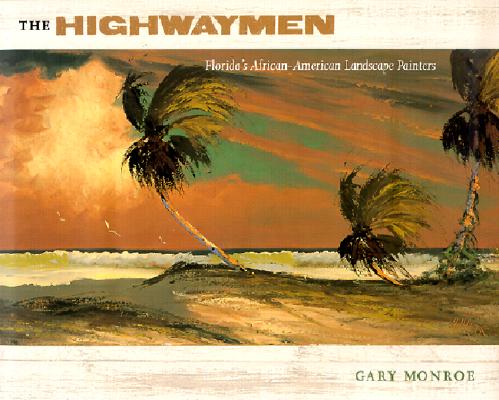
From the best-selling author of The Highwaymen comes the story of the group's most prolific and most sought after painter. Harold Newton was an unrecognized vagabond artist who not only captured the beauty of the Florida landscape but transformed it with an artistry that invoked its drama of light, colour, and form while hinting at its dark, primordial forces.
From the best-selling author of The Highwaymen comes the story of the group''s most prolific and most sought after painter. Harold Newton was an unrecognized vagabond artist who not only captured the beauty of the Florida landscape but transformed it with an artistry that invoked its drama of light, color, and form while hinting at its dark, primordial forces. One of his fellow Highwaymen once observed of his work, “It don''t have to be signed to know it''s a Newton.” Combining samples of his paintings with biographical details and reminiscences of family members, customers, and fellow Highwaymen, Gary Monroe creates an homage to the man whose work contributed perhaps more than anyone else''s to shaping the romantic imagery and identity of modern Florida.
An enigmatic figure, Newton lived an artist''s life-aloof and prolific while painting, gregarious and expansive when socializing. Taking to the streets to sell his paintings in 1954, he sold untold numbers of works, showering the state with them. There are “Newtons” everywhere-especially along Florida''s east central coast, the Highwaymen''s backyard. Their art is in Miami and the Palm Beaches, Tallahassee and across the Panhandle, Lake City and scattered throughout the interior, and along the west coast as well, in Naples, Sarasota, Tampa, and St. Petersburg-wherever there were homes and offices. More of Newton''s paintings remain today than those of any of the other highwaymen. Monroe explains these images'' enduring appeal while providing glimpses of the African American artist''s life from which they emerged, from a childhood spent moving between Florida and south Georgia, to a pivotal encounter with Bean Backus, to his sojourns at Eddie''s Place, to the repossession of his 1959 Ford sedan decorated with beach, ocean, palm trees, and nude girls, to the quiet accumulation of professional patrons eager to purchase another two or three ""Newtons"" at every available opportunity.
Newton is central to understanding the style of landscape painting that emerged from the Indian River area at mid-century, and Monroe creates an attractive, engaging, and informative account of this pivotal artist and his impact on the popular image of Florida.
An enigmatic figure, Newton lived an artist''s life-aloof and prolific while painting, gregarious and expansive when socializing. Taking to the streets to sell his paintings in 1954, he sold untold numbers of works, showering the state with them. There are “Newtons” everywhere-especially along Florida''s east central coast, the Highwaymen''s backyard. Their art is in Miami and the Palm Beaches, Tallahassee and across the Panhandle, Lake City and scattered throughout the interior, and along the west coast as well, in Naples, Sarasota, Tampa, and St. Petersburg-wherever there were homes and offices. More of Newton''s paintings remain today than those of any of the other highwaymen. Monroe explains these images'' enduring appeal while providing glimpses of the African American artist''s life from which they emerged, from a childhood spent moving between Florida and south Georgia, to a pivotal encounter with Bean Backus, to his sojourns at Eddie''s Place, to the repossession of his 1959 Ford sedan decorated with beach, ocean, palm trees, and nude girls, to the quiet accumulation of professional patrons eager to purchase another two or three ""Newtons"" at every available opportunity.
Newton is central to understanding the style of landscape painting that emerged from the Indian River area at mid-century, and Monroe creates an attractive, engaging, and informative account of this pivotal artist and his impact on the popular image of Florida.
Get Harold Newton by Gary Monroe at the best price and quality guaranteed only at Werezi Africa's largest book ecommerce store. The book was published by University Press of Florida and it has 160 pages.
Customers Who Bought This Also Bought

Van Gogh
KSh 10,750.00
Kahlo
KSh 1,800.00
Michelangelo
KSh 15,850.00

Frida Kahlo
KSh 5,400.00

Michelangelo
KSh 5,950.00

Caravaggio
KSh 3,250.00
Life, Letters, and Poetry
KSh 2,000.00

The Book of Emma Reyes
KSh 2,000.00

Jean-Michel Basquiat
KSh 5,650.00

Michelangelo
KSh 3,250.00

Artists Who Changed History
KSh 5,900.00

Basquiat
KSh 3,250.00