
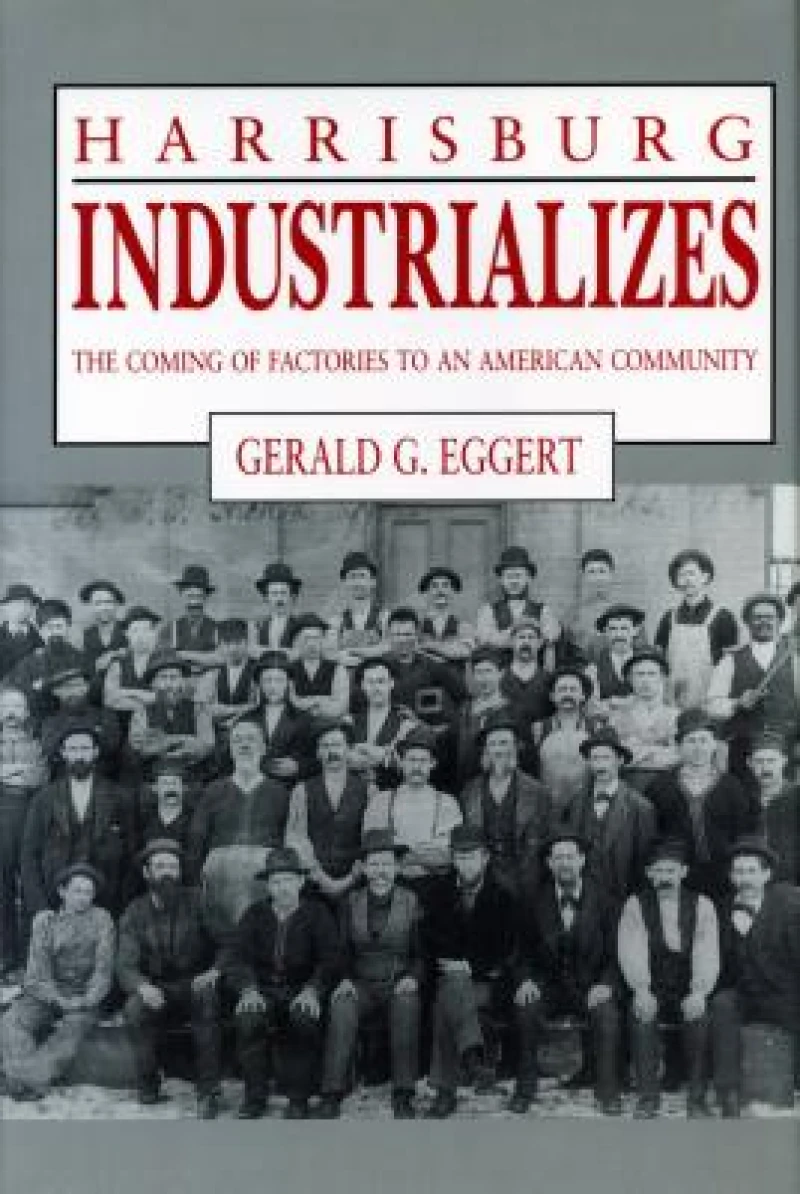
Harrisburg Industrializes : The Coming of Factories to an American Community
Book Details
Format
Paperback / Softback
ISBN-10
0271030704
ISBN-13
9780271030708
Publisher
Pennsylvania State University Press
Imprint
Pennsylvania State University Press
Country of Manufacture
GB
Country of Publication
GB
Publication Date
Sep 15th, 1992
Print length
432 Pages
Weight
658 grams
Dimensions
22.90 x 15.20 x 3.00 cms
Product Classification:
Economic historyIndustry & industrial studies
Ksh 5,950.00
Temporarily out of stock, due soon
0 in stock
Delivery Location
Delivery fee: Select location
Secure
Quality
Fast
In 1850, Harrisburg, Pennsylvania, was a community like many others in the U. S., employing most of its citizens in trade and commerce. Unlike its larger neighbors, Pittsburgh and Philadelphia, Harrisburg had not yet experienced firsthand the Industrial Revolution. Within a decade, however, Harrisburg boasted a cotton textile mill, two blast furnaces and several iron rolling mills, a railroad car manufactory, and a machinery plant. This burst of industrial activity naturally left its mark on the community, by within two generations most industry had left Harrisburg, and its economic base was shifting toward white-collar governmental administration and services. Harrisburg Industrializes looks at this critical episode in Harrisburg's history to discover how the coming of the factory system affected the life of the community. Eggert begins with the earliest years of Harrisburg, describing its transformation from a frontier town to a small commercial and artisanal community. He identifies the early entrepreneurs who built the banking, commercial, and transportation infrastructure, which would provide the basis for industry at mid-century. Eggert then reconstructs the development of the principal manufacturing firms from their foundings, through the expansive post-Civil War era, to the onset of deindustrialization near the end of the century. Through census and company records, he is able to follow the next generation of craftsmen and entrepreneurs as well as the new industrial workers—many of then minorities—who came to the city after 1850. Eggert sees Harrisburg's experience with the factory system as "second-stage," or imitative, industrialization, which was typical of many, if not most, communities that developed factory production. At those relatively few industrial centers (Lowell and Pittsburgh, for example) where new technologies arose and were aggressively impose on workers, the consequences were devastating, often causing alienation, rebellion, and repression. By contrast, at secondary centers like Harrisburg (or Reading, Scranton, or Wilmington), industrialization came later, was derivative rather than creative, was modest in scale, and focused on local and regional markets. Because the new factories did not compete with local crafts, few displaced artisans became factory hands. At the same time, an adequate supply of local native-born workers forestalled an influx of immigrants, so Harrisburg experienced little ethnic hostility. Ultimately, therefore, Eggert concludes that the introduction of an industrial order was much less disruptive in Harrisburg than in the major industrial sites, primarily because it did not alter so profoundly the existing economic and social order.
Get Harrisburg Industrializes by at the best price and quality guaranteed only at Werezi Africa's largest book ecommerce store. The book was published by Pennsylvania State University Press and it has pages.

