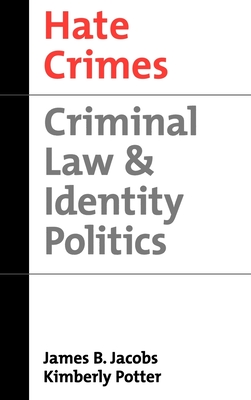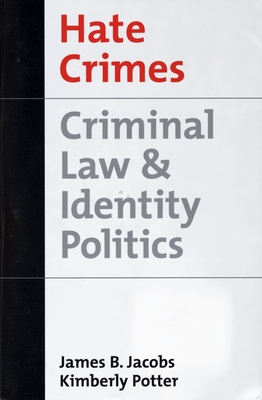
Hate Crimes : Criminal Law and Identity Politics
Book Details
Format
Paperback / softback
Book Series
Studies in Crime and Public Policy
ISBN-10
0195140540
ISBN-13
9780195140545
Publisher
Oxford University Press Inc
Imprint
Oxford University Press Inc
Country of Manufacture
GB
Country of Publication
GB
Publication Date
Jan 18th, 2001
Print length
224 Pages
Weight
354 grams
Dimensions
23.30 x 15.10 x 1.40 cms
KSh 6,350.00
Temporarily out of stock, due soon
0 in stock
Delivery Location
Delivery fee: Select location
Secure
Quality
Fast
In the early-1980s, the US Congress and many state legislatures passed a wave of "hate crime" laws requiring the collection of statistics on, and enhancing punishments for, crimes motivated by certain prejudices. This book places the evolution of the hate crime concept in socio-legal perspective.
In the early 1980s, a new category of crime appeared in the criminal law lexicon. In response to concerted advocacy-group lobbying, Congress and many state legislatures passed a wave of "hate crime" laws requiring the collection of statistics on, and enhancing the punishment for, crimes motivated by certain prejudices. This book places the evolution of the hate crime concept in socio-legal perspective. James B. Jacobs and Kimberly Potter adopt a skeptical if not critical stance, maintaining that legal definitions of hate crime are riddled with ambiguity and subjectivity. No matter how hate crime is defined, and despite an apparent media consensus to the contrary, the authors find no evidence to support the claim that the United States is experiencing a hate crime epidemic--instead, they cast doubt on whether the number of hate crimes is even increasing. The authors further assert that, while the federal effort to establish a reliable hate crime accounting system has failed, data collected for this purpose have led to widespread misinterpretation of the state of intergroup relations in this country. The book contends that hate crime as a socio-legal category represents the elaboration of an identity politics now manifesting itself in many areas of the law. But the attempt to apply the anti-discrimination paradigm to criminal law generates problems and anomalies. For one thing, members of minority groups are frequently hate crime perpetrators. Moreover, the underlying conduct prohibited by hate crime law is already subject to criminal punishment. Jacobs and Potter question whether hate crimes are worse or more serious than similar crimes attributable to other anti-social motivations. They also argue that the effort to single out hate crime for greater punishment is, in effect, an effort to punish some offenders more seriously simply because of their beliefs, opinions, or values, thus implicating the First Amendment. Advancing a provocative argument in clear and persuasive terms, Jacobs and Potter show how the recriminalization of hate crime has little (if any) value with respect to law enforcement or criminal justice. Indeed, enforcement of such laws may exacerbate intergroup tensions rather than eradicate prejudice.
Get Hate Crimes by James B. Jacobs, Kimberly Potter at the best price and quality guaranteed only at Werezi Africa's largest book ecommerce store. The book was published by Oxford University Press Inc and it has 224 pages.
Customers Who Bought This Also Bought

Yahoo Boys
KSh 3,050.00

Yahoo Boys
KSh 3,950.00

Lost Girls
KSh 2,000.00

In Cold Blood
KSh 2,000.00

Nobody's Girl
KSh 4,500.00
Forensic Case Histories
KSh 7,550.00

The Dryslwyn Castle Killings
KSh 1,900.00

Tolerating State Violence
KSh 7,900.00

The Dark Hours
KSh 3,600.00

Crime and Psychology
KSh 30,950.00

Challenging Criminological Theory
KSh 8,700.00

The International Drugs Trade
KSh 10,100.00