
Cart 0
Health Without Borders
Click to zoom

Share this book

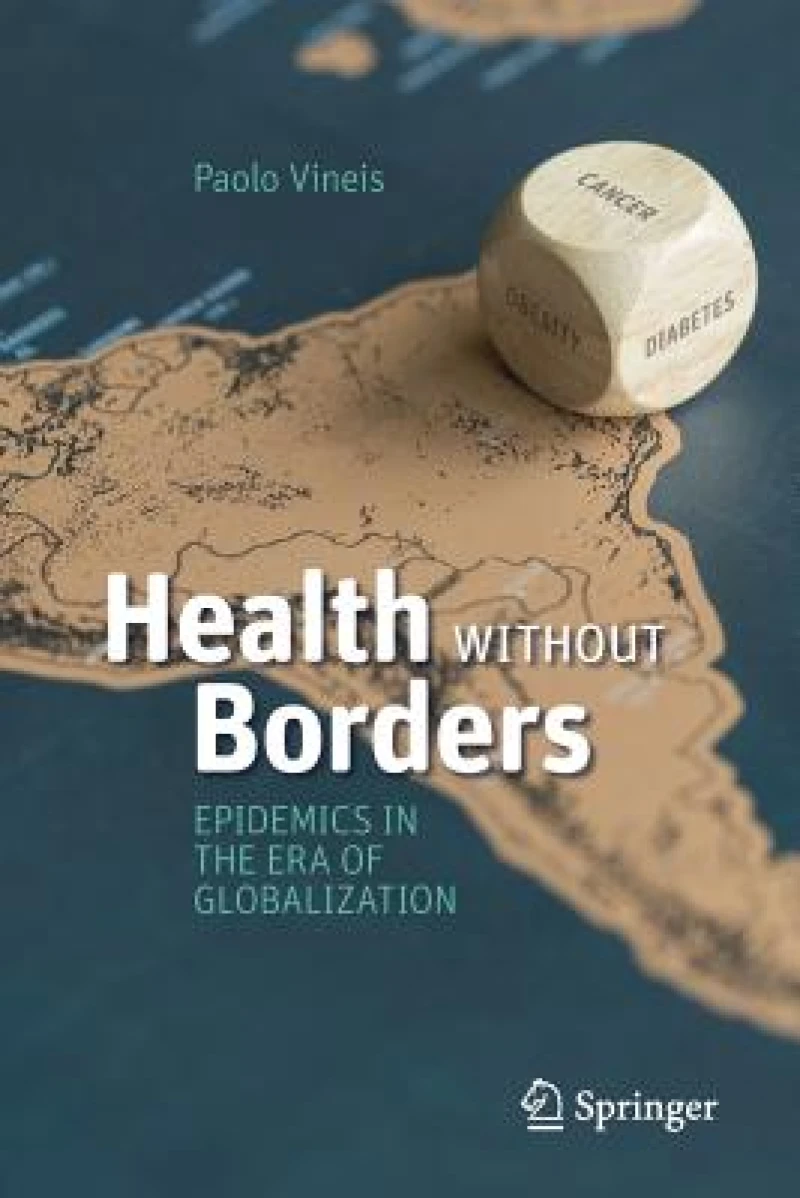
Health Without Borders : Epidemics in the Era of Globalization

1st ed. 2017

Book Details

Format Paperback / Softback
ISBN-10 3319524453
ISBN-13 9783319524450
Edition 1st ed. 2017
Publisher Springer International Publishing AG
Imprint Springer International Publishing AG
Country of Manufacture CH
Country of Publication GB
Publication Date Jun 9th, 2017
Print length 108 Pages
Weight 206 grams
Dimensions 15.70 x 23.40 x 1.10 cms
Ksh 5,400.00
Werezi Extended Catalogue 0 in stock

Delivery Location

Delivery fee: Select location

Secure
Quality
Fast
This book discusses globalization and its impact on human health. The population of the world grew from 1 billion in 1800 to 7 billion in 2012, and over the past 50 years the mean temperature has risen faster than ever before. Both factors continue to rise, as well as health inequalities. Our environment is changing rapidly, with tremendous consequences for our health. These changes produce complex and constantly varying interactions between the biosphere, economy, climate and human health, forcing us to approach future global health trends from a new perspective. Preventive actions to improve health, especially in low-income countries, are essential if our future is going to be a sustainable one. After a period of undeniable improvement in the health of the world’s population, this improvement is likely to slow down and we will experience– at least locally – crises of the same magnitude as have been observed in financial markets since 2009. There is instability in health systems, which will worsen if preventive and buffering mechanisms do not take on a central role. We cannot exclude the possibility that the allied forces of poverty, social inequalities, climate change, industrial food and lack of governance will lead to a deterioration in the health of large sectors of the population. In low-income countries, while many of the traditional causes of death (infectious diseases) are still highly prevalent, other threats typical of affluent societies (obesity, diabetes, cardiovascular diseases) are increasing. Africa is not only affected by malaria, TB and HIV, but also by skyrocketing rates of cancer. The book argues that the current situation requires effective and coordinated multinational interventions guided by the principle of health as a common good. An entirely competition-driven economy cannot – by its very nature – address global challenges that require full international cooperation. A communal global leadership is called for. Paolo Vineis is Chair of Environmental Epidemiology at Imperial College. His current research activities focus on examining biomarkers of disease risk as well as studying the effects of climate change on non-communicable diseases. “From morality to molecules, environment to equity, climate change to cancer, and politics to pathology, this is a wonderful tour of global health – consistently presented in a clear, readable format. Really, an important contribution.”Professor  Sir  Michael  Marmot Director, Institute of Health Equity University College London Author of “The Health Gap”“This book is a salutary and soundly argued reminder that the ‘common good’ is not simply what remains after individuals and groups have appropriated the majority of societal resources: it is in fact the foundation on which any society rests and without which it collapses.” Rodolfo Saracci, International Agency for Research on Cancer, Lyon, France

This book discusses globalization and its impact on human health. The population of the world grew from 1 billion in 1800 to 7 billion in 2012, and over the past 50 years the mean temperature has risen faster than ever before. Both factors continue to rise, as well as health inequalities. Our environment is changing rapidly, with tremendous consequences for our health. These changes produce complex and constantly varying interactions between the biosphere, economy, climate and human health, forcing us to approach future global health trends from a new perspective. Preventive actions to improve health, especially in low-income countries, are essential if our future is going to be a sustainable one. After a period of undeniable improvement in the health of the world’s population, this improvement is likely to slow down and we will experience– at least locally – crises of the same magnitude as have been observed in financial markets since 2009. There is instability in health systems, which will worsen if preventive and buffering mechanisms do not take on a central role. We cannot exclude the possibility that the allied forces of poverty, social inequalities, climate change, industrial food and lack of governance will lead to a deterioration in the health of large sectors of the population. In low-income countries, while many of the traditional causes of death (infectious diseases) are still highly prevalent, other threats typical of affluent societies (obesity, diabetes, cardiovascular diseases) are increasing. Africa is not only affected by malaria, TB and HIV, but also by skyrocketing rates of cancer. The book argues that the current situation requires effective and coordinated multinational interventions guided by the principle of health as a common good. An entirely competition-driven economy cannot – by its very nature – address global challenges that require full international cooperation. A communal global leadership is called for.

Paolo Vineis is Chair of Environmental Epidemiology at Imperial College. His current research activities focus on examining biomarkers of disease risk as well as studying the effects of climate change on non-communicable diseases.

“From morality to molecules, environment to equity, climate change to cancer, and politics to pathology, this is a wonderful tour of global health – consistently presented in a clear, readable format. Really, an important contribution.”

Professor Sir Michael Marmot
Director, Institute of Health Equity
University College London
Author of “The Health Gap”

“This book is a salutary and soundly argued reminder that the ‘common good’ is not simply what remains after individuals and groups have appropriated the majority of societal resources: it is in fact the foundation on which any society rests and without which it collapses.”

Rodolfo Saracci, International Agency for Research on Cancer, Lyon, France


Get Health Without Borders by at the best price and quality guaranteed only at Werezi Africa's largest book ecommerce store. The book was published by Springer International Publishing AG and it has pages.


Mind, Body, & Spirit

Shopping Cart

Africa largest book store

Sub Total:
Ebooks

Digital Library
Coming Soon

Our digital collection is currently being curated to ensure the best possible reading experience on Werezi. We'll be launching our Ebooks platform shortly.