
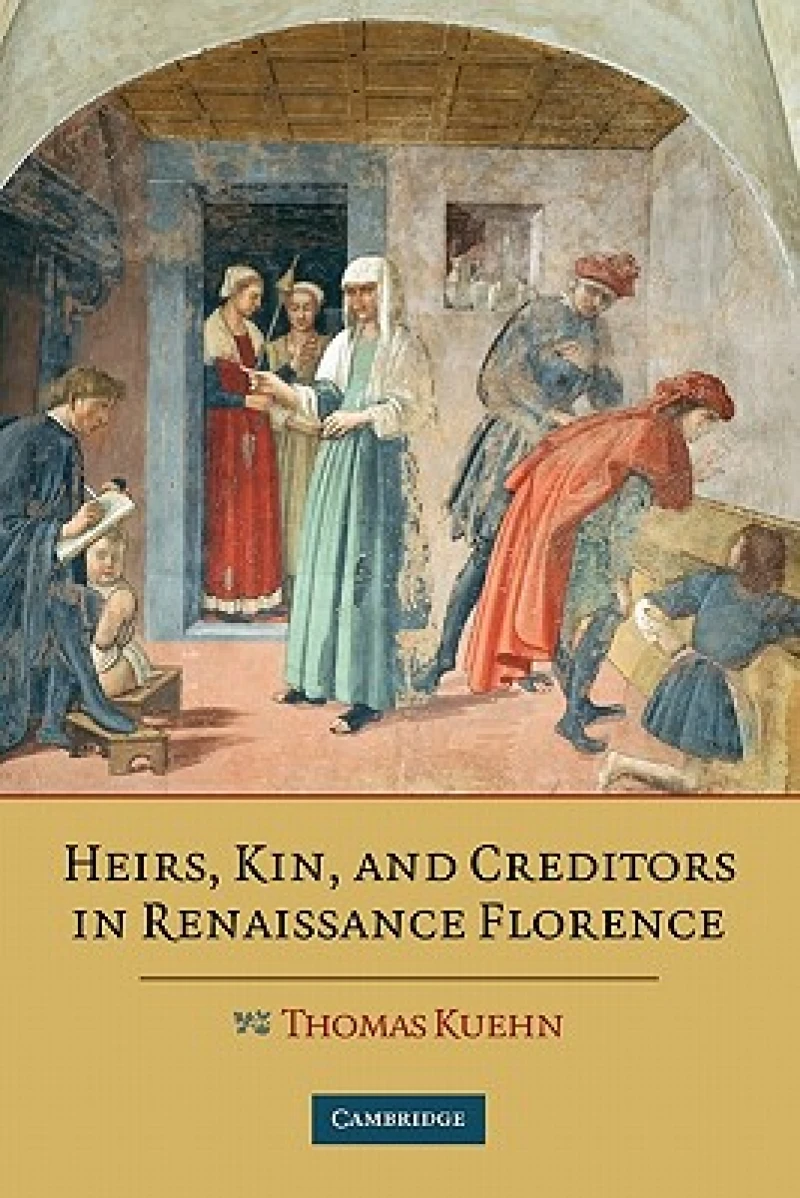
Heirs, Kin, and Creditors in Renaissance Florence
by
Thomas Kuehn
Book Details
Format
Paperback / Softback
ISBN-10
0521178479
ISBN-13
9780521178471
Publisher
Cambridge University Press
Imprint
Cambridge University Press
Country of Manufacture
GB
Country of Publication
GB
Publication Date
Mar 3rd, 2011
Print length
256 Pages
Weight
396 grams
Dimensions
23.20 x 15.20 x 2.00 cms
Product Classification:
European historyEarly history: c 500 to c 1450/1500HistoryEuropean history
Ksh 7,550.00
Manufactured on Demand
0 in stock
Delivery Location
Delivery fee: Select location
Secure
Quality
Fast
The process of inheritance was one of the most important moments in social life of the past, but also one of the most difficult to study. This book exploits a previously unexamined source of inheritance practices in Renaissance Florence, the serial registry of repudiations of inheritance, in order to understand social life and law of this historically important European society.
This study, based on Florentine repudiations of inheritance, reveals that inheritance was not simply an automatic process where the recipients were passive, if grateful. In influential European societies of the past, it was in fact a process that continued long after the deceased's death. Heirs also had options: at the least, to reject a burdensome patrimony, but also to manoeuvre property to others and to avoid (at times deceptively, if not fraudulently) the claims of others to portions of the estate. Repudiation was a vestige of Roman law that once again became a viable legal institution with the revival of Roman law in the Middle Ages. Florentines incorporated repudiation into their strategies of adjustment after death, showing that they were not merely passive recipients of what came their way. Further, these strategies fostered family goals, including continuity across the generations.
Get Heirs, Kin, and Creditors in Renaissance Florence by at the best price and quality guaranteed only at Werezi Africa's largest book ecommerce store. The book was published by Cambridge University Press and it has pages.

