
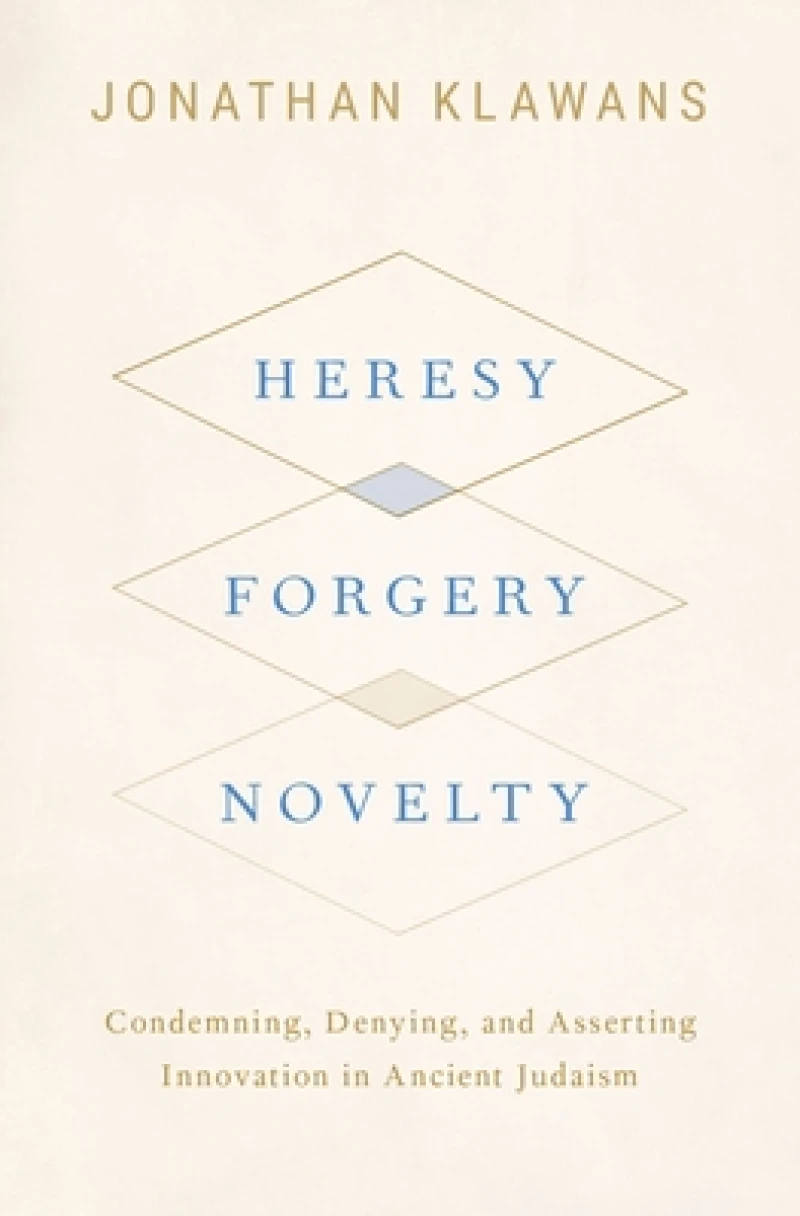
Heresy, Forgery, Novelty : Condemning, Denying, and Asserting Innovation in Ancient Judaism
Book Details
Format
Hardback or Cased Book
ISBN-10
0190062509
ISBN-13
9780190062507
Publisher
Oxford University Press Inc
Imprint
Oxford University Press Inc
Country of Manufacture
US
Country of Publication
GB
Publication Date
Oct 14th, 2019
Print length
240 Pages
Weight
499 grams
Dimensions
16.30 x 24.10 x 2.30 cms
Product Classification:
History of religionChristianityJudaism: sacred texts
Ksh 13,950.00
Temporarily out of stock, due soon
0 in stock
Delivery Location
Delivery fee: Select location
Secure
Quality
Fast
It is commonly asserted that heresy is a Christian invention that emerged in late antiquity as Christianity distinguished itself from Judaism. Heresy, Forgery, Novelty clearly defines these three important terms in the study of ancient Judaism and early Christianity, and demonstrates that Christianity's heresiological impulse is in fact indebted to Jewish precedents.
It is commonly asserted that heresy is a Christian invention that emerged in late antiquity as Christianity distinguished itself from Judaism. Heresy, Forgery, Novelty probes ancient Jewish disputes regarding religious innovation and argues that Christianity''s heresiological impulse is in fact indebted to Jewish precedents. In this book, Jonathan Klawans demonstrates that ancient Jewish literature displays a profound unease regarding religious innovation. The historian Josephus condemned religious innovation outright, and later rabbis valorize the antiquity of their traditions. The Dead Sea sectarians spoke occasionally-and perhaps secretly-of a "new covenant," but more frequently masked newer ideas in rhetorics of renewal or recovery. Other ancient Jews engaged in pseudepigraphy-the false attribution of recent works to prophets of old. The flourishing of such religious forgeries further underscores the dangers associated with religious innovation. As Christianity emerged, the discourse surrounding religious novelty shifted dramatically. On the one hand, Christians came to believe that Jesus had inaugurated a "new covenant," replacing what came prior. On the other hand, Christian writers followed their Jewish predecessors in condemning heretics as dangerous innovators, and concealing new works in pseudepigraphic garb. In its open, unabashed embrace of new things, Christianity parts from Judaism. Christianity''s heresiological condemnation of novelty, however, displays continuity with prior Jewish traditions. Heresy, Forgery, Novelty reconsiders and offers a new interpretation of the dynamics of the split between Judaism and Christianity.
Get Heresy, Forgery, Novelty by at the best price and quality guaranteed only at Werezi Africa's largest book ecommerce store. The book was published by Oxford University Press Inc and it has pages.

