
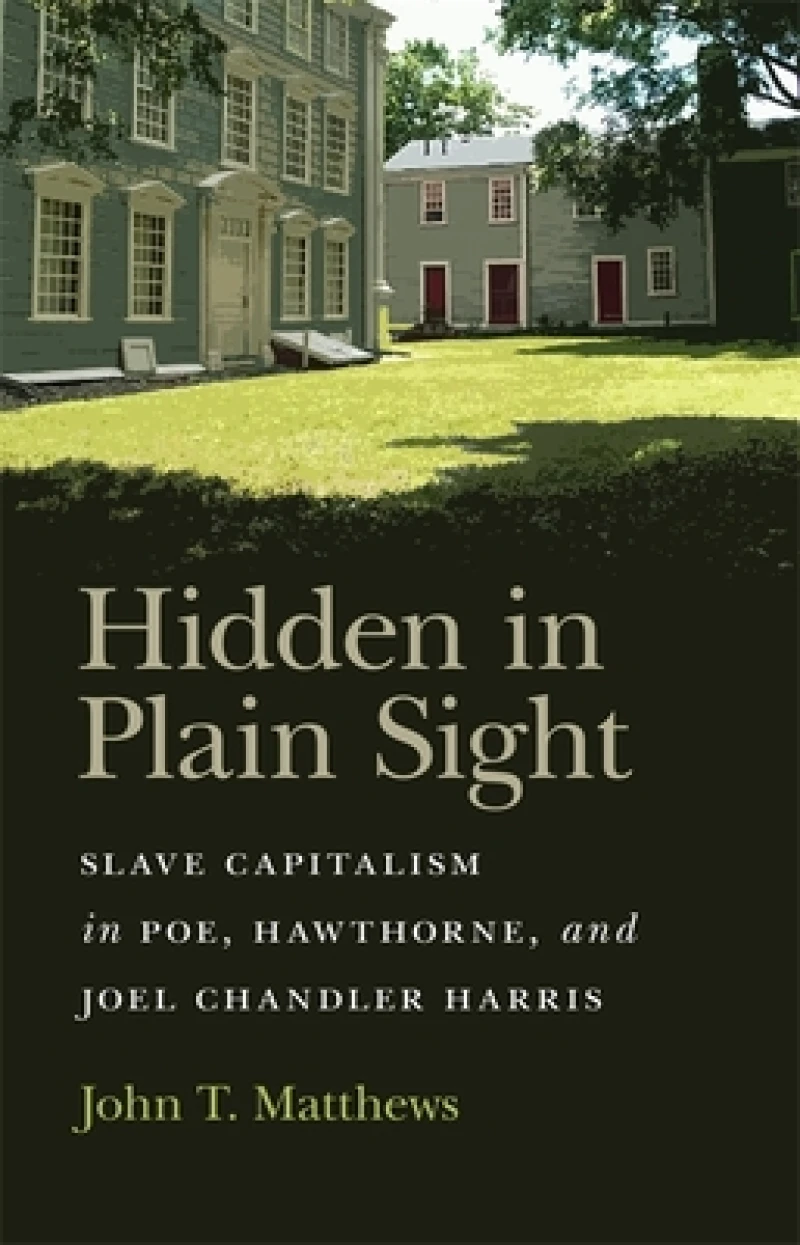
Hidden in Plain Sight : Slave Capitalism in Poe, Hawthorne, and Joel Chandler Harris
Book Details
Format
Hardback or Cased Book
Book Series
Mercer University Lamar Memorial Lectures
ISBN-10
0820356700
ISBN-13
9780820356709
Publisher
University of Georgia Press
Imprint
University of Georgia Press
Country of Manufacture
US
Country of Publication
GB
Publication Date
Apr 15th, 2020
Print length
156 Pages
Weight
340 grams
Dimensions
14.70 x 22.40 x 1.80 cms
Ksh 6,200.00
Temporarily out of stock, due soon
0 in stock
Delivery Location
Delivery fee: Select location
Secure
Quality
Fast
Difficult truths were hidden in plain sight, allowing beholders at once to recognize and disavow knowledge they would not act on. What were the habits of mind that enabled free Americans to acknowledge what was intolerable yet act as if they did not?
For as long as the United States owed its prosperity to a New World plantation complex, from colonial settlement until well into the twentieth century, the toxic practices associated with its permutations stimulated imaginary solutions to the contradiction with the nation’s enlightenment ideals and republican ideology. Ideals of liberty, democracy, and individualism could not be separated from a history of forcible coercion, oligarchic power, and state-protected economic opportunism. While recent historical scholarship about the relation of capitalism to slavery explores the depths at which U.S. ascension was indebted to global plantation slave economies, John T. Matthews probes how exemplary works of literature represented the determination to deny the open secret of a national atrocity. Difficult truths were hidden in plain sight, allowing beholders at once to recognize and disavow knowledge they would not act on. What were the habits of mind that enabled free Americans to acknowledge what was intolerable yet act as if they did not? In what ways did non-slave-owning Americans imagine a relation to slavery that both admitted its iniquity and accepted its benefits? How did the reconfiguration of the plantation system after the Civil War elicit new literary forms for dealing with its perpetuation of racial injustice, expropriation of labor, and exploitation for profit of the land? Hidden in Plain Sight examines signal nineteenth-century works by Edgar Allan Poe, Nathaniel Hawthorne, Herman Melville, and Joel Chandler Harris to show how writers portrayed a nation founded on the unseen seen of slavery’s capitalism.
Get Hidden in Plain Sight by at the best price and quality guaranteed only at Werezi Africa's largest book ecommerce store. The book was published by University of Georgia Press and it has pages.

