
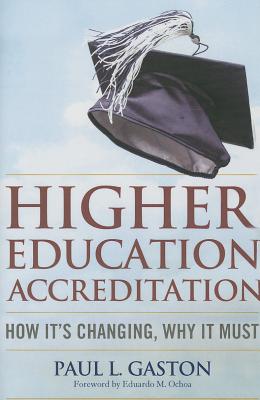
Higher Education Accreditation : How It's Changing, Why It Must
Book Details
Format
Hardback
ISBN-10
1579227627
ISBN-13
9781579227623
Publisher
Taylor & Francis Inc
Imprint
Stylus Publishing
Country of Manufacture
US
Country of Publication
GB
Publication Date
Dec 4th, 2013
Print length
240 Pages
Weight
494 grams
KSh 6,700.00
Currently unavailable
0 in stock
Delivery Location
Delivery fee: Select location
Secure
Quality
Fast
This book addresses this question head-on, asking whether accreditation is indeed in need of radical reform, and whether the agencies’ authority should be curtailed; or whether in fact the changes now underway – that accrediting agencies contend ensure rigorous and consistent standards.
Is the accreditation system ?broken? as claimed by successive Secretaries of Education and some recent reports?
This book addresses this question head-on, asking whether accreditation is indeed in need of radical reform, and whether the agencies? authority should be curtailed; or whether in fact the changes now underway ? that accrediting agencies contend ensure rigorous and consistent standards and degrees that are a reliable gauge of student attainment ? are moving the academy and the nation in the right direction.
In a sweeping and ambitious book, Paul Gaston deploys his knowledge and experience as a peer reviewer for three regional accrediting agencies, a former board member and chair of the Association of Specialized and Professional Accreditors, and his involvement in the early stages of the Council for Higher Education Accreditation, to go beyond the polemics to explore whether a strategy that builds on the emerging values and good practices can achieve the substantive and positive improvements the public is demanding.
As an introduction for readers new to the debate, he provides a brief overview of the development of accreditation, its terminology, and structure, describing how it currently works, and what it has achieved; and offers insight into the proliferation of the missions of accreditation ? as well as the multiplicity of stakeholders with an interest in its outcomes ? to question whether the mandate of accreditation should, as some contend, be expanded, or particular missions reassigned or abandoned.
This established, he undertakes a dispassionate analysis of the arguments and recommendations of critics and supporters of the current direction of accreditation to identify common ground and explore constructive ways forward, paying specific attention to current and potential reforms of the three sectors of higher education accreditation: the seven regional accrediting associations, the national accreditors, and programmatic, or ?specialized? accreditation.
The book concludes by outlining a comprehensive approach to reform. His proposal would preserve practices that already work well while advancing important changes that can be incrementally implemented. The result would be a higher education accreditation structure more cost effective, more efficient, more transparent and accountable, and more responsive to institutional and public needs.
This book addresses this question head-on, asking whether accreditation is indeed in need of radical reform, and whether the agencies? authority should be curtailed; or whether in fact the changes now underway ? that accrediting agencies contend ensure rigorous and consistent standards and degrees that are a reliable gauge of student attainment ? are moving the academy and the nation in the right direction.
In a sweeping and ambitious book, Paul Gaston deploys his knowledge and experience as a peer reviewer for three regional accrediting agencies, a former board member and chair of the Association of Specialized and Professional Accreditors, and his involvement in the early stages of the Council for Higher Education Accreditation, to go beyond the polemics to explore whether a strategy that builds on the emerging values and good practices can achieve the substantive and positive improvements the public is demanding.
As an introduction for readers new to the debate, he provides a brief overview of the development of accreditation, its terminology, and structure, describing how it currently works, and what it has achieved; and offers insight into the proliferation of the missions of accreditation ? as well as the multiplicity of stakeholders with an interest in its outcomes ? to question whether the mandate of accreditation should, as some contend, be expanded, or particular missions reassigned or abandoned.
This established, he undertakes a dispassionate analysis of the arguments and recommendations of critics and supporters of the current direction of accreditation to identify common ground and explore constructive ways forward, paying specific attention to current and potential reforms of the three sectors of higher education accreditation: the seven regional accrediting associations, the national accreditors, and programmatic, or ?specialized? accreditation.
The book concludes by outlining a comprehensive approach to reform. His proposal would preserve practices that already work well while advancing important changes that can be incrementally implemented. The result would be a higher education accreditation structure more cost effective, more efficient, more transparent and accountable, and more responsive to institutional and public needs.
Get Higher Education Accreditation by Paul L. Gaston at the best price and quality guaranteed only at Werezi Africa's largest book ecommerce store. The book was published by Taylor & Francis Inc and it has 240 pages.
Customers Who Bought This Also Bought
Cam Al Geography 2e SB
KSh 10,400.00

Assessing Young Children in Inclusive Settings
KSh 6,500.00

Advancing Evaluation in Informal Science Learning
KSh 30,950.00

Advancing Evaluation in Informal Science Learning
KSh 5,750.00

Dissertation as Contemporary Art
KSh 12,250.00
Enhancing Teaching and Learning through Assessment
KSh 32,400.00
Assessment and Documentation in Early Childhood Education
KSh 11,000.00
Assessment and Teaching of 21st Century Skills
KSh 34,750.00
Alternative Education for the 21st Century
KSh 19,800.00

Implementing Sustainable Change in Higher Education
KSh 30,950.00

A Suitcase Full of Stories
KSh 6,500.00
Understanding Students with Additional Needs as Learners
KSh 23,400.00
More by Paul L. Gaston
Ohio''s Craft Beers
KSh 3,350.00

Credentials
KSh 30,950.00

Rebuilding Support for Higher Education
KSh 30,950.00
A Concordance to Conrad''s The Arrow of Gold
KSh 24,500.00

Rebuilding Support for Higher Education
KSh 6,500.00
Credentials
KSh 6,700.00
A Concordance to Conrad''s The Arrow of Gold
KSh 6,850.00
The Challenge of Bologna
KSh 9,350.00
More in This Genre
Cam Al Geography 2e SB
KSh 10,400.00
Assessing Young Children in Inclusive Settings
KSh 6,500.00
Advancing Evaluation in Informal Science Learning
KSh 30,950.00
Advancing Evaluation in Informal Science Learning
KSh 5,750.00
Dissertation as Contemporary Art
KSh 12,250.00
Enhancing Teaching and Learning through Assessment
KSh 32,400.00
