
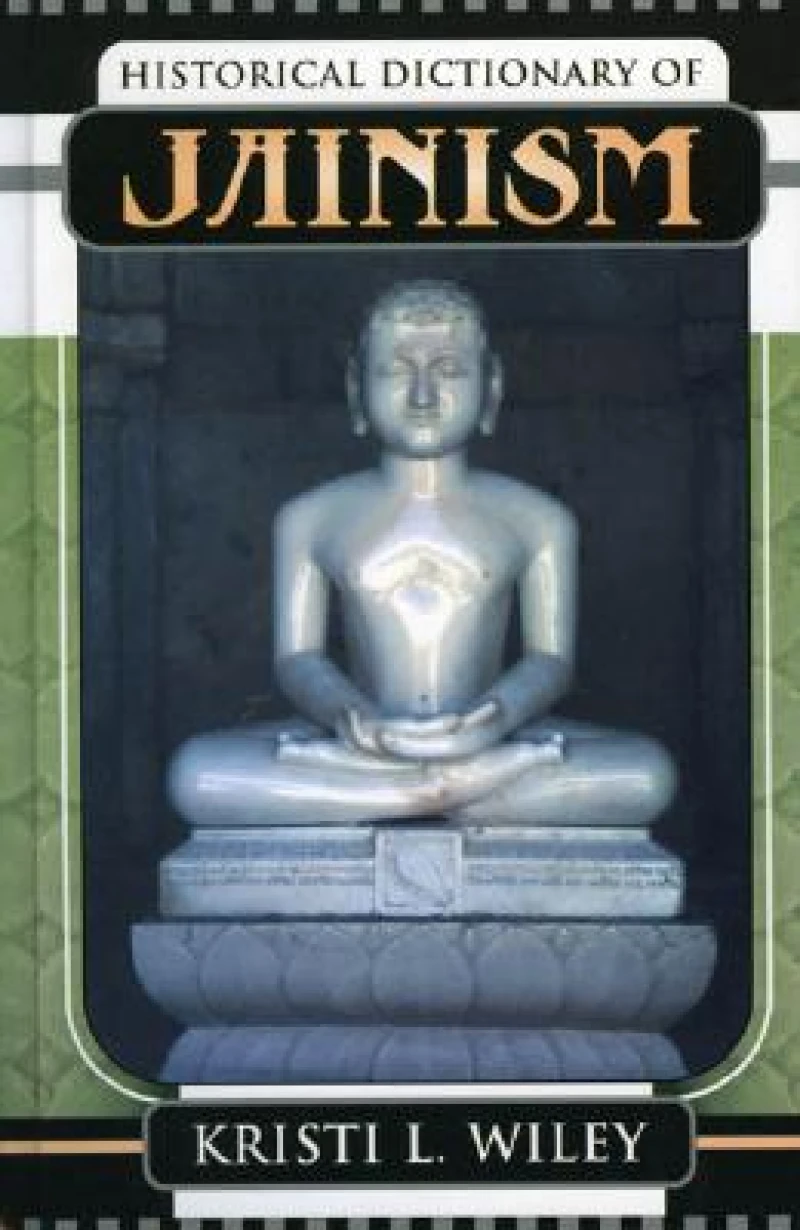
Historical Dictionary of Jainism
Book Details
Format
Hardback or Cased Book
ISBN-10
0810850516
ISBN-13
9780810850514
Publisher
Scarecrow Press
Imprint
Scarecrow Press
Country of Manufacture
US
Country of Publication
GB
Publication Date
Jul 8th, 2004
Print length
336 Pages
Weight
542 grams
Dimensions
22.40 x 14.80 x 1.80 cms
Product Classification:
Reference worksJainism
Ksh 18,350.00
Re-Printing
0 in stock
Delivery Location
Delivery fee: Select location
Secure
Quality
Fast
Jain is the term used for a person who has faith in the teachings of the Jinas ("Spiritual Victors"). Jinas are human beings who have overcome all passions (kasayas) and have attained enlightenment or omniscience (kevala-jnana), who teach the truths they realized to others, and who attain liberation (moksa) from the cycle of rebirth (samsara). At the core of these teachings is nonviolence (ahimsa), which has remained the guiding principle of Jain ethics and practices to this day. In comparison with other religious traditions of South Asia, Jains are few in number, comprising less than one percent of India's population. The Jain lay and mendicant communities, however, have maintained an unbroken presence in India for more than 2,500 years and have influenced its culture throughout this time. Historical Dictionary of Jainism covers the history of Jainism that spans a period of more than 2,500 years. The history, values, concepts and scriptures, eminent mendicant and lay leaders and scholars, places, institutions, and social and cultural factors are covered in over 450 dictionary entries. This comprehensive reference work also includes an introductory essay, explanation of the Jain scriptures, chronology, appendices, bibliography, and an 8-page black-and-white photo spread. This book provides an excellent introduction and overview to Jainism for scholars, students, and general readers.
Jain is the term used for a person who has faith in the teachings of the Jinas ("Spiritual Victors"). Jinas are human beings who have overcome all passions (kasayas) and have attained enlightenment or omniscience (kevala-jnana), who teach the truths they realized to others, and who attain liberation (moksa) from the cycle of rebirth (samsara). At the core of these teachings is nonviolence (ahimsa), which has remained the guiding principle of Jain ethics and practices to this day. In comparison with other religious traditions of South Asia, Jains are few in number, comprising less than one percent of India''s population. The Jain lay and mendicant communities, however, have maintained an unbroken presence in India for more than 2,500 years and have influenced its culture throughout this time. Historical Dictionary of Jainism covers the history of Jainism that spans a period of more than 2,500 years. The history, values, concepts and scriptures, eminent mendicant and lay leaders and scholars, places, institutions, and social and cultural factors are covered in over 450 dictionary entries. This comprehensive reference work also includes an introductory essay, explanation of the Jain scriptures, chronology, appendices, bibliography, and an 8-page black-and-white photo spread. This book provides an excellent introduction and overview to Jainism for scholars, students, and general readers.
Get Historical Dictionary of Jainism by at the best price and quality guaranteed only at Werezi Africa's largest book ecommerce store. The book was published by Scarecrow Press and it has pages.

