

Historicizing the Enlightenment, Volume 2 : Literature, the Arts, and the Aesthetic in Britain
Book Details
Format
Paperback / softback
ISBN-10
1684484758
ISBN-13
9781684484751
Publisher
Bucknell University Press,U.S.
Imprint
Bucknell University Press,U.S.
Country of Manufacture
US
Country of Publication
GB
Publication Date
Jul 14th, 2023
Print length
268 Pages
Weight
394 grams
Dimensions
15.70 x 23.50 x 1.70 cms
KSh 6,850.00
Temporarily out of stock, due soon
0 in stock
Delivery Location
Delivery fee: Select location
Secure
Quality
Fast
Emphasizes the British Enlightenment’s effects on the future rather than its break with the past. Michael McKeon urges us to distinguish between those aspects of the Enlightenment that eventually were used to organise epistemic violence and oppression from those aspects that were - and remain today - revolutionary.
Enlightenment critics from Dryden through Johnson and Wordsworth conceived the modern view that art and especially literature entails a double reflection: a reflection of the world, and a reflection on the process by which that reflection is accomplished. Instead “neoclassicism” and “Augustanism” have been falsely construed as involving a one-dimensional imitation of classical texts and an unselfconscious representation of the world. In fact these Enlightenment movements adopted an oblique perspective that registers the distance between past tradition and its present reenactment, between representation and presence. Two modern movements, Romanticism and modernism, have appropriated as their own these innovations, which derive from Enlightenment thought. Both of these movements ground their error in a misreading of “imitation” as understood by Aristotle and his Enlightenment proponents. Rightly understood, neoclassical imitation, constitutively aware of the difference between what it knows and how it knows it, is an experimental inquiry that generates a range of prefixes-“counter-,” “mock-,” “anti-,” “neo-”-that mark formal degrees of its epistemological detachment. Romantic ideology has denied the role of the imagination in Enlightenment imitation, imposing on the eighteenth century a dichotomous periodization: duplication versus imagination, the mirror versus the lamp. Structuralist ideology has dichotomized narration and description, form and content, structure and history. Poststructuralist ideology has propounded for the novel a contradictory “novel tradition”-realism, modernism, postmodernism, postcolonialism-whose stages both constitute a sequence and collapse it, each stage claiming the innovation of the stage that precedes it.
Published by Bucknell University Press. Distributed worldwide by Rutgers University Press.
Published by Bucknell University Press. Distributed worldwide by Rutgers University Press.
Get Historicizing the Enlightenment, Volume 2 by Michael McKeon at the best price and quality guaranteed only at Werezi Africa's largest book ecommerce store. The book was published by Bucknell University Press,U.S. and it has 268 pages.
Customers Who Bought This Also Bought

How to Read a Book
KSh 2,000.00
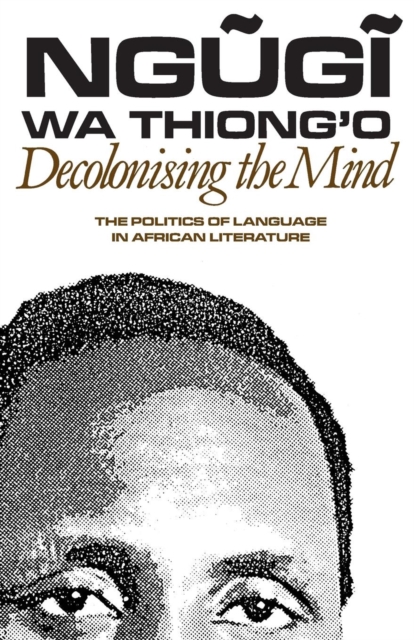
Decolonising the Mind
KSh 4,700.00

How to Read & Why
KSh 2,350.00
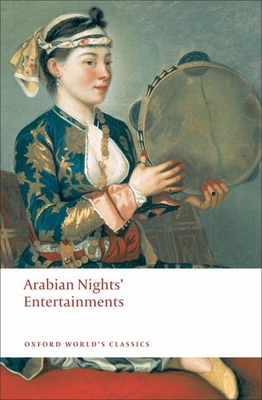
Arabian Nights'' Entertainments
KSh 2,950.00
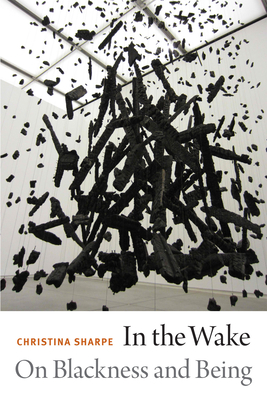
In the Wake
KSh 3,600.00
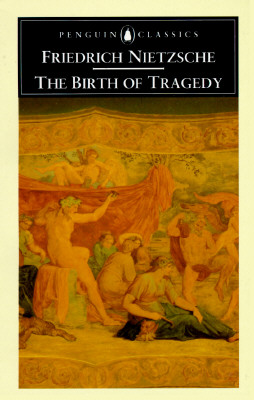
The Birth of Tragedy
KSh 1,800.00
Against Nature
KSh 1,800.00
The White Album
KSh 3,250.00
Robinson Crusoe
KSh 1,450.00
Metaphysical Poetry
KSh 2,350.00
Reading Lessons
KSh 2,350.00

Literature Book
KSh 4,250.00
More by Michael McKeon

Historicizing the Enlightenment (2 Vol Set)
KSh 29,900.00

Historicizing the Enlightenment (2 Vol Set)
KSh 10,800.00

Historicizing the Enlightenment, Volume 1
KSh 6,850.00
The Secret History of Domesticity
KSh 6,850.00

Historicizing the Enlightenment, Volume 1
KSh 21,600.00

Historicizing the Enlightenment, Volume 2
KSh 21,600.00
